


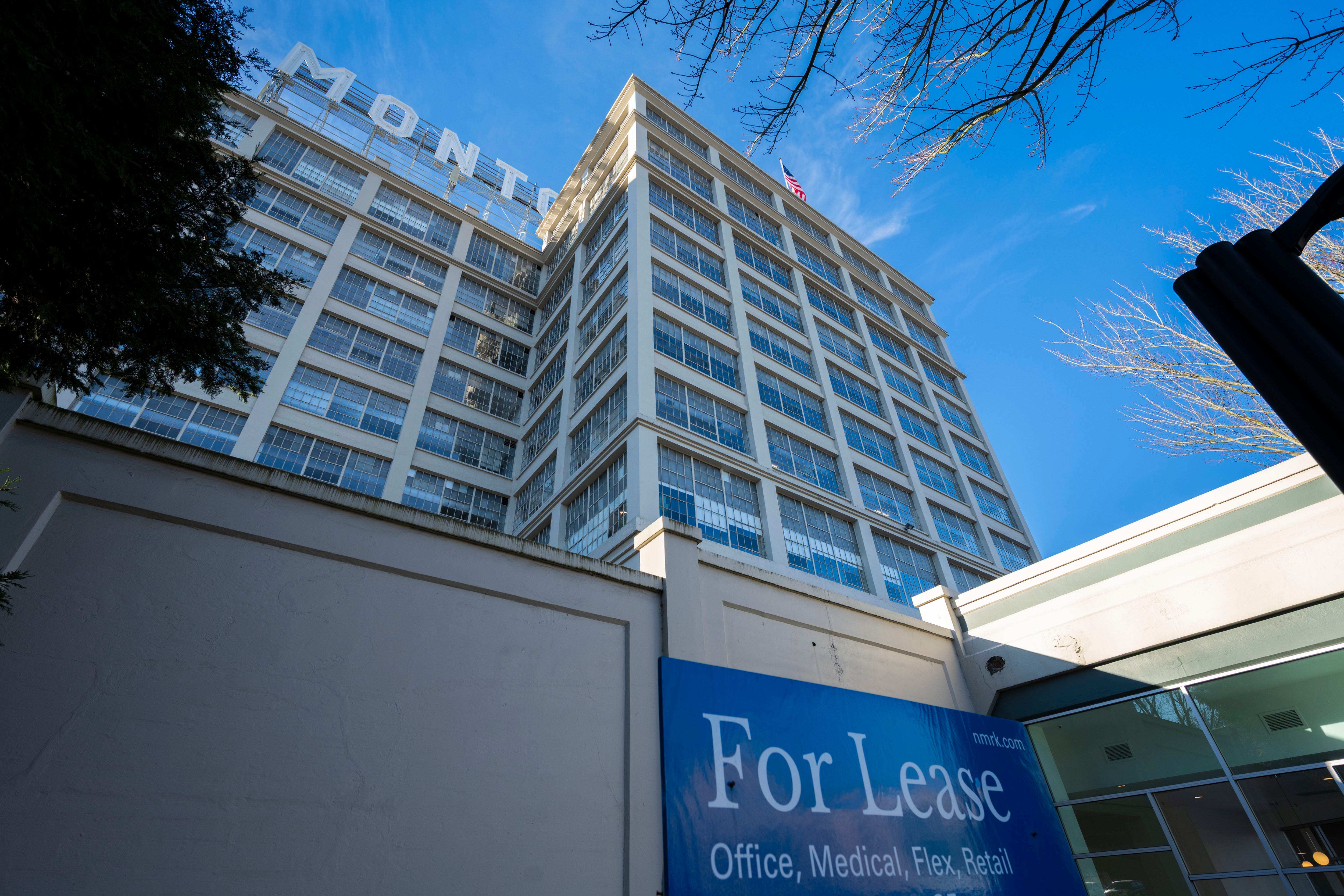
While some may have wondered whether the proposed streetcar line extension to Montgomery Park had died, it has been advancing quietly in the background. It may take years and the right mood at the Trump Administration to get there, but the project keeps rolling, ticking off stops along the way.
Surveyors were seen around Northwest 23rd and Northrup streets in late November, the project’s first visible stirring, as part of preliminary engineering work funded by a $10 million Metro grant approved in July.
Northwest District Association President Todd Zarnitz, who calls the project a “boondoggle,” reported the sighting to his organization. NWDA has for years questioned the project’s value, particularly the route favoring future development over service to the existing neighborhood.
“I presumed the federal support would have evaporated,” said Steve Pinger, who represented NWDA on an official citizen oversight body that stopped meeting four years ago.
Neighbors thought last year’s collapse of ambitious redevelopment plans for Montgomery Park that included high-density housing on current surface parking lots might throw a damper on things. It didn’t seem to matter.
“It has gone through at least three administrative approvals since the first of the year,” Pinger said, though none involved the level of community outreach he expected.
The recent approvals include the Portland City Council’s adoption of the route and associated zoning changes last December. Metro added its blessing this summer, and in October, the council authorized requests for proposals for infrastructure design and streetcar vehicles.
A $30 million grant from the Portland Clean Energy Fund for additional streetcar vehicles has been awarded.
Another grant application to the Federal Transit Administration could bring another $30 million, with a decision at least two years away.
Tracks would occupy both lanes of Northwest 23rd, the first time Portland Streetcar would have two-way service on the same street. The route would extend from Northwest Northrup to Roosevelt Street, then turn westward toward Montgomery Park at Northwest 27th Avenue.
Portland Streetcar Inc. Executive Director Dan Bower has been through this process before in his nearly 12 years at the helm, a period in which the system has expanded to the Eastside.
As for the perception of all action and no talk, the Portland Bureau of Transportation explained recent delays in citizen engagement to “unforeseen procurement delays at the city” and promised email updates about every three months.
Route unlikely to change
The route, however, is unlikely to change no matter what citizens say, according to Bower, in that the “locally preferred option” has been approved unanimously at every local jurisdiction.
Unico Properties’ sale of Montgomery Park last year for 13% of what it paid for the 18-acre site only five years earlier laid to rest a spectacular vision for a mixed-use urban center with mid-rise housing, retail, office space and even a pedestrian bridge linking to Forest Park. Local buyer Menashe Properties has yet to announce any plans for the site.
If the proposed urban center and resulting ridership justified the Montgomery Park destination, what is the consequence of that vision deflating? If it remains primarily an office facility, potential growth would be more limited.
But who is counting?
“Ridership is modeled on adopted zoning, and the zoning at that site has not changed between ownership transfers, so our future projections remain static,” Bower said.
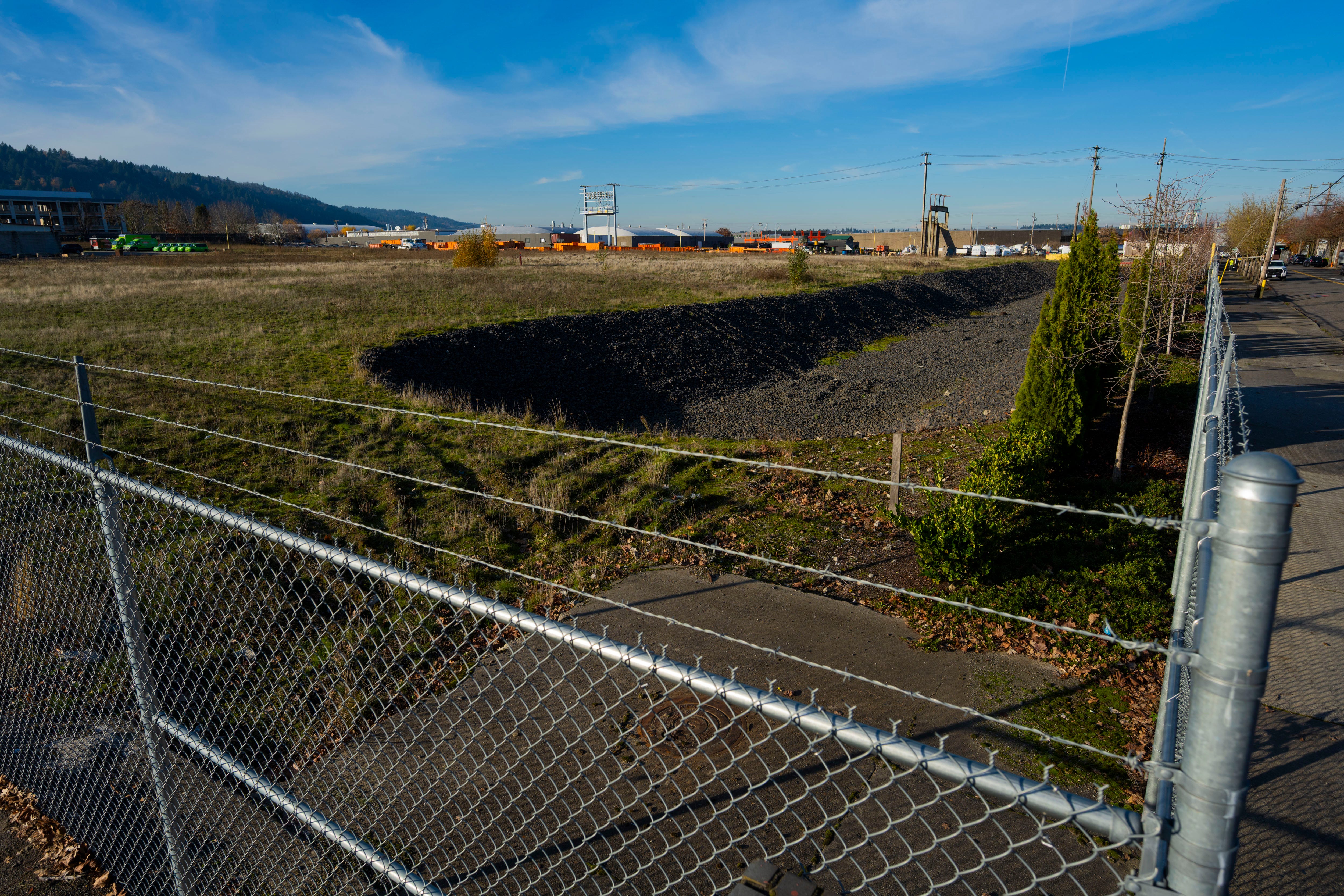
PBOT and the Bureau of Planning & Sustainability give the same explanation. Because the 30-plus acres in the Montgomery Park Area Plan have been rezoned to allow residential and a wider spectrum of commercial uses, future growth can be counted on.
“Over the next 20 years, the broader Montgomery Park study area is expected to grow by up to 14,000 new households and 1,500 new jobs,” according to the plan adopted by the city. “Within the core project area, more than 2,000 new households, and hundreds of new jobs could be accommodated. The existing transportation network would be unable to support this future growth if residents, workers and visitors travel by driving alone.”
The plan assumed the streetcar extension would draw an additional 3,300 daily riders, a 60% increase over existing ridership on the North-South streetcar line.
Budget for project is $190 million
The budget for the streetcar extension project is $190 million, which includes rebuilding Northwest 23rd, Wilson and Roosevelt streets as well as installing tracks. Adding new and replacing aging trains would cost about $60 million, of which the Federal Transportation Administration will be asked to provide a 50% match or $30 million.
Ultimately, property owners along the route will be asked to tax themselves through a local improvement district (LID). The amount of that tax and which properties will be assessed are unknowns, Bower said, and cannot be estimated until the main funding streams are in place.
The current Portland Streetcar system has been 14% funded by LIDs, according to the Federal Highway Administration, but Bower said that gives no indication of the share Northwest Portland property owners would be expected to pay.
“It’s not particularly instructive to compare what was done 25 or even 15 years ago,” he said. “This conversation will evolve as we learn more about project scope and budget and we have a better sense of our partnership with the FTA.”
Nor can it be known which properties will be bound by the LID. Because a majority of property owners within a proposed LID must vote affirmatively to create the taxing district, those boundary lines must be drawn strategically to exclude those likely to vote no.
Zarnitz has spoken and testified repeatedly about the unfairness of this process, which could tax homeowners deriving little benefit from a streetcar line equally with property owners standing to receive a substantial boost in their development potential.
“Why should businesses and homeowners, in an already thriving neighborhood, be compelled to make a major investment in infrastructure whose primary and obvious beneficiaries will be the developers of vacant land tracts?” he said.
Before LID discussions can begin, the federal grant application must play out.
Bower considers that decision pivotal.
“Hypothetically it could go forward with 100% local funding, or other federal or state grants,” he said, “but I would consider that unlikely at this time. There isn’t really any place to significantly reduce scope within the existing plan.”
This story was updated with corrected information about housing projects and grant amounts from the Portland Bureau of Transportation.
To Montgomery Park—or Bust? A Respondent’s View
The NW Examiner’s detailed examination of the proposed Montgomery Park streetcar extension underscores what many of us already feel in our bones: Portland is again marching toward a mega-project whose costs and assumptions seem detached from reality. But there are several additional concerns—ground-level and well-documented—that deserve equal attention.
1. A Broken Promise on NW 23rd—And Residents Left Dodging Potholes for Years to Come
During my 2024 campaign for Portland City Council, a high-level PBOT official told me something that stunned me at the time and should alarm every Northwest resident now: PBOT would do nothing to fix the pavement on NW 23rd Avenue between Northrup and Thurman until the new streetcar extension was completed.
No interim repairs. No basic maintenance. Just years of waiting.
Sadly, and to the surprise of no one familiar with PBOT’s project-driven culture, this appears to be exactly what has transpired. Northwest Portland residents and other Nw 23rd users continue to navigate dangerous potholes, including those in crosswalks that pose particular risks to pedestrians with mobility issues.
We tell people to walk more, bike more, shop local, and ride transit—yet the most basic requirement for any of those activities is a functional street. Instead, PBOT is letting it crumble in anticipation of a speculative, multi-year, multi-hundred-million-dollar buildout.
If you want proof that this project is driving priorities rather than community need, look no further than the literal pavement under our feet.
2.. A $190 Million Project—At $292 Million Per Mile for .65 Miles- And That’s Just the Opening Bid.
The NW Examiner correctly highlights escalating costs, but the raw math deserves sharper emphasis:
$190 million for .65 miles.
That’s $292 million per mile.
This would be eye-opening even if we had a long history of PBOT and regional agencies delivering large capital projects on time and on budget. But we don’t. Not even close.
The pattern is consistent and predictable: initial projections deliberately lowball costs to secure public approval, then reality intrudes during actual construction.
We have recent case studies:
• The Interstate Bridge Replacement project, whose budget estimates have ballooned wildly long before any shovels hit dirt.
• The Rose Quarter freeway expansion, which has seen projections rise by the hundreds of millions with no end in sight.
Given this history of escalating costs, it is difficult to imagine the Montgomery Park extension coming in anywhere near the $190 million estimate. Portlanders should be prepared for the real number to climb dramatically.
Where will those additional funds come from? Almost certainly from property owners through an expanded Local Improvement District, from transportation dollars desperately needed for basic maintenance, or from other deferred public services.
3. Fantasy Ridership Projections Untethered from Reality
Perhaps most troubling is Portland Streetcar Inc.’s stubborn refusal to revise ridership projections despite radical changes in the circumstances that supposedly justified this route.
Executive Director Dan Bower admits that projections are based on zoning potential rather than actual development plans or market realities. When the spectacular vision for Montgomery Park collapsed, with Unico Properties selling the site for just 13% of what it paid, the response was essentially: nothing to see here, our models remain unchanged.
This approach borders on magical thinking. Bower states that ridership is “modeled on adopted zoning” and therefore projections “remain static” despite the deflation of development plans. But zoning represents possibility, not certainty. The fact that land could theoretically support 2,000 housing units doesn’t mean those units will materialize, especially when the primary property changed hands at a 87% loss and the new owner has announced no development plans whatsoever.
Montgomery Park’s grand vision has evaporated. Yet official projections remain the same.
Real planning would adjust projections based on actual market conditions, property owner intentions, and observed development patterns. Instead, we have a faith-based approach: if we build the tracks, surely the density will come.
When the financial foundation of a project depends on ignoring present-day reality, the public deserves to be skeptical.
The Wrong Project at the Wrong Time
Portland is at a fiscal crossroads. Basic street maintenance is underfunded. Pedestrian safety improvements languish unfunded. Local businesses are struggling. And Northwest Portland residents are literally tripping over potholes while PBOT promises salvation “after the streetcar arrives.”
A responsible transportation agenda would:
• Fix NW 23rd now—not in ten years.
• Prioritize safety, maintenance, and reliability over ribbon-cutting megaprojects.
• Update ridership assumptions to reflect real conditions, not legacy spreadsheets.
• Demand financial accountability before committing to another nine-figure gamble.
Instead, we are sprinting toward Montgomery Park—or bust.
If this project proceeds on its current trajectory, “bust” may be the more accurate destination.
Anyone who thinks the Trump administration will fund European-style urban rail in the world ‘Antifa’ capital, Portland, to advance progressive urbanism has been gobbling gummies.