



District 1 County Commissioner Meghan Moyer addressed about 60 people at a Pearl District Neighborhood Association meeting Friday morning, reinforcing one of her central policy principles: Forced mental health treatment does not work.
After 20 years in social services, Moyer makes no claims that state and local governments are adequately addressing the mental health crisis. But she differs from those who recommend broader civil commitment authority to arrest offenders and require them to undergo treatment.
On the other hand, “drug court works,” she said, favoring reestablishing the system in place locally until the pandemic. Offenders are required to make frequent appearances before a judge, who monitors their progress. Several Oregon counties achieve “phenomenal success” with their drug courts.
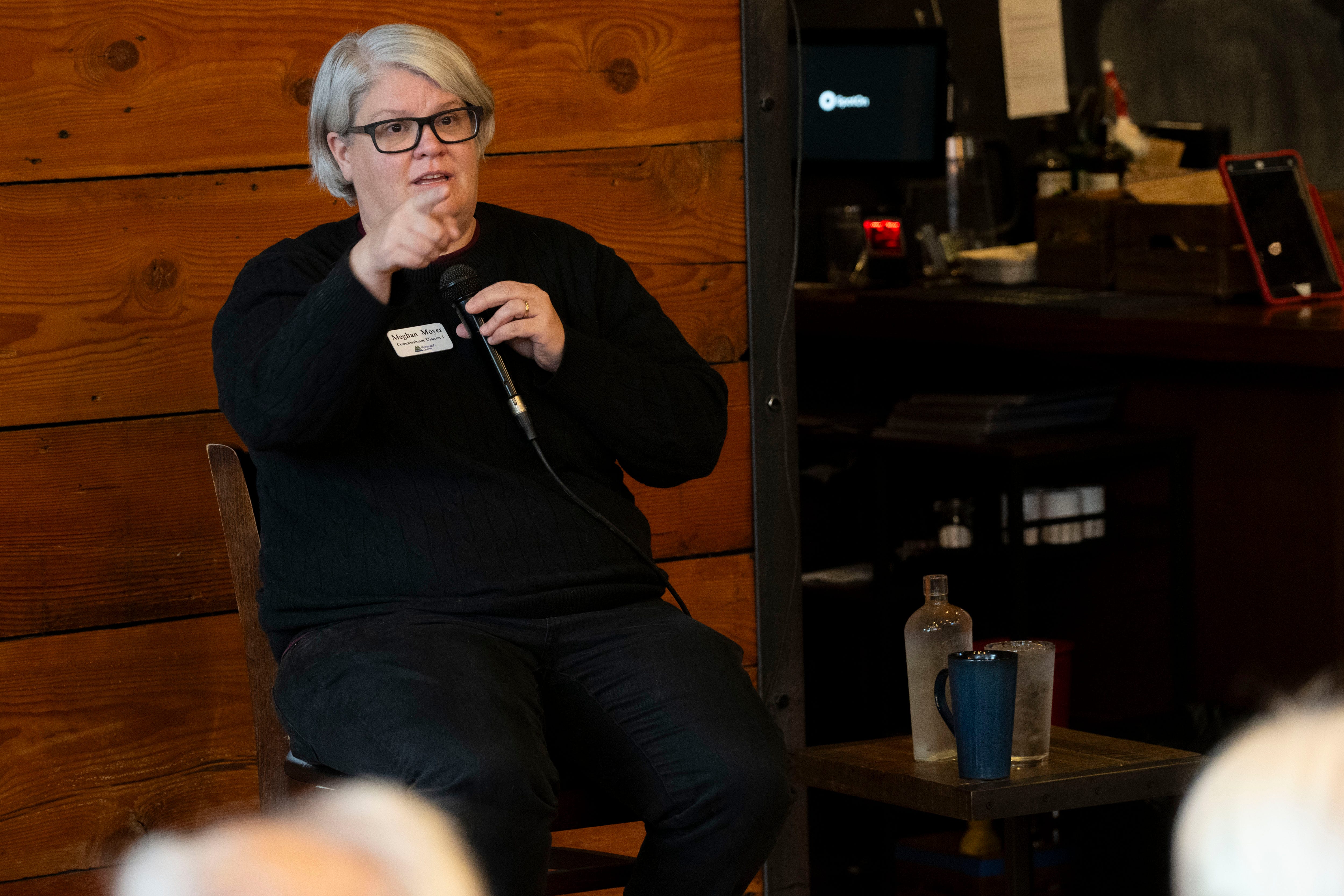
Moyer does not support the ineffectual drug deflection program in place that allows offenders to avoid prosecution by agreeing—but not necessarily following through—to enter deflection. Instead, she recommends diversion, in which the charges are not dismissed until completing a 60-day treatment program.
She blamed the state for not funding behavioral health treatment, leaving the county with no resources to address a yawning vacuum.
Many at the meeting expressed frustrations about the nearby Northrup Street Shelter, speaking of people and businesses leaving the district as a result of increased crime, safety and disorder.
Several audience members recommended using the currently vacant 250-bed Inverness Jail for treatment, which she said is unworkable for several reasons, including lack of staffing.
Unfortunately, the majority of people agree with Commissioner Moyer and oppose forced treatment of any kind when it comes to mental health disorders. She does not convince me, however, to change my opinion that both forced treatment is sometimes necessary for a proper balance of public safety, civility and beauty versus the liberty interests of severely ill people. I wish the county would stop funding the deflection center, move away from legally flawed arguments for a separate set of laws for those with drug and alcohol and mental health difficulties. These policies, including drug courts, dismiss the rights of the public to expect that when public laws are violated, punishment is warranted. That could be the first step in rehabilitation. Commissioner Moyer's apparent policies incentivize continued use of drugs in the promise of getting free housing. If we stop enabling drug use by passing out needles to drug addicts and realize that what works for drug addiction exists in the mind and will of those who are addicted, we will be moving in the right direction. Forced treatment is one avenue that can ensure that they will be drug free for a significant period and free to contemplate what is in their best interest when not under the influence of narcotics or other drugs. Forced treatment for severe mental disorders also gives the public agency. It establishes a process whereby one individual both will be held accountable for breaking public laws and that they will be required to be drug free for a period when confined. Strengthening traditional approaches both in the criminal justice system and in the mental health system will help them work together when necessary.
She's living in a dream world. And she really doesn't care about the feral colonizing our streets, since they are the raw material for her allies in NGO-world. As long as we treat the druggies and psychotics with "compassion" they will stay in Portland. That's what she wants.