


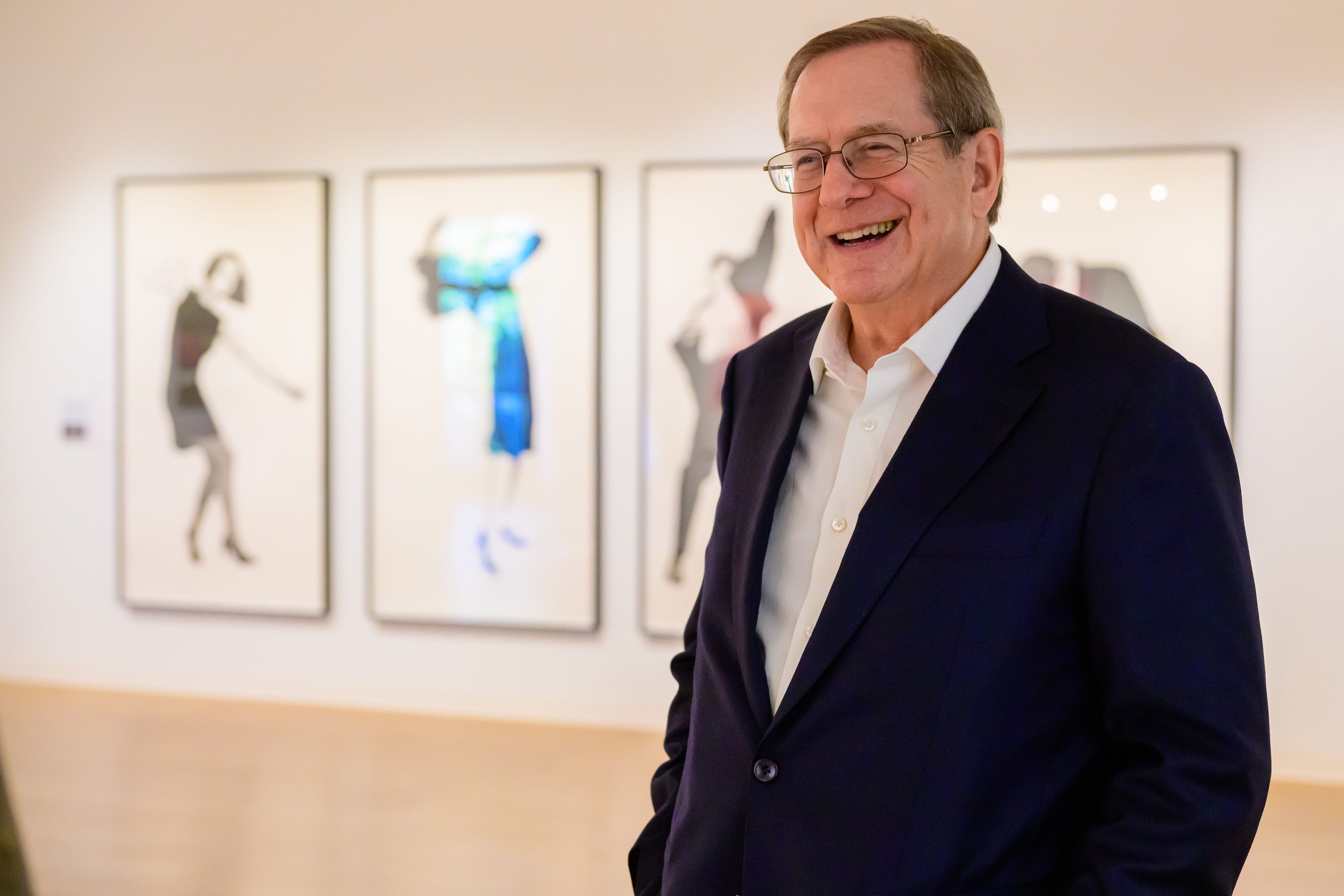
On an industrial street dotted with warehouses, mini-storage stalls and semis, there’s a gallery anyone can visit free of charge. Inside, you’ll find a trove of art works from Jordan D. Schnitzer’s private art collection, a world-class display of both postwar work, as well as contemporary prints, painting, sculpture and mixed-media.
The collection can be found at 3033 NW Yeon Ave. Hours are 3-5 Wednesday, Thursday and Friday, and 12-6 on Saturdays.
Schnitzer is president and CEO of Schnitzer Properties and one of the world’s preeminent collectors of visual art. He could also be the most enthusiastic art history teacher you ever met.
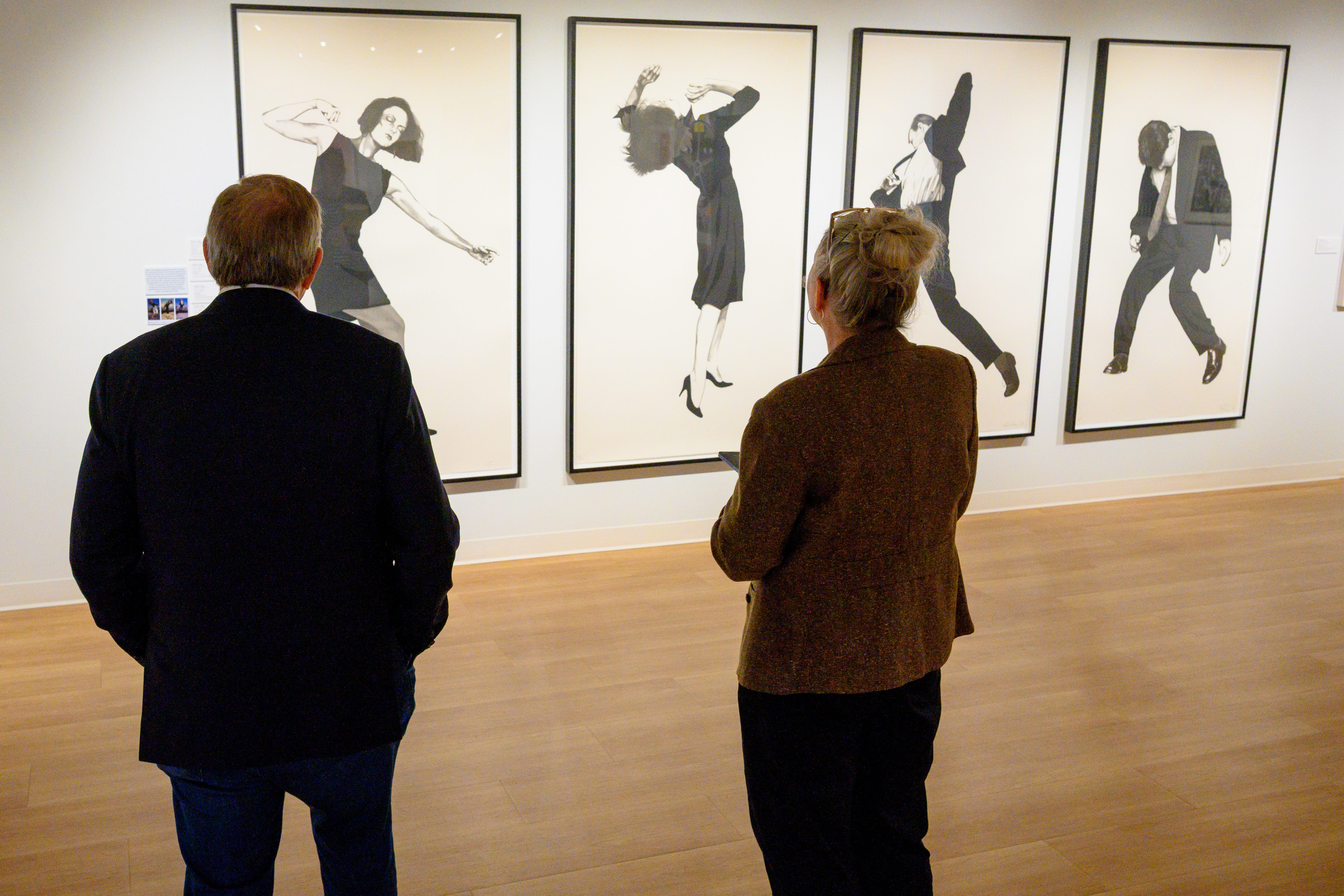
That’s because Schnitzer’s love for it is so contagious. How does he know when it’s something he wants to add to his trove? “It’s in the gut. If you just turn your brain off and let your heart and mind soar, you see art that speaks to you, and if you just let the artist’s voice come to you, you will find things you like,” he says.
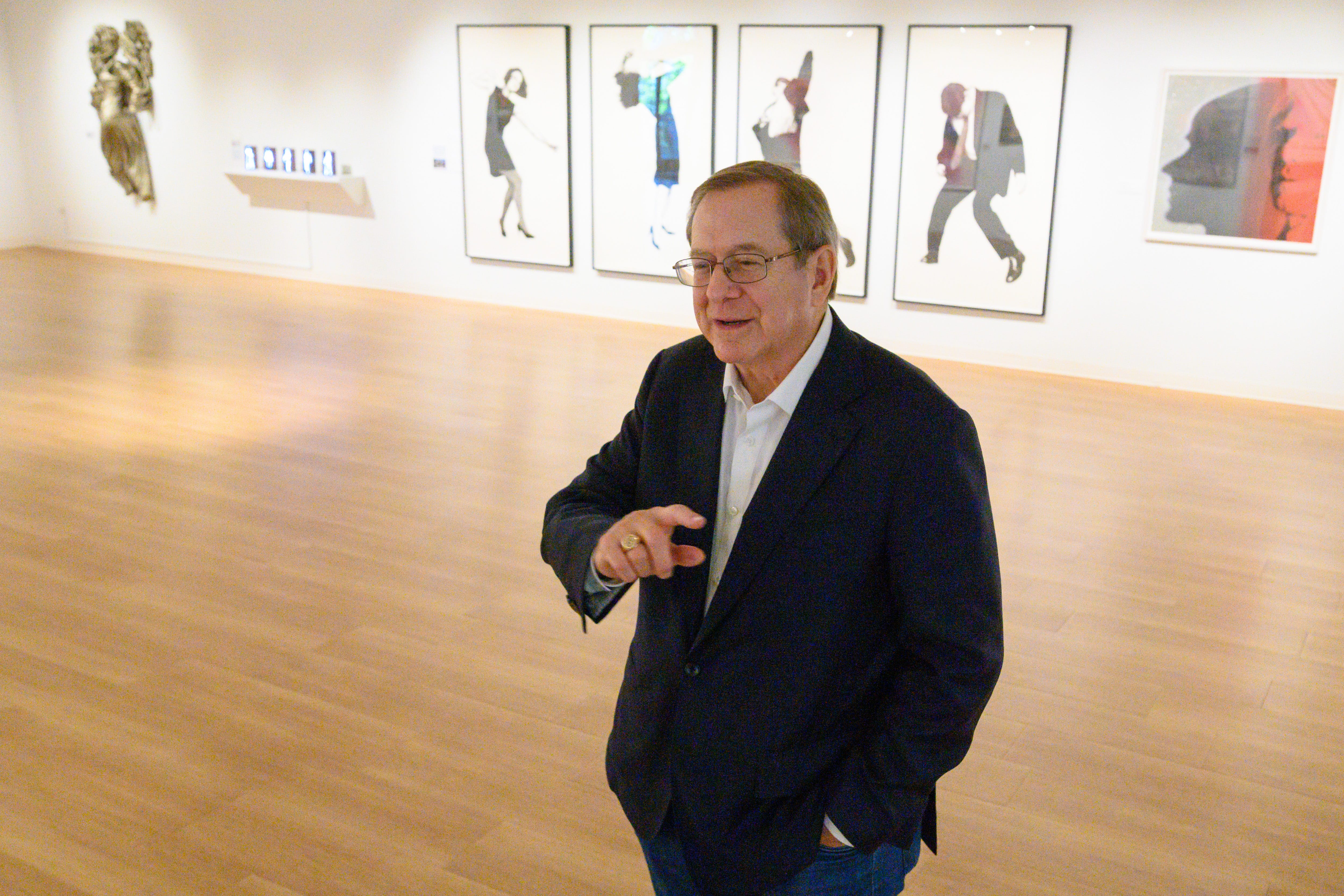
His advice for starting your own collection? Simply start. “I think collecting is just fun. Whether it’s rocks, agates, books, pens, watches or chestnuts. But for me waking up without art around me would be like waking up without the sun. I mean, I can’t imagine a life without art.
“I’ve had so much fun collecting, and now with the public program, we’ve had 180 exhibitions at 130 museums. I love it, but the joy is sharing it.”
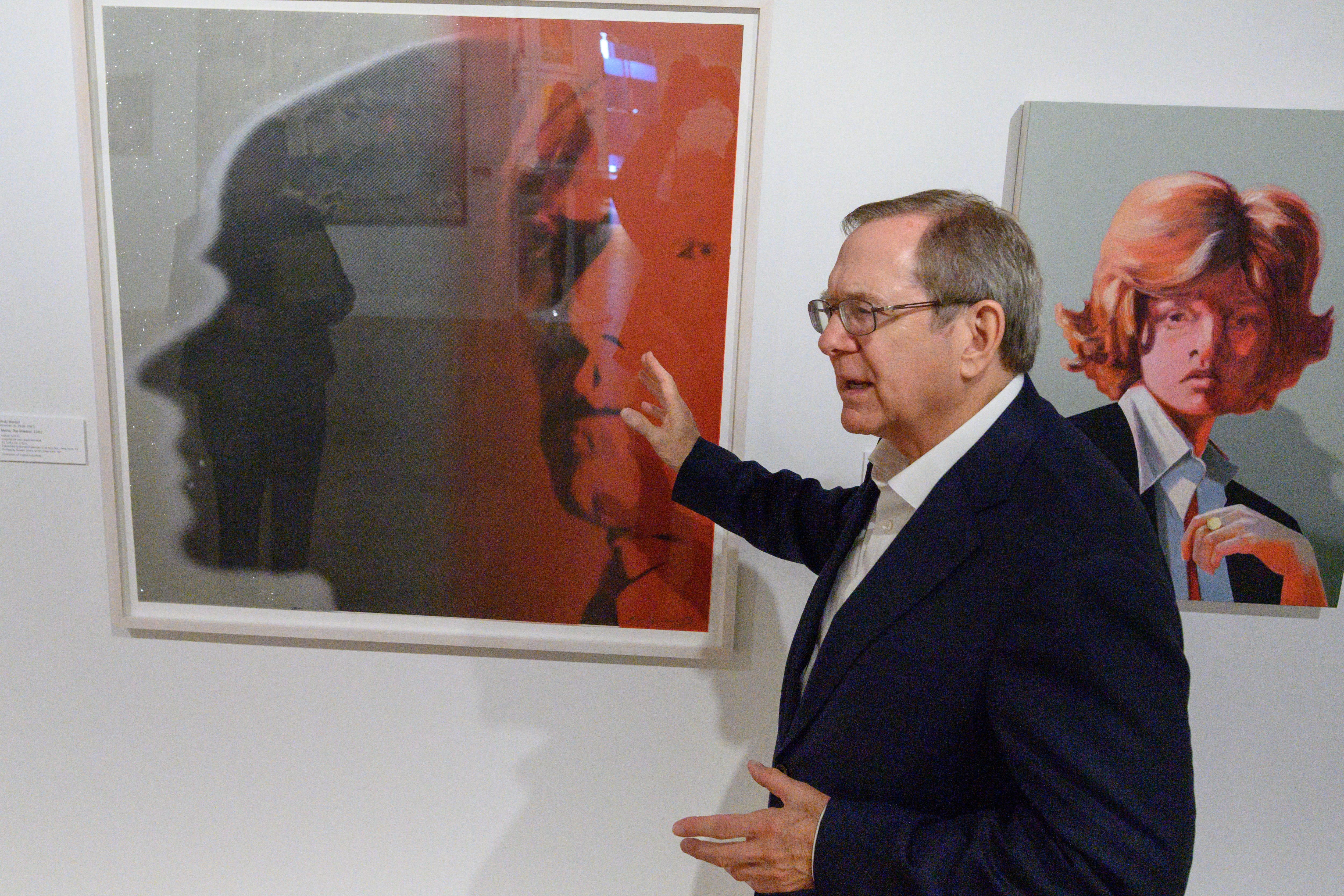
Standing in front of an Andy Warhol’s self-portrait, Schnitzer explains the artist’s power. “It wasn’t in his technical skill, which was modest at best, but in his visionary thematic choices and his brilliant self-promotion. Artists are chroniclers of our time. They’re supposed to focus on issues. And if anyone did it, Andy Warhol did. He was the first one to create an image of himself, which may or may not have been who he really was. Themes of death and dying are pervasive in all his work.”
The Schnitzer Collection has 1,400 works by Andy Warhol.
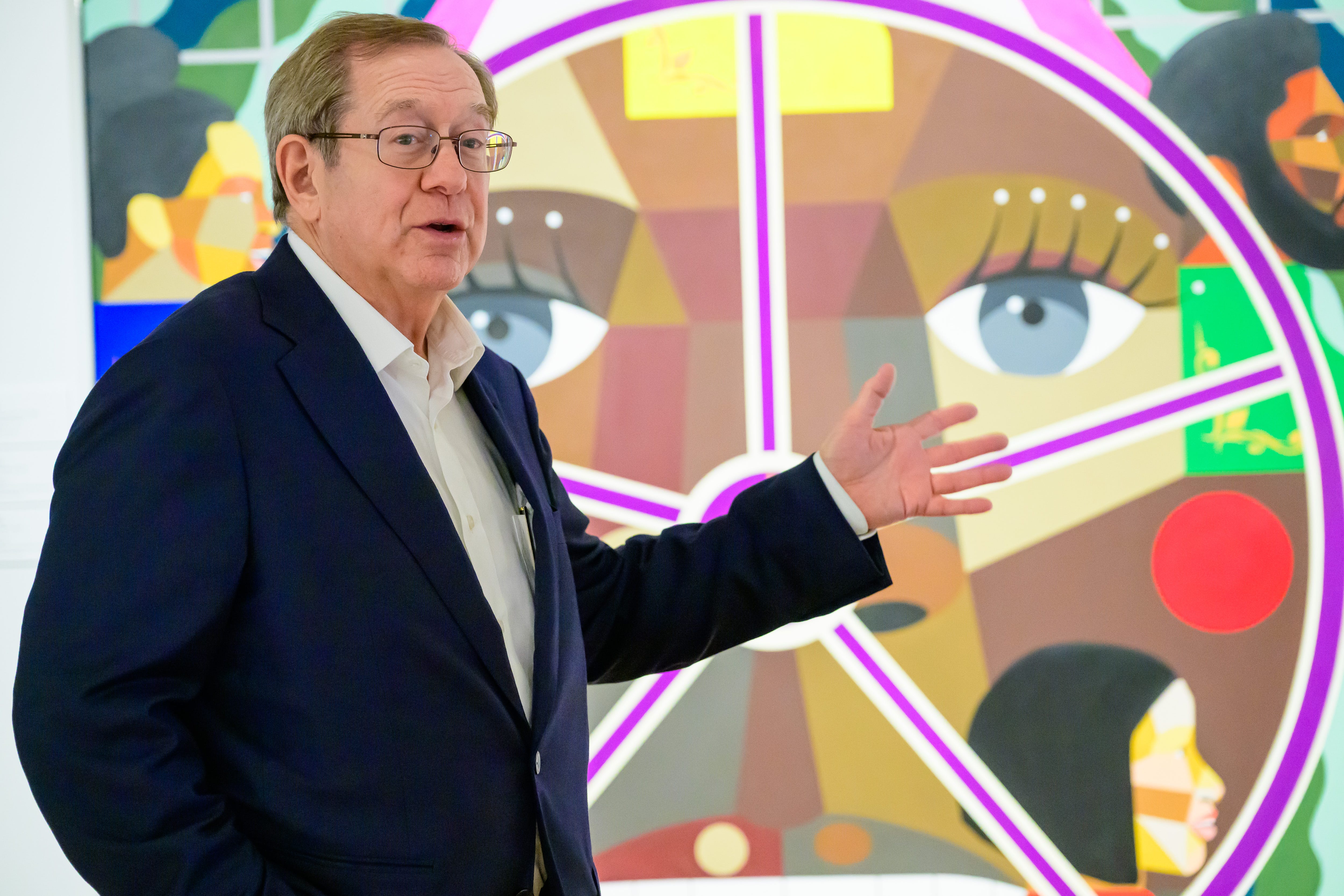
Schnitzer’s recent acquisitions focus on younger artists and artists of color. He’s excited about art that really shakes people up
Some people don’t like contemporary art, he admits.
“At these openings, people will say, ‘Ugh, this abstract art. Why can’t this person just do some nice bowls of fruit and portraits?’ And I’ll say, ‘well, they basically all went to art school, and they did a lots of that. But a couple of things have to happen to be on the wall of whatever museum we’re at. First, they have to be gifted in some way that’s special. They have to have a predisposition, I would suggest, of an aesthetic that’s higher than many, and that aesthetic energy gets translated into making art. And they’ve got to have the passion and the guts of some message. Something they want to do to change the world. They’re willing to rip open their guts and say, ‘Here it is. Look at it, criticize it, fawn over it. Whatever. Lastly, they have to do it a different way than it’s been done before.’
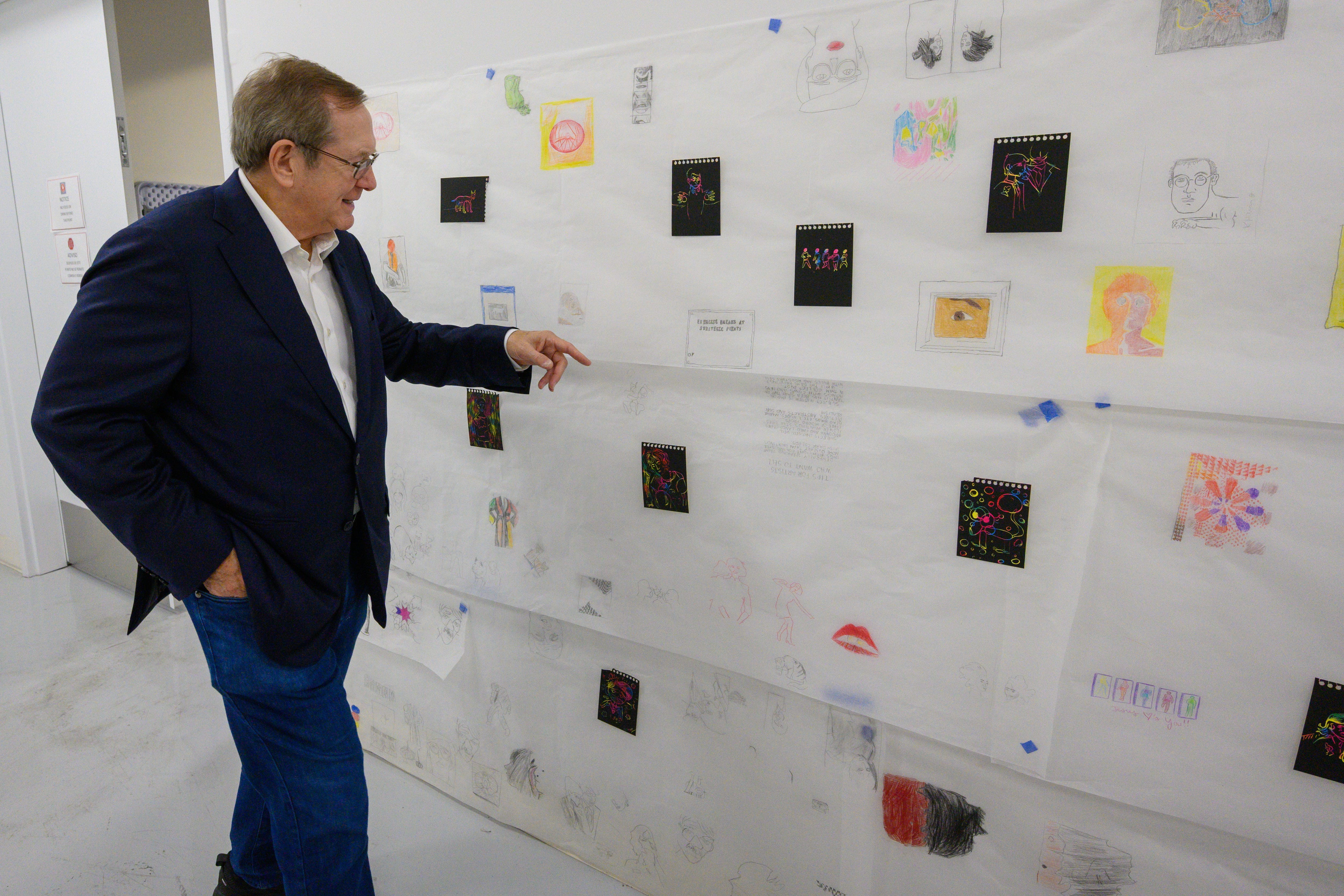
Approximately 1,000 school kids visit the collection any given month. Activities that engage and empower them are offered up, as seen in this photo of artwork they’ve left behind.
Art and nature could be the last bastions where kids’ minds aren’t relentlessly programmed, says Schnitzer. “We want them to feel their self-worth, that their views and thoughts are special and unique.”
When they visit, “they make their own drawings. There were a dozen kids in front of this one. And I said, ‘boy, wait a minute, that’s really good.’ And I took a picture of them in front of it, and sent it to the artist. He wrote back and said, ‘I love you, man.’ That warmed his heart. I mean, just to know that we’re getting his work out.”
“The most important thing you can do for your children is give them passion for the arts,” Schnitzer says. “It may be visual arts, it could be dance, theater, whatever. Because that way when they go through those tough times, they can escape to an art museum, go to a gallery, and it’s often free, to see some art in a public place. Maybe just for that moment they’re taken away from their issue. A little vacation from themselves. They can go back to their issue with a fresh perspective and might be better able to work through that issue.”
He’s trying to fill a gap, he says. “One reason we bring in so many kids, and try to bring parents with kids, is that so many of the school districts in Oregon and across the country, with all the budget cuts. They have had the arts cut back dramatically, or completely.”

“While I have in my collection many of the most important artists of the last 75 years in this country, it doesn’t matter if it’s a small little photograph of the Oregon coast or it’s a little ceramic bowl from Saturday market. It’s not a question of how much something is worth. It’s a question of some beautiful object and how it touches your heart.”
He urges parents and elders to expose kids to art early and often.
“I’ve said to grandparents, when you are seeing your grandkids on a Saturday morning and you’re going to take them to the zoo, well, stop by a gallery first—just 15 minutes. And for their birthday, Christmas, Hanukkah or whatever it is, instead of a Star Wars toy or a Barbie doll, give them a piece of art. And again, it doesn’t matter if it’s five bucks, 50 bucks. I guarantee, 30 years from now, they won’t know where that toy is.”
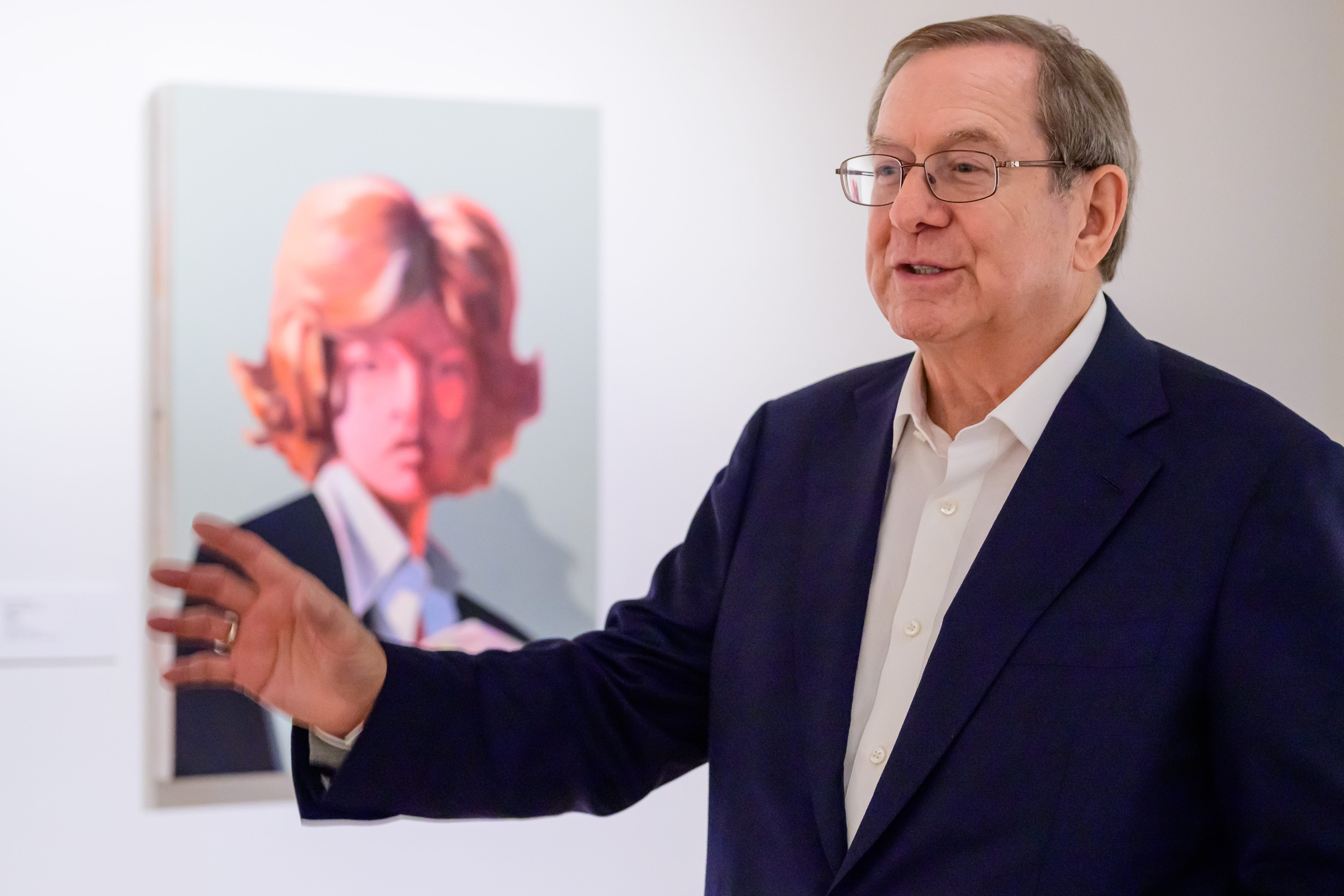
“David Hockney: Works from the Collections of Jordan D. Schnitzer and His Family foundation,” is on exhibit from Feb. 14-July 26 at the Portland Art Museum.
Jordan Schnitzer has for years been sustaining Portland's arts institutions, expanding public access to culture, and investing deeply in the civic life of the city. Yet when Portland DSA placed him on its “enemies” list last month, DSA-aligned city councilors like District 4's Mitch Green didn't just stay silent; they tacitly endorsed the smear.
They chose factional loyalty over truth, gratitude, and basic decency—proving that in today’s City Hall, ideological enforcement matters more than the public good.
Thank you, Jordan! The arts are also a vital part of Oregon’s economy and receive little or no public investment.