


1947 was a pivotal year for America, for the world and for film noir. It was the first year of the Cold War, the Red Scare and communist blacklisting. The triumphalism of the Allies’ WWII victory was waning and giving way to a sense of disillusionment and earth-shattering fear.
It was the Atomic Age, and Americans understood they now held the awesome and terrifying power to destroy the entire world, while also facing the possibility they could themselves be wiped out by a nuclear holocaust. The Soviets were developing their own bomb. Most of us have grown up with “the bomb” but imagine what the dawn of the Atomic Age must have been like — and you can begin to understand the fatalism of the era, which found its way into the cinema of the time.
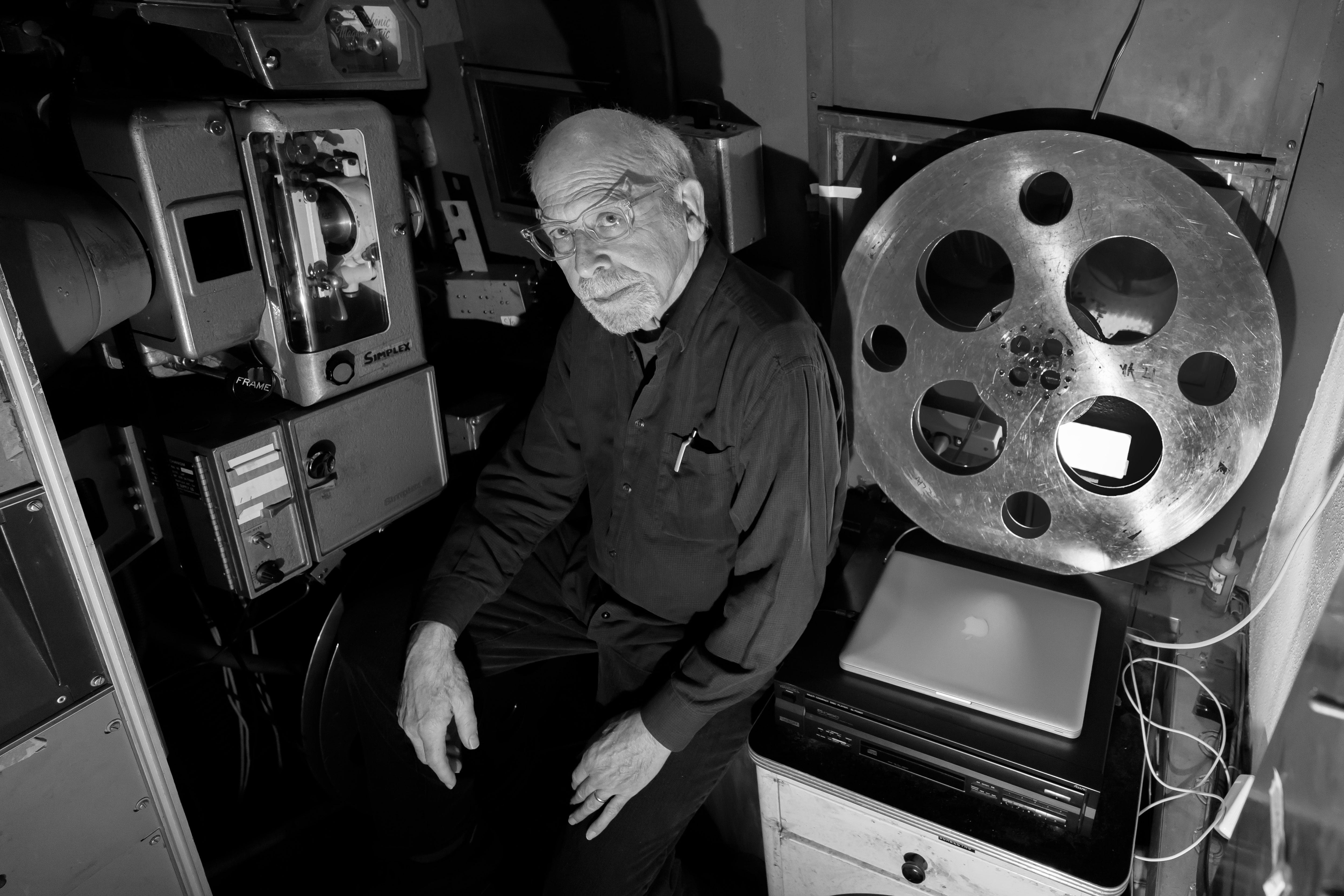
Film critics consider 1947 the peak year for classic American film noir. (Film noir is French for black film or dark film.) And these films, with their dark shadows and hard-boiled characters, fill us with a damning sense of dread. But they light up the eyes and tingle the spine of Cinema 21 Saturday morning classics film programmer Elliot Lavine – a nationally recognized expert on film noir. As I write this, Lavine is in my head right now saying, “oh goody, goody, goody.” (See my NW Examiner profile of Lavine: This man gets the pictures. )
Lavine says 1947 was a year of peak “dislocation and disillusionment … so film noir was the perfect cinematic repository for these layers of repressed emotions and this psychological emptiness.” Sounds like July is going to be one merry month! Lavine’s picks are never boring. Think of July at Cinema 21 as your graduate course in film noir.
This is our monthly look at coming attractions for Cinema 21’s Saturday Morning Classics. Renowned film programmer Elliot Lavine selects a theme every month, and we let you know what’s coming to the big screen at our iconic neighborhood theater at 616 NW 21st Ave.
To purchase advance tickets for the Saturday morning series, visit Cinema 21. All showings in the series are at 11 a.m.
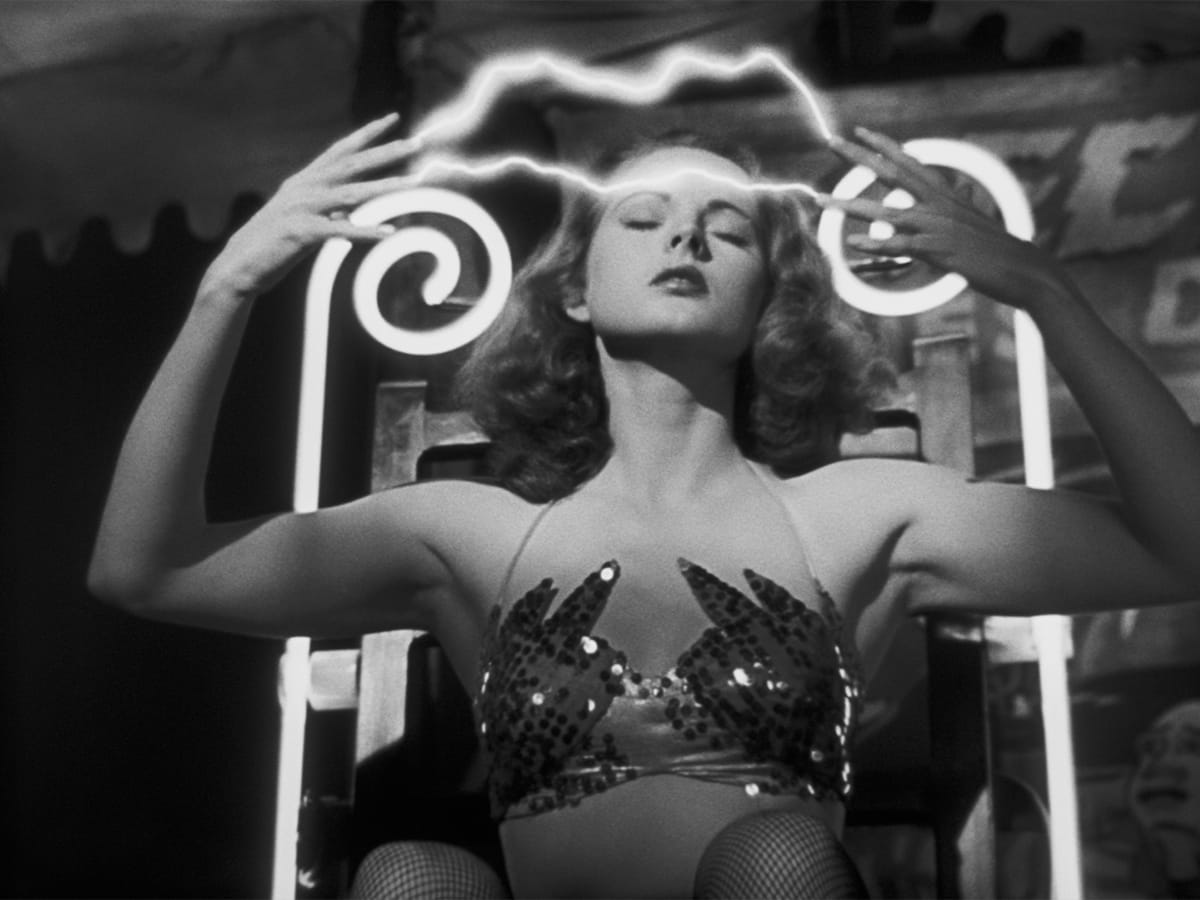
NIGHTMARE ALLEY (1947) at Cinema 21 on July 4. Director: Edmund Goulding
Lavine says “Nightmare Alley” is the “most perversely cynical film in the entire film noir canon.” (And could there possibly be a more offbeat way to start your own July 4 celebration of America’s semiquincentennial?)
“Nightmare Alley” has about all the noir one can take: a carny sideshow, seedy characters and carny queens, fake mind readers, a grotesque geek – who eats live chickens. You get the idea. I like the way Lavine puts it, describing the film as “the carnival sideshow classic so steeped in the acrid stench of demented fatalism that it practically oozes off the screen.” Say no more.
Actor Tyrone Power, already admired for playing swashbuckling romantic leads, plays against type here. In “Nightmare Alley,” he is the shady carnival barker driven by greed. His rise and fall as a fake mentalist has been called a road to ruin melodrama. Power’s character falls into his own trap. Lavine calls this the definition of film noir.
In one way, “Nightmare Alley” is unique for noir. No gangsters. No gun fights. This is not a shoot-em-up. The crimes in “Nightmare Alley” are committed by hustlers, hucksters and charlatans — by both grubby carnies and respectable professionals.
Joan Blondell plays a fading carnival queen.
One other note: The film’s producers built a working carnival set on 10 acres of the 20th century back lot in Los Angeles and hired more than 100 sideshow attractions and carnies to make the film noir seem real. Just to ensure that proper feel of leaching ooze.
(Do not confuse this 1947 film with the 2021 remake directed by Guillermo Del Toro starring Bradley Cooper.)
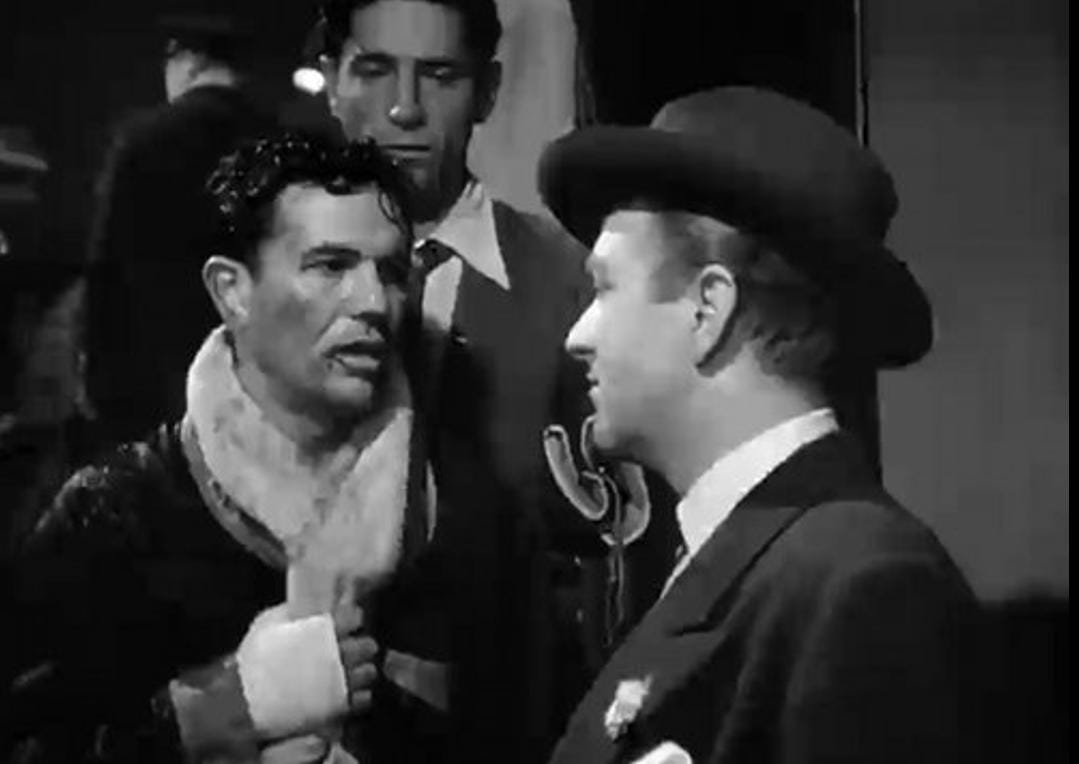
BODY AND SOUL (1947) at Cinema 21 on July 11. Director: Robert Rossen
Moving now from the carny circuit to the boxing ring. And film noir again finds its story with this cynical critique of the twin evils of corruption and greed. It’s the little guy as a victim of ruthless capitalism. The boxer slugs his way up the ladder of success but comes under the sway of an unethical promotor and a nefarious world. What is the prizefighter fighting for?
Actor John Garfield is the “champ” who lands blows with his fists and wrestles with his soul. This is film noir as social commentary. Lavine calls “Body and Soul” one of the most “emotionally shattering noir films.”
And it’s boxing melodrama with off-screen drama too. John Garfield was already a Hollywood star when he made this film. In the late ‘40s, the U.S. government was investigating him for his alleged past involvement in pro-communist groups. Later, investigators would demand he name names. He did not. As a result, he and director Rossen and several other actors in this film were eventually blacklisted.
Besides being great film noir, “Body and Soul” is considered one of the best-ever boxing films. The cinematography is by James Wong Howe, shooting the fight sequences in the ring with a hand-held camera — while on roller skates.
The film also stars Lilli Palmer, Anne Revere, Hazel Brooks and William Conrad.
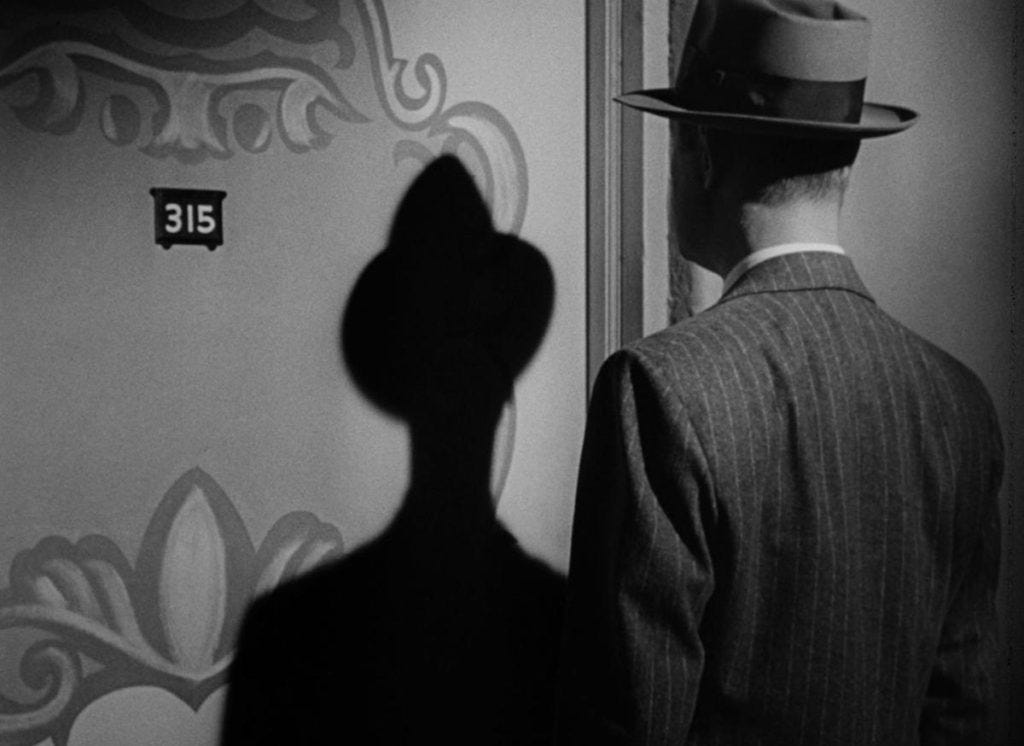
RIDE THE PINK HORSE (1947) at Cinema 21 on July 18. Director: Robert Montgomery
This is the noir film of dark alleys, knockouts and knife fights, thugs and mobsters, shakedowns, blackmail and revenge plots, hidden keys in bus depots and evening meet-ups at the Tip Top Café. It’s a pitch-perfect noir thriller: a story of disillusionment and danger and men who talk and play tough.
Film noir often takes place in big gritty cities, where it’s easier for slippery characters to come and go from hidden corners. But “Ride the Pink Horse” is not an urban film. It’s set in a rural New Mexico border town.
Robert Montgomery directs and stars as the World War II veteran bent on revenge after his war buddy is killed. As Gagin, he’s a mystery. Gagin is his only name and locals refer to him as “the man with no place.”
Gagin tracks down and attempts to blackmail a local mobster, but he also has to outwit an FBI agent who is also on the mob boss’s trail.
Wanda Hendrix plays one of the beautiful — though not fatally beautiful — women in the cafes and on the carousels in “Ride the Pink Horse.” (The pink horse is a ride on a carousel.)
And a first for an American film: actor Thomas Gomez who played Poncho, a local man who befriends Montgomery’s character, was the first Hispanic actor ever nominated for an Academy Award.
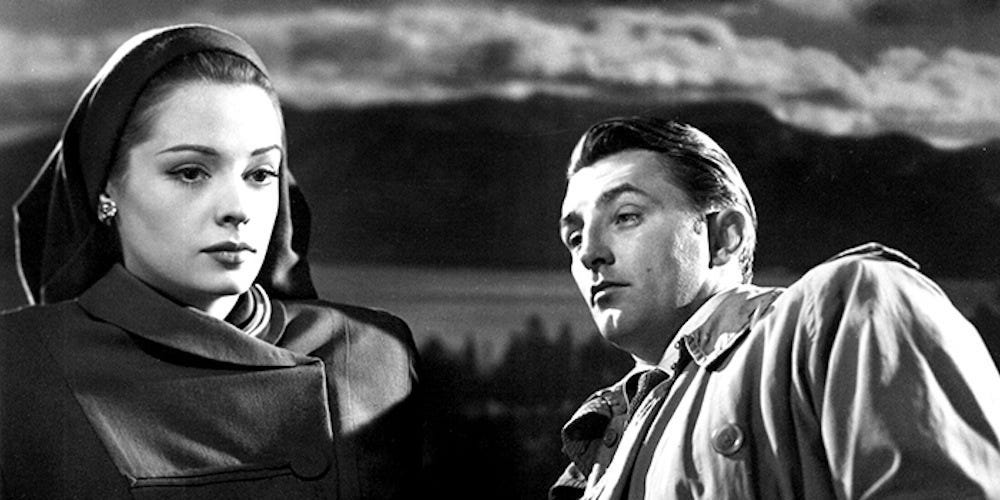
OUT OF THE PAST at Cinema 21 on July 25. Director: Jacques Tourneau
You can decide for yourself whether Robert Mongomery or Robert Mitchum is the greater film noir leading man.
Mitchum in “Out of the Past” is another man with a suspect past. We’re not always sure what he is about. In fact, there are a number of subplots that throw us all over the place. Deceit crops up in almost every scene — and when there isn’t, you’re still questioning what you just witnessed.
Much of the thanks for the intrigue goes to the movie’s femme fatale, played by Jane Greer. She is deadly charming. She is double-crossing. She is the girlfriend of a mob kingpin played by none other than Kirk Douglas, who is all mean and smooth in his crisp fancy suits, leaving his yes-men to do his dirty work.
Oh, and losers are all “chumps.”
The publicity for “Out of the Past” called the film a story about love, money, murder and betrayal. Everyone’s pretending to be something or somebody. And as Lavine says, like great noir, this film clicks with note-perfect acting and an airtight screenplay. Director Jacques Tourneau, he says, creates “magical film noir realism.”
Guilty pleasure from this film: Watching Mitchum light up a cigarette. Guilty also because Mitchum died from lung cancer and emphysema five decades later. Another treat: there’s a famous scene where Mitchum and Douglas smoke at each other. You just have to see it.
This was an entertaining read particularly since I was born in '47. Not a film noir viewer but I must say you peaked my interest in seeing one or two. Thank you