


The NW Examiner’s “Holders of Hope” series is highlighting nonprofit staff members to recognize the contributions of this crucial workforce.
James Smith and his partner knew Portland was experiencing rising homelessness when they moved from Monterey, Calif., to the Pearl District three years ago. But Smith, then in his late 40s, had never seen anything like what he encountered in his new neighborhood.
From his balcony each evening, he could see a young man sprawled in a sleeping bag on the corner. Walking to work as a preschool teacher, he began to always look for the elderly woman in the oversized coat who slept in the doorway of a shuttered nightclub. She reminded him of his aunt. It broke his heart.
“I struggled for the first few months that I lived here,” Smith said. “I felt powerless. What do you do when you are surrounded by a lot of pain?”
Smith began researching organizations that helped the homeless. He signed on as a volunteer with Blanchet House, 10 blocks away, helping serve breakfast in the nonprofit’s café before work. Soon, a café coordinator job came open. He gave notice at the preschool and joined Blanchet.
Now Smith is among the thousands of people working on the front lines as the city and county struggle to stem a worsening humanitarian crisis. Homelessness accelerated in Multnomah County during the pandemic and, since 2023, has ballooned to well over 12,000.
A dozen people are already gathered by 5:30 a.m. on a damp, frigid Thursday outside Blanchet House at Northwest Third and Glisan, lit like a beacon in the inky darkness.
Some are still asleep on the sidewalk; their bodies and belongings completely covered in tarps. An old man in a sleeping bag lies, stocking capped, white-whiskered cheek pressed to the damp sidewalk, as if Santa himself has fallen.
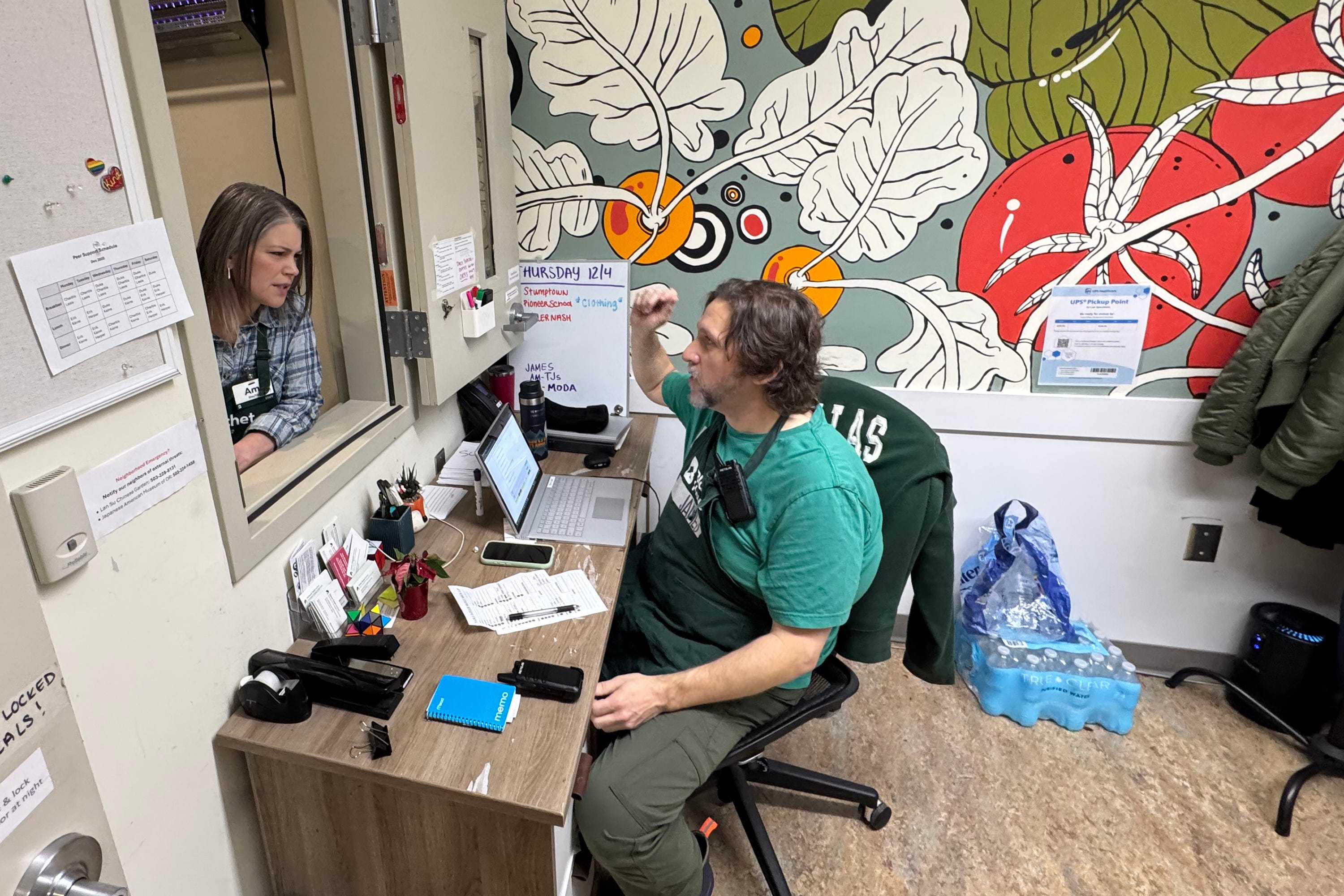
Inside, Smith is in the café office reviewing the roster. Volunteers are starting to filter in from Stumptown Coffee, which provides more than half of the café’s coffee and a reliable posse of helpers.
“William, I’ll have you serve plates today,” Smith tells a tall guy as he trades his coat for a green Blanchet House apron.
Ami Prevec, the café lead, leans in the service window between Smith’s office and the foyer.
“It’s supposed to rain,” Prevec notes, suggesting that they heap ponchos at the back of the café for guests to help themselves.
Prevec, Smith and a tight leadership team run a well-organized operation at the nonprofit, founded in 1952 by University of Portland alumni as a “House of Hospitality” in the model developed by the Catholic Worker Movement. The 55-minute, six-day-a-week, cooked-from-scratch breakfast service utilizes a dozen volunteers and two dozen kitchen and café workers, including many of the 50 men who live in the residential program above the café.
All their initial tasks are geared toward 6:30 a.m., when the doors open.
Among Smith’s responsibilities is checking the milk supply in the walk-in refrigerator. Everything is done through the lens of scarcity. The team makes provisions stretch while simultaneously shielding guests from the anxiety of running out. Rather than letting guests take multiple glasses of milk at once, for example, they serve one glass at a time and call for seconds if more is available.
“People like to have their cup of milk in the morning,” Smith said.
Prevec addresses the volunteers seated at tables in the spacious yet inviting café, wrapping silverware in paper napkins. She reviews the procedures, including the importance of understanding the stress their meal guests are under and adhering to the café’s de-escalation and safety protocols.
Then she steps to the host stand. A coworker unlocks the front door.
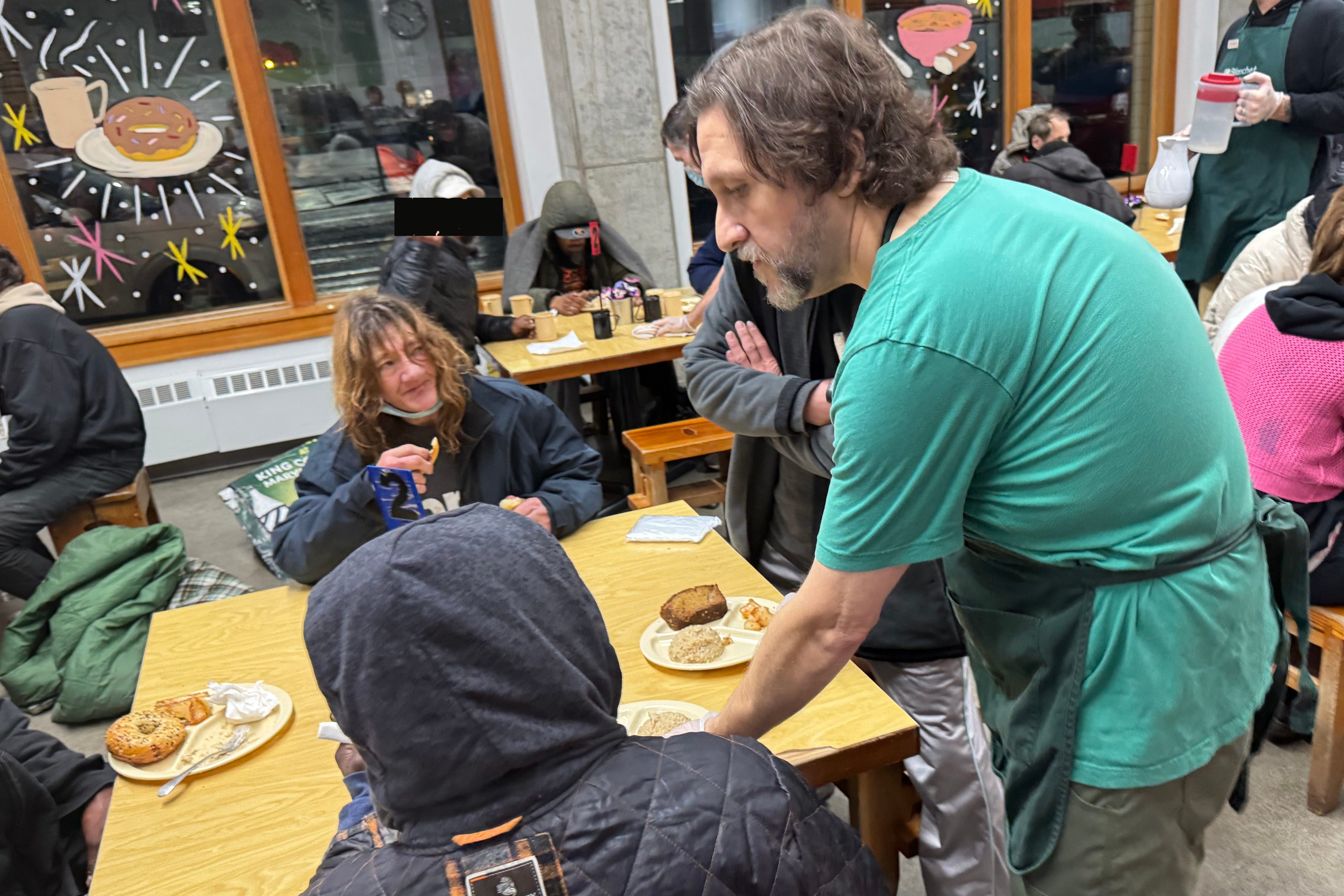
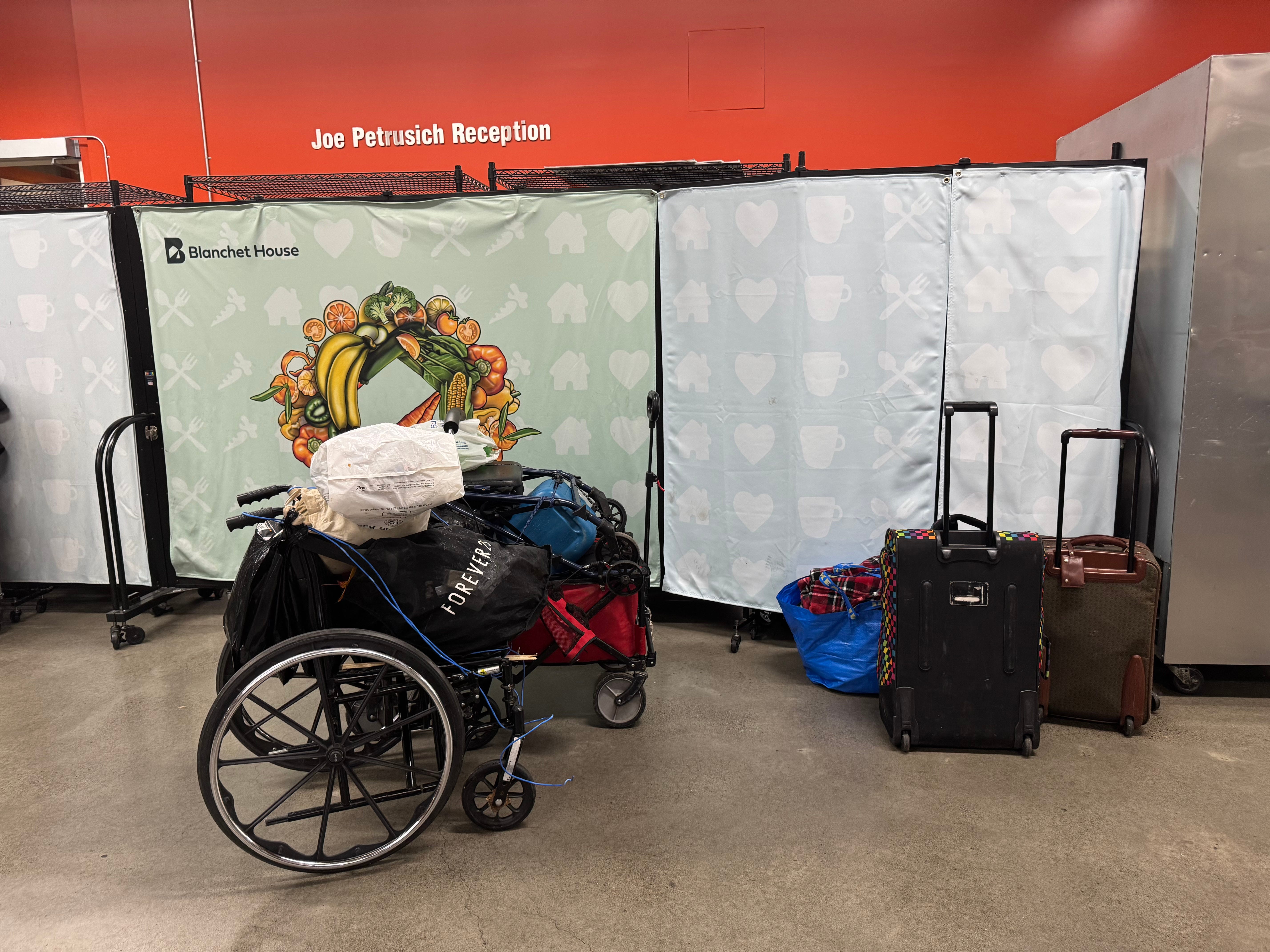
The guests file in dragging suitcases, shouldering backpacks, sleeping bags draped like shawls. Smith grabs two plates heaped with hearty oatmeal, fresh fruit and pastries. As Prevec assigns each guest to a table, Smith and the volunteers follow the guests, giving each a plate as they sit down.
“Enjoy your meal,” Smith says.
A spikey-blond-haired, 40-something woman approaches him. A nasty bruise covers a bald spot on the side of her head. Dressed in a dark sweatshirt and pants, she is barefoot, her legs and feet swollen.
“I need shoes, socks, a coat,” she tells Smith quietly. “Size 7.”
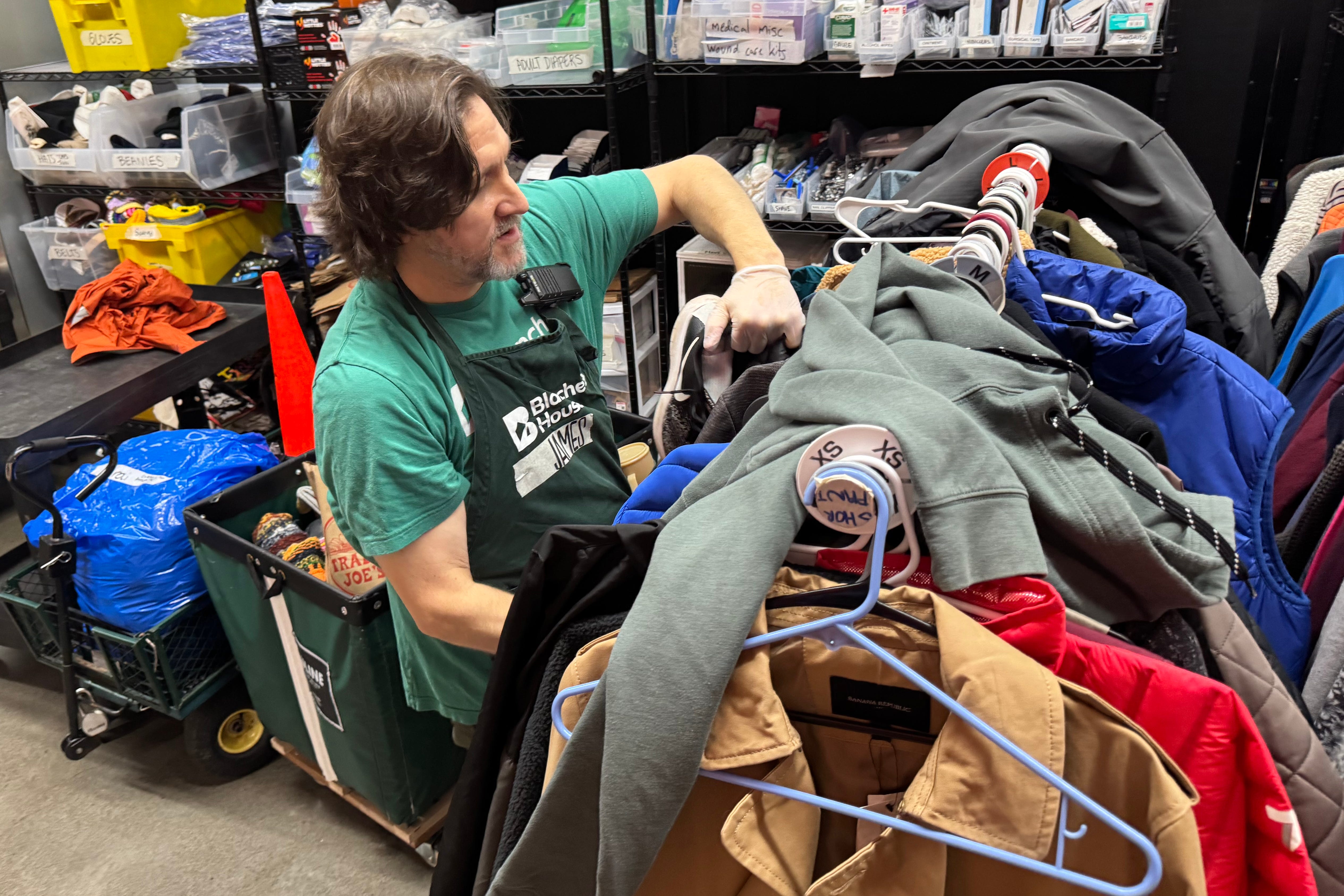
Smith nods and makes his way to a cordoned off area where they keep racks of coats, shelves of shoes and bins of socks. He tries to pick out the best fit. He returns and hands her his selections.
“Thank you,” she says.
Soon after he started at Blanchet House, Smith saw familiar faces, like the young guy who slept on the corner in view of Smith’s balcony. Turns out he is a veteran. The team at Blanchet House was able to connect him with an apartment. He still comes in for meals.
“It was a real pleasure to not see him” on the corner anymore, Smith said.
Smith also regularly sees the older woman who slept in the nightclub doorway. She keeps to herself. But now he knows her name and always checks in on her when she comes to eat.
“We learned that she likes piano music, so we always seat her near the piano so she can enjoy it when we have someone play,” Smith said. “It makes my heart happy to know that this is something that makes her happy.”
The woman accepted housing that the Blanchet House found for her but left because she didn’t feel safe. Now, on cold nights, she sleeps at the shelter on Northwest Northrup that the city of Portland recently opened.
Smith said more services are coming online, providing additional places for Blanchet staff members to refer folks, like The Oasis, an outdoor, covered day center in Old Town with showers, bathrooms and phone charging stations.
The hardest part of the morning comes as 7:25 a.m. approaches, the end of the breakfast service.
Some people have occupied their seats the whole time, hands wrapped around a second cup of coffee, talking with others or just absorbing the warmth. Others have shuffled out the exit and gotten back in line for another helping.
Prevec steps to the host stand again and announces that the breakfast service is ending. Smith joins the other staff members in creating a supportive transition back outside.
He fetches napkins for a man sporting a fedora complete with a feather, so he can wrap and take his pastry with him. Smith stands at the exit, holding the door, directing people to The Oasis and reminding folks what time lunch is served back at Blanchet.
“Doing this helps me feel like I am helping my neighbors, and it also helps me not feel quite as powerless as I did when I first moved here,” Smith said. “We’re finding success sometimes in small ways and sometimes in big ways.”
Learn more about Blanchet House at

Thank you, Dick, and also for your great Commentary pieces!
Homelessness is a symptom. Until we tax the rich and do something about the extreme income inequality in this country, we will have homelessness.