


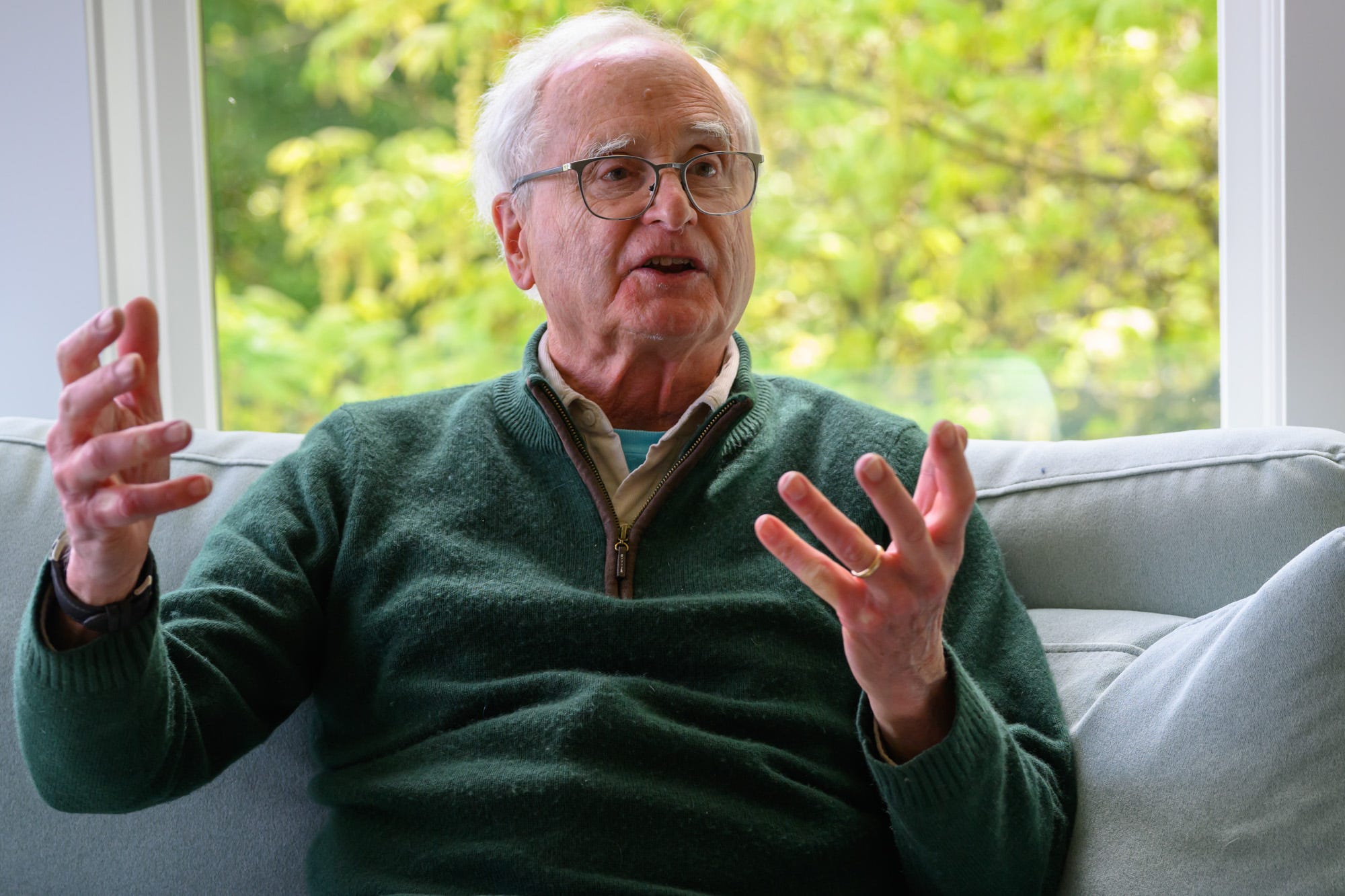
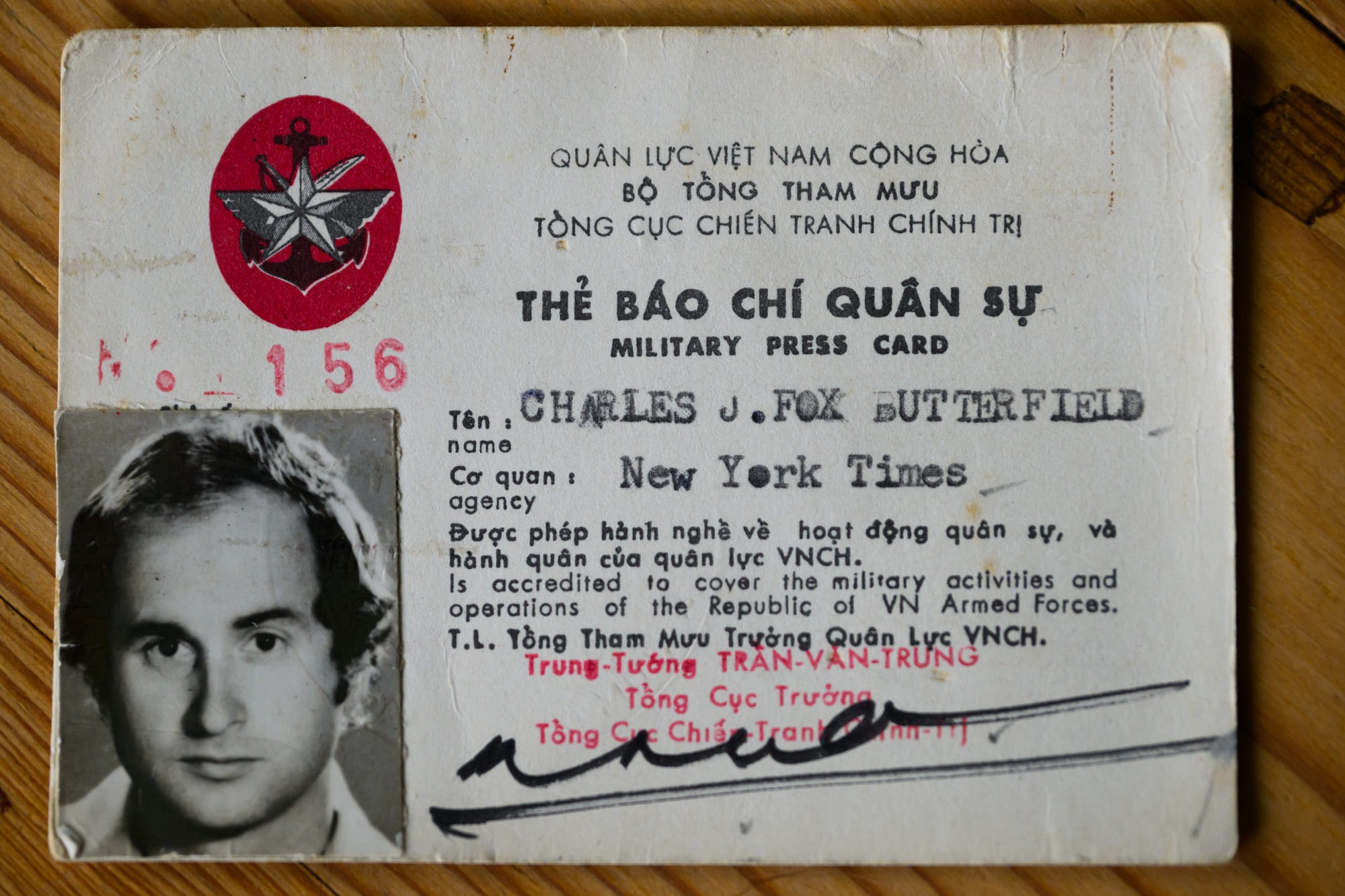
He retired to Portland 12 years ago, in part to work on a book about an Oregon crime family. But Fox Butterfield is best known for his reporting on the Pentagon Papers, the U.S. government’s secret history of the Vietnam War. Butterfield and his team at the New York Times won the 1971 Pulitzer Prize for that investigative work.
We talked with Butterfield recently about his nearly 40-year career at the Times, including the “Eyes Only President” documents he reviewed to help write the Pentagon Papers reports; his reflections on the moment he stood at the Vietnamese roadside when the famed “Napalm Girl” photo was taken; and his later experiences in the U.S. covering a much-younger Donald Trump as he prepared his first dive into national politics.
The Pentagon Papers
The secret Pentagon documents that told the previously untold story of U.S. involvement in Vietnam — and how our leaders lied to the American public about the war — were leaked to the New York Times.
Recalls Butterfield, “From the very beginning, I was told this was top secret and I couldn’t tell anybody. I couldn’t tell my parents. I couldn’t tell my American girlfriend. I just couldn’t tell anybody what I was doing.”
Times reporters including Butterfield spent months poring over 7,000 pages of documents before publishing a word. It was a clandestine operation, with reporters and editors secretly holed up in a New York City hotel reading, analyzing and condensing the trove of government papers.
“We worked in a suite of rooms at the New York Hilton, and the suite of rooms kept getting bigger and bigger and bigger. First there was one room, two rooms, three rooms and about five rooms eventually, because the documents were so enormous. I mean, they would have filled this place up.”
Butterfield says it was clear from the start that the Pentagon papers’ content was explosive. Not only had U.S. administrations going back to President Harry Truman lied to the public about U.S. involvement in Vietnam, they also knew the war was likely unwinnable. More than 58,000 American soldiers — and perhaps 3 million Vietnamese — died in the conflict, which began in the mid-1950’s and did not end until April 1975. Since the work on the Pentagon Papers was such a monumental and time-consuming endeavor, Butterfield worried that the Nixon administration would eventually discover that the Times possessed the secret government documents and would raid their hotel rooms and seize the papers.
The documents, after all, were U.S. government property. Not only was “Top Secret” stamped on the pages, so were the words “Eyes Only President.”
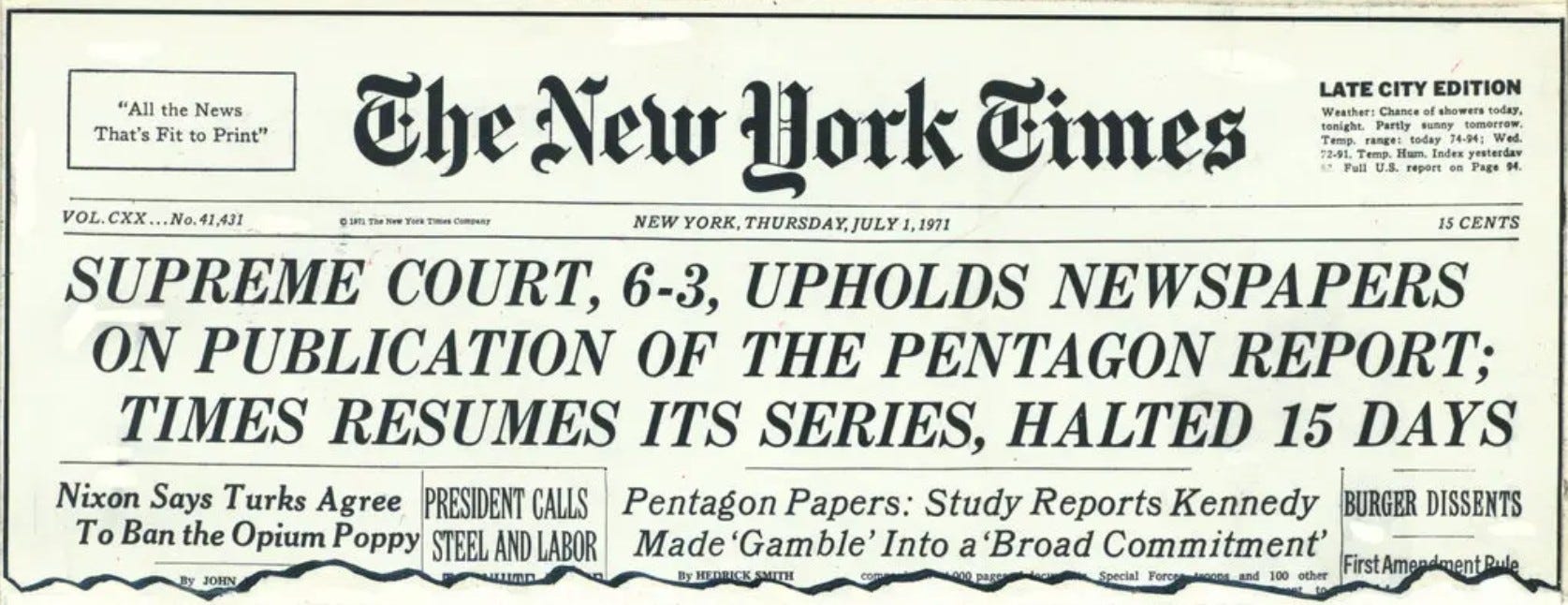
And there were disagreements among Times lawyers and editors on whether the paper could even legally publish the articles. The Times did publish its first installment on June 13, 1971. Within days, the Nixon administration sued to stop further publication, citing national security. The U.S. Supreme Court ruled for the Times, and the case is still considered a landmark legal battle establishing freedom of the press under the First Amendment to the U.S. Constitution.
Vietnam War correspondent
After the Pentagon Papers, the Times sent Butterfield to cover the war in Vietnam, where he was wounded twice while reporting from battle zones.
On one of those assignments, he was witness to one of the most searing visual moments of the war. Butterfield recalls that June 8, 1972, started like any other day covering the war. Butterfield was in the village of Trang Bang that day when the American-backed South Vietnamese air force mistakenly dropped napalm on its own people, also killing some of its own soldiers. What the world remembers from that day — and what Butterfield saw with his own eyes — was children running in terror and pain from the napalm strike, particularly one girl whose clothes the napalm had scorched off.
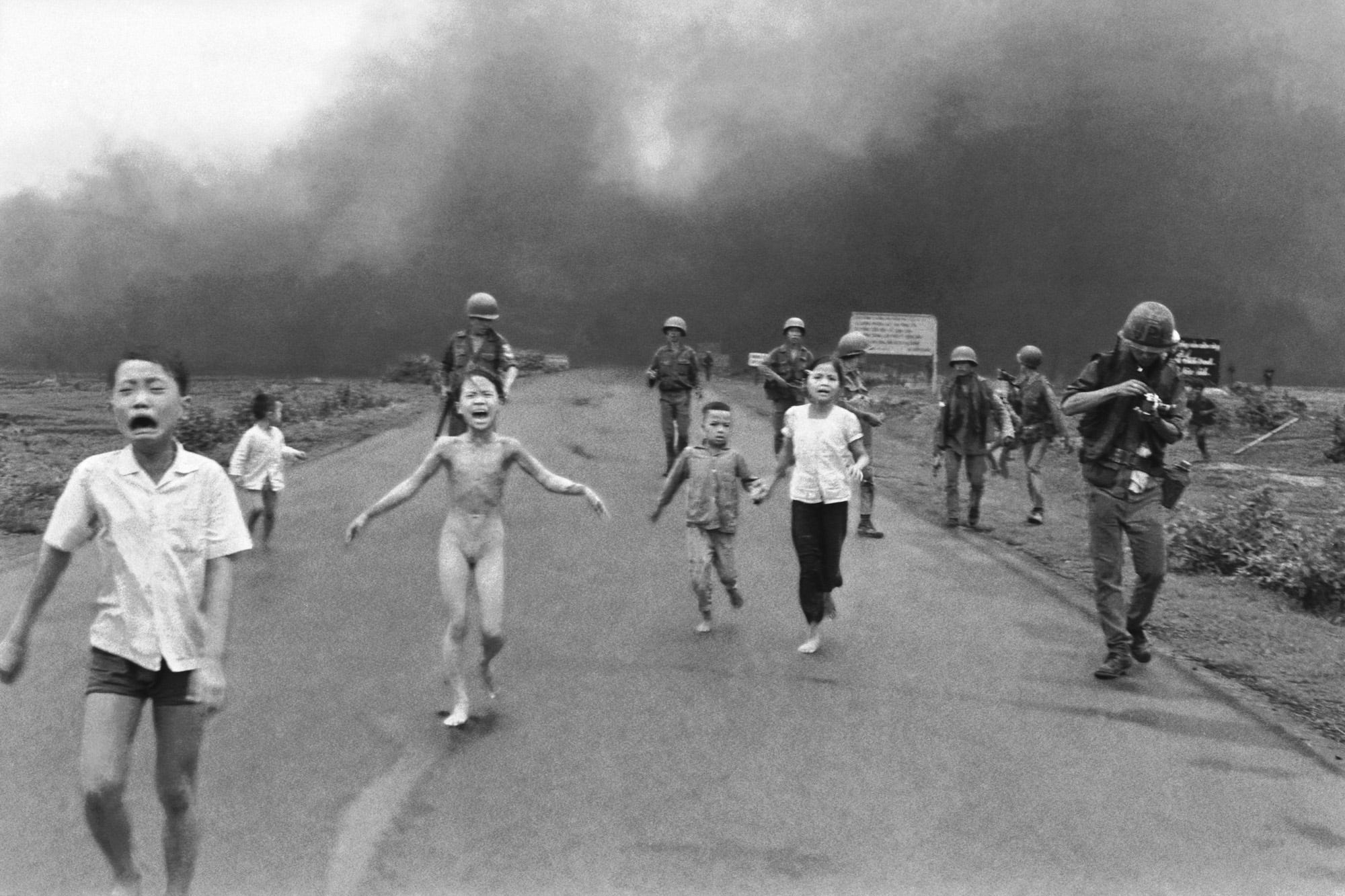
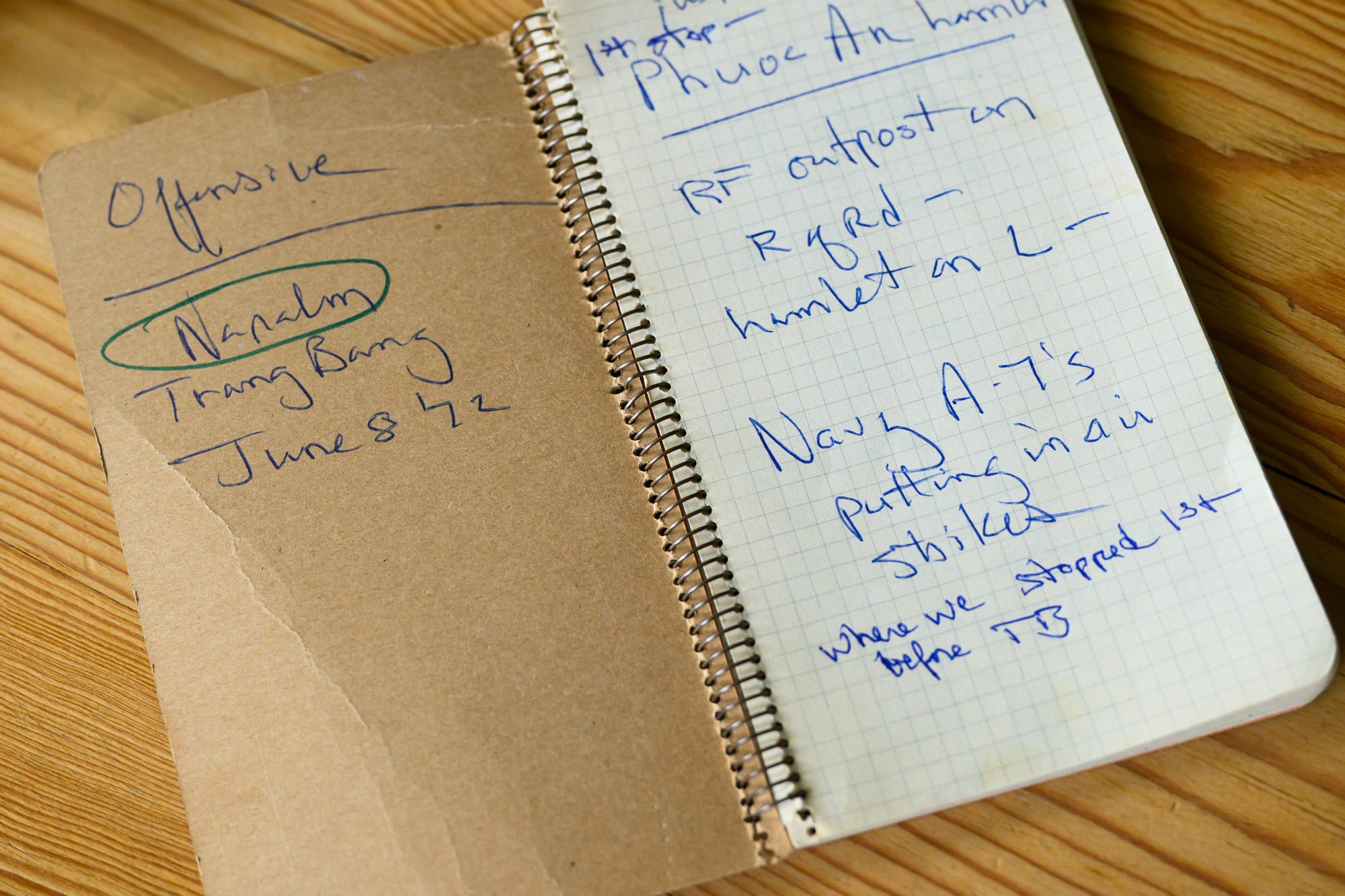
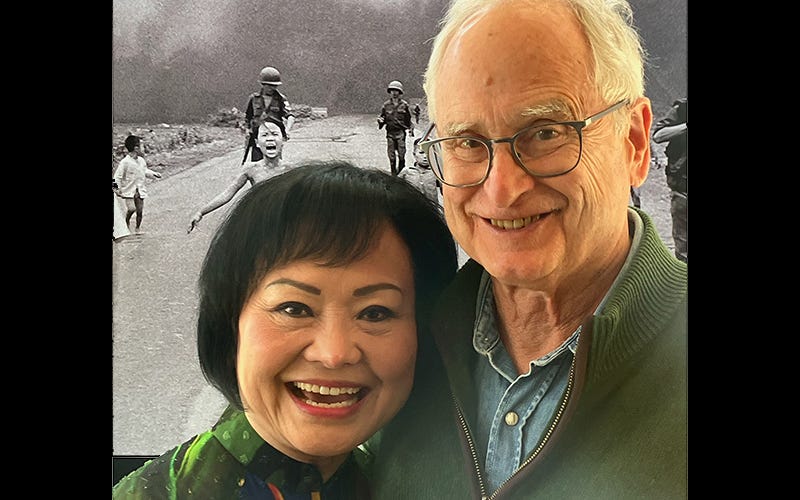
Kim Phuc and family ran toward them. Butterfield’s photographer, at the far right in the first photo above, had run out of film and was reloading his camera at that moment. Later that day, back in Saigon, Butterfield went to the Associated Press office to see what photographs it had. He remembers the first time he saw that powerful photo depicting the terror of war.
“I walked in the door to the AP office, they were just developing a photo and they started shouting from the other room, from the darkroom where they were developing the picture and they looked at it, holy shit. And they showed it to me and I went, ‘Oh my goodness.’”
The photograph would later win a Pulitzer Prize for a young Associated Press photographer named Nick Ut. (A recent documentary claims Ut was not the photographer who took that shot. But Fox Butterfield was at the roadside that day, just a few feet away from Ut, and says there is no doubt in his mind that Ut did indeed take that famous photo.)
Butterfield’s reporting from Trang Bang came almost one year after the Times published its first article on the Pentagon Papers — both pieces created even more American antipathy toward the already deeply unpopular war.
Covering Donald Trump
Back in the U.S., Butterfield was assigned to cover Donald Trump in 1986, several years after the Trump Tower first appeared on the New York City skyline. Trump had already established himself as a brash self-promoter.
What was the future president like 40 years ago?
“When I met him, he said that he had got this vision that he was going to become president. And now we see the picture of him as Christ. I mean, he has these visions,” says Butterfield.
“He was an entertaining character. He was one of a kind, total egomaniac. You could tell right away … he was trying to figure out how to become president. At that time, he had all the money, but he had no idea what he was doing. … So we first met and talked about where he wanted to go and what he wanted to do. He said, ‘Well, if I was a candidate, where would I go?’ I said, “Well, you start in New Hampshire.”
Butterfield says Trump had been a Democrat but thought becoming a Republican would improve his electoral chances.
“He said very quickly to me that it was a better road for him,” recalls Butterfield.
“He could become the candidate faster as a Republican. ... So he switched to the Republican Party because he thought that was a better way to win. … He didn’t have any deep-seated views about much of anything at that point.”
Butterfield followed Trump for several months.
“He really liked women … and he was still married to his first wife at that point, but he could not keep his hands off women. We would go out together and he would whistle at women. He would go over and put his arm around them. He was, what’s the right term, ‘lecherous?’”
We asked Butterfield if he was still reporting today, how would he cover President Trump? Would he cover him differently than the media is now covering him?
“Well, I think we’re getting around to the ultimate question, which is, I mean, is he mentally ill?” Butterfield says he is struck by the fact that the topic is now an open matter of news coverage and analysis.
Settling in Northwest Portland
Butterfield and his wife, the former Washington Post and L.A. Times reporter and author Elizabeth Mehren, moved to Oregon 12 years ago. He got to know the state while working for the Times on a series of articles tracing several generations of an Oregon crime family. He retired here in part to write a book about this outlaw family and the criminal justice system. “In My Father’s House” is available at Powell’s City of Books, 1005 W. Burnside.
But it was not the criminal element that attracted Butterfield and Mehren to Oregon. It was the beauty of the state and the friendliness of its people.