


Tired of predictable Hollywood endings? Well, September is your month to break away from the mainstream. You won’t find the safe and expected in this quartet of foreign films at Cinema 21. Additionally, all the films this month are shot in black and white.
This is our monthly look at coming attractions for Cinema 21’s popular Saturday Morning Classics. Film programmer Elliot Lavine selects a theme every month, and we let you know what’s coming to the big screen each Saturday at 11 a.m. at our iconic neighborhood theater at 616 NW 21st Ave.
Lavine kicks off September with a film that helps define “avant garde.”
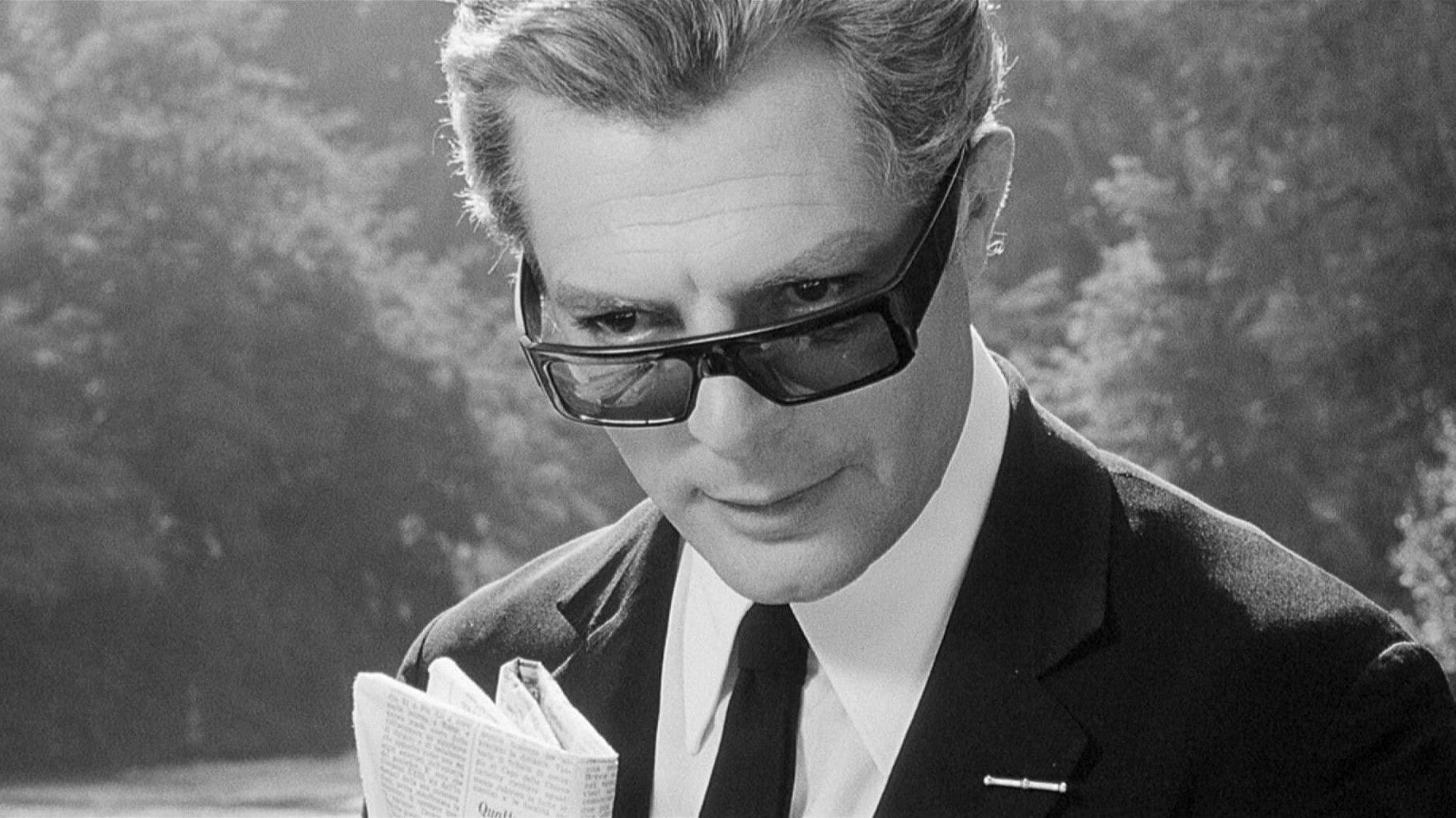
8 ½ (1963) at Cinema 21 on Sept. 5. Director: Federico Fellini
There is no ordinary linear story-telling in “8 ½.”
Lavine calls the film “Fellini’s autobiographical masterpiece.” It tells the story of an Italian film director suffering from director’s block while in the midst of directing his latest film. His artistic struggles are compounded by his difficulties with the women in his life—wife, mistress, actress. Obsessed by the idea of the “ideal woman,” our director is broken, confused, anxious.
“8 ½” changed what movies could do, as Fellini seamlessly interwove the here and now, with flashbacks and surreal dream sequences. Critics have called Fellini’s “8 ½” the work of a magician because it shouldn’t hold together, but it does.
While most reviewers praised the film as a groundbreaking tour de force—even saying it rewrote the language of cinema. Not every critic agreed.
Pauline Kael was biting in her review. The sharp-tongued film critic called the movie self-indulgent, superficial and fake. She even took Fellini to task for the way he portrayed a director’s creative process, blasting Fellini for depicting it as a three-ring circus.
Marcello Mastroianni plays the troubled director, Guido Anselmi. And has any man ever adjusted his dark-rimmed glasses down his nose and made you both smile and sigh? There may be some existential meaning to the flick of that index finger but it just looks like effortless Italian cool to me. Mastroianni as the director is the center of the film’s universe.
Fellini called his film “8 ½” because that was the number of films he had made, one film was a collaboration with another director, so he counted that as one-half.
Lavine says “8 ½” delivers “what people expect of Fellini, the spectacle, the intimacy…”
There is a spellbinding festival-like quality to the film. And the beautiful carnival-like score by Fellini’s favorite composer, Nino Rota, will have you humming and grinning as you leave the theatre.
“8 ½” won the Oscar for best foreign language film in 1964.
Claudia Cardinale, Anouk Aimee and Sandra Milo play the women in Fellini/Guido’s head and life.
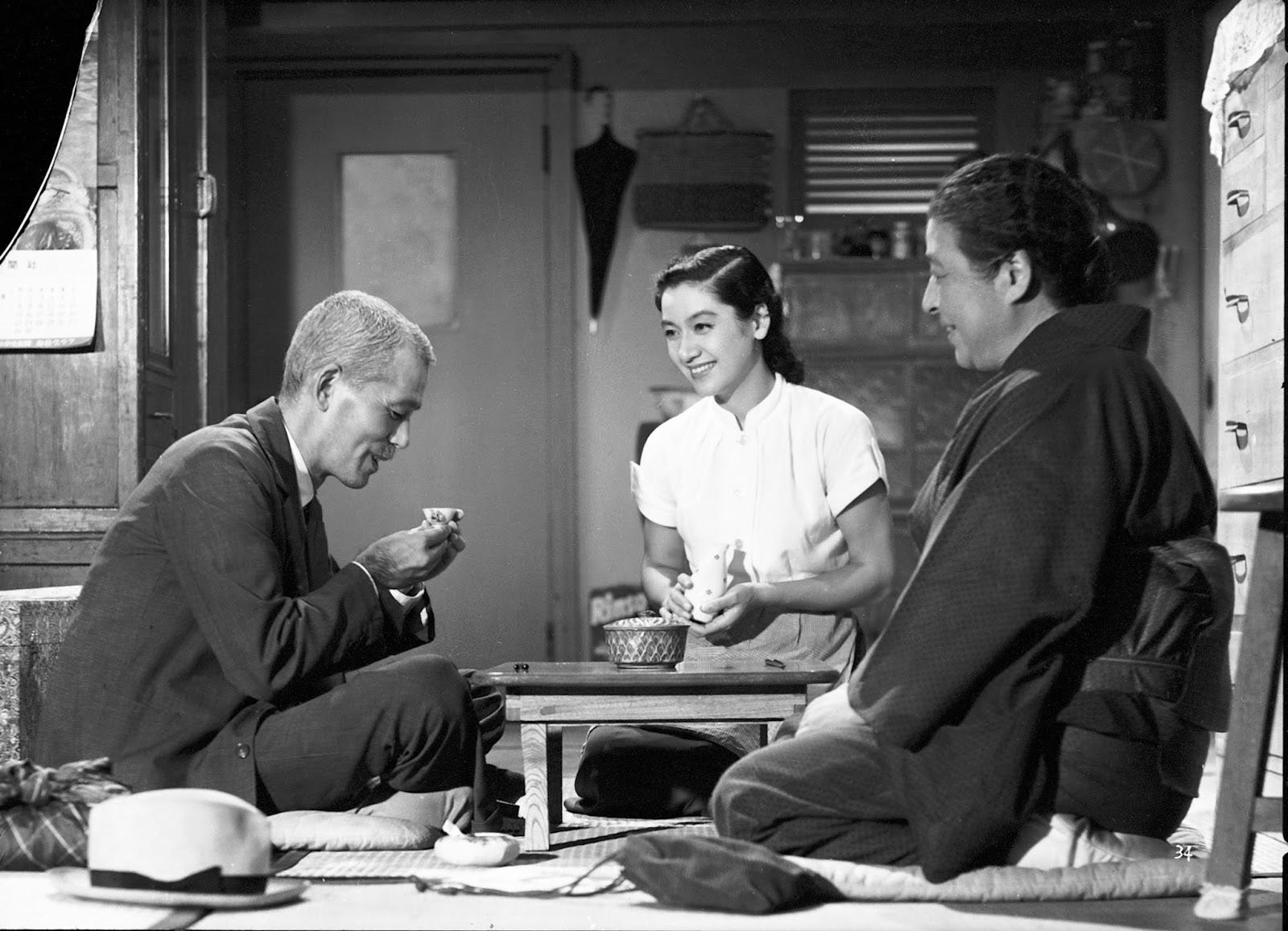
Tokyo Story (1953) at Cinema 21 on Sept. 12. Director: Yasujiro Ozo
Lavine calls this a “heartbreaking family drama that seems simple and ordinary at first blush.” It is considered Ozo’s masterpiece.
The film is set in post-World War II Japan. Families are separated. Aging parents live modestly in rural Japan. Their children have moved to the rapidly modernizing (read westernizing) city of Tokyo and no longer have time for their parents.
The old rules of family life are rapidly changing and Ozo breaks the old rules of filmmaking, including the supposedly hard-and-fast rules of spatial relationships and screen direction.
Ozo also places his camera only 2 feet off the ground for much of the movie to match the eye level of someone sitting on a traditional Japanese tatami mat. His cinematography is known for its minimalism. His shot-making has been compared to still-life paintings. I read that the camera only moves once in this two-hour-16-minute-long film.
Quiet and complex, film critics say even more than 70 years later, “Tokyo Story” hasn’t lost its power. And Lavine says this mid 20th century Japanese film resonates in 21st century America.
When the film was first released, it was thought “too Japanese” for an American audience, and was not shown in the U.S. for a decade.
Ozo’s work may not be well known here, but “Tokyo Story” is considered one of the best arthouse films of all time.
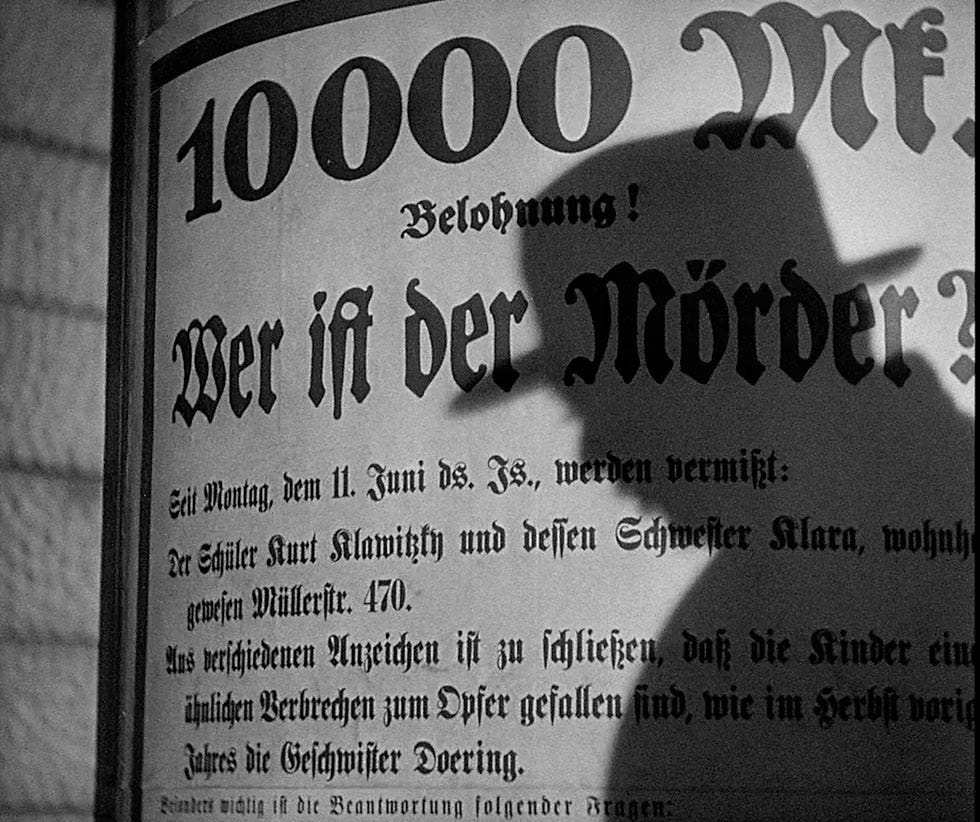
M (1931) at Cinema 21 Sept. 19. Director: Fritz Lang
Another masterpiece by a master filmmaker. “M” is considered Lang’s best movie. German expressionism always makes me uneasy. It should: it’s known for its distortions.
This post-World War I film is a psychological mystery thriller, Germany is a broken nation. The economy is in ruins. The government, unstable. Nazis are on the rise. And in “M”— which stands for murder, a serial child-killer is terrorizing the tormented families of Berlin.
Lavine, a film noir expert, says “M” became “the prototype of the film noir movement,” and he calls the movie a “bone-chilling examination of a soulless killer, hunted by every facet of his society.”
The killer played by Peter Lorre, writes an anonymous letter to the local newspaper claiming responsibility and promising he will strike again. Police use what were then new techniques—fingerprinting and handwriting analysis—to try to catch the madman.
The local criminal syndicate with its known gangsters and scoundrels sets a trap for the child killer as well.
And while the film is about violent crime, Lang does not show the violence. He leaves it to the audience to imagine the murder of a young child.
“M” is known for his cinematic innovations, including long tracking shots and the use of a musical leitmotif. Lang borrowed the leitmotif from opera. This was Lang’s first “talkie,” and he experimented with both sound and silence.
This film was actor Peter Lorre’s first starring role. He later became famous for playing movie villains.
Both Lang and Lorre eventually fled Nazi Germany and continued making movies in Hollywood.
Interesting facts: To prepare for the film, Lang spent time in a German mental institution, trying to understand what goes through the mind of a child-killer. And he hired real criminals as extras. Twenty-five cast members were arrested during the shooting of the film.
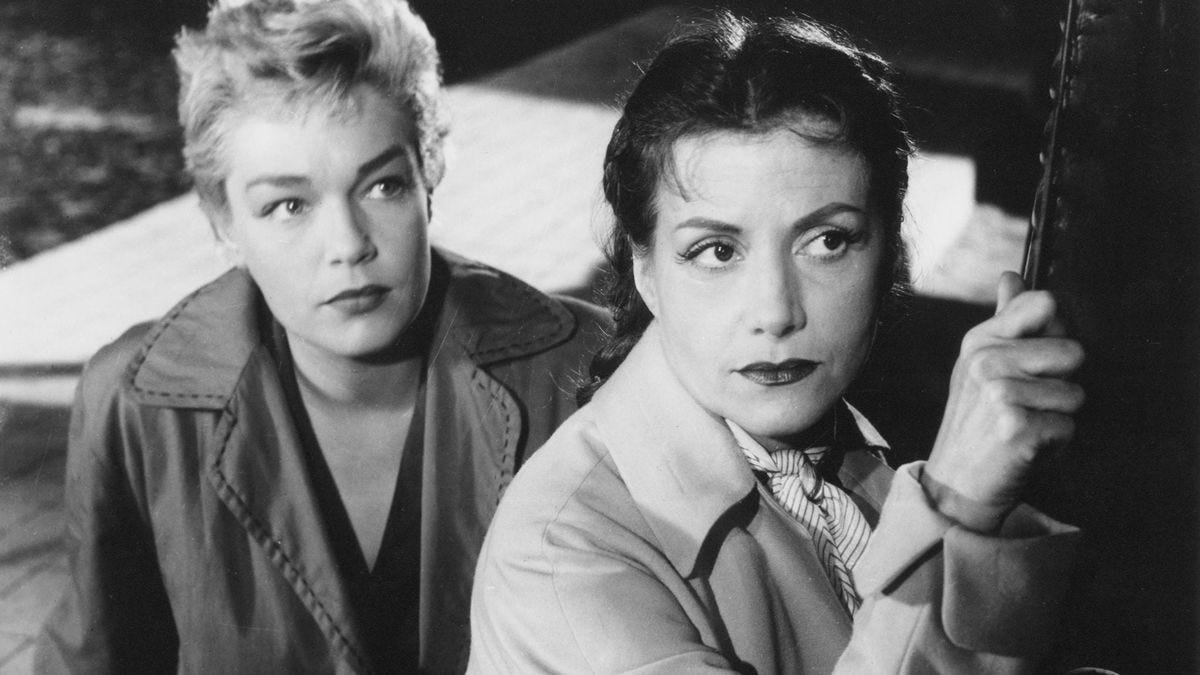
Diabolique (1955) at Cinema 21 on Sept. 26. Director: Henri-Georges Clouzot
September ends with a French psycho-thriller that made Hitchcock jealous. Hitchcock had hoped to direct the film, but Clouzot got to the writers first.
Reviewers have said Hitchcock later modeled “Psycho” after “Diabolique.” Hitchcock also repeatedly watched “Diabolique” while filming “Vertigo.” (Both “Diabolique” and “Vertigo” are based on novels by the same French writing team of Pierre Bolleau and Thomas Narcejac.)
The story takes place at a boys’ boarding school. The headmaster is a brutal man. The boys hate him. The teachers hate him. His wife hates him. His mistress hates him too.
The wife and the mistress plot murderous revenge on the cruel headmaster. All goes well for the women—not the headmaster—until his corpse disappears. And that’s when the real diabolical plot of the movie begins. What happened to the headmaster? What happened to the corpse? What happens to the wife and mistress? What is really going on? Horror! Or as the French say, “horreur!”
Oddly, with all this calculated and cold-blooded mystery and tension, there is one character who is really funny: the unassuming and rumpled but clever, cigar-chomping Inspector Alfred Fichet. Sound familiar? Peter Falk modeled Columbo after Fichet.
Simone Signouret, Vera Clouzot and Paul Meurisse are the leads.
Clouzot has a curious history. The French filmmaker started his career in Paris, then worked on films in Germany. He was fired because he befriended Jewish filmmakers. Clouzot returned to France and later, broke and starving, worked for a German film company in German-occupied France.
After the war, he was tried and convicted as a collaborator, and banned from making films, though intellectuals like Jean-Paul Sartre defended him. Eventually that ban was lifted and Clouzot made “Diabolique” and other films.