


If you’re looking for a bit of wintertime outdoor time and don’t care to haul yourself up to the mountain, the gorge or the coast, may we offer a suggestion? It’s only about 11 miles from the shops and restaurants on Northwest 23rd or the Pearl District. Sauvie Island in the offseason has charms and scenery and wildlife galore — far more than just U-pick berries and hay wagon rides for the kids at Halloween. Sauvie Island in the winter is drop-dead gorgeous. I took all these photographs just last week. Come along!
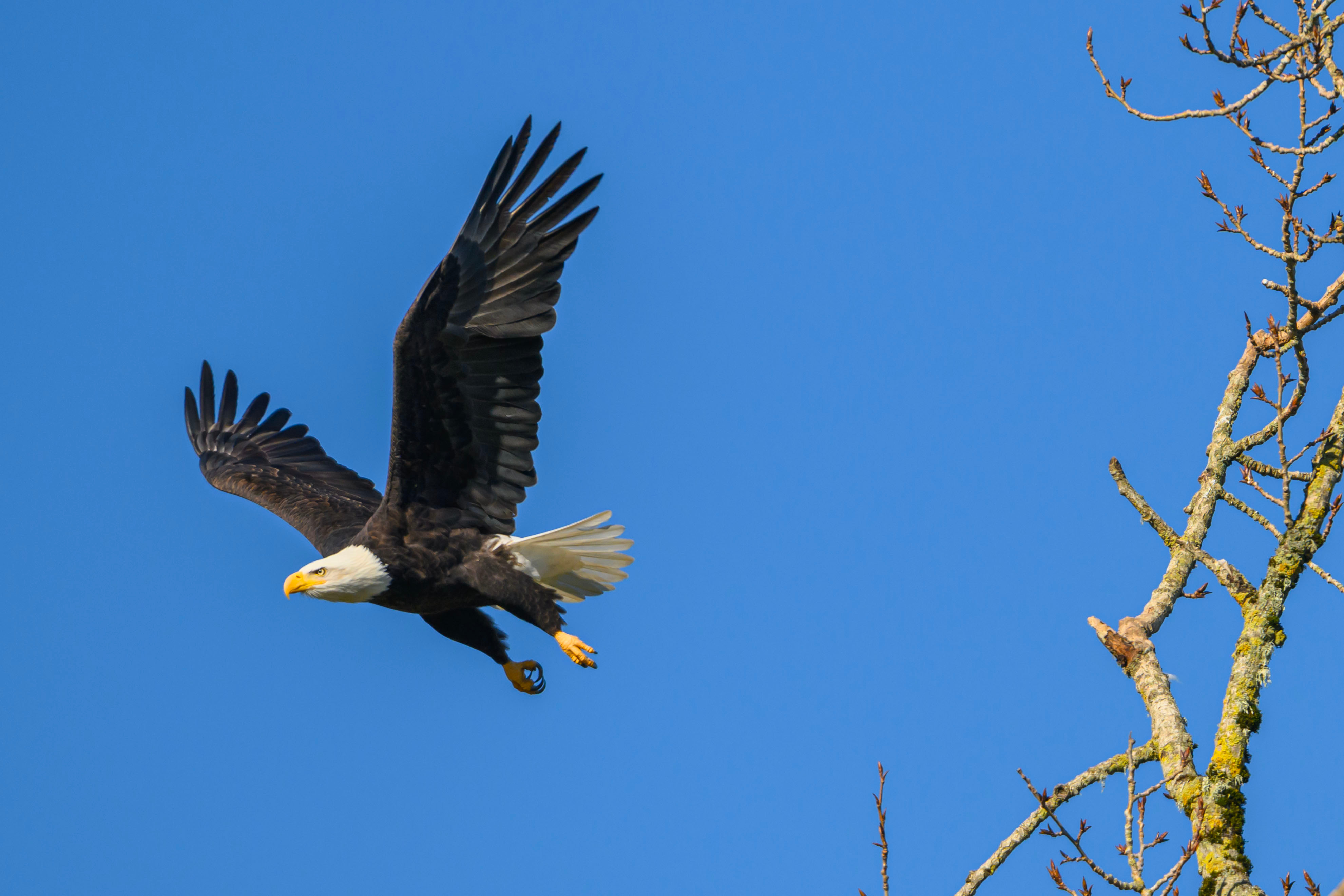
First things first. If you’d like to spot one of nature’s most majestic birds, Sauvie Island is the place to see bald eagles. During the winter months, Oregon Department of Fish and Wildlife people have counted up to 100 of them nesting on the island. You can easily spot a mature bald eagle from afar, with its bright white head and tail, flapping its wings minimally as it rides the wind currents on its 6- to 7-foot wingspan. But if you’re a small rodent on Sauvie Island, the bald eagle is a less-welcome sight. With the bird’s scary-sharp vision, ornithologists believe a bald eagle can spot a delicious unawares rabbit from at least 2 miles away.
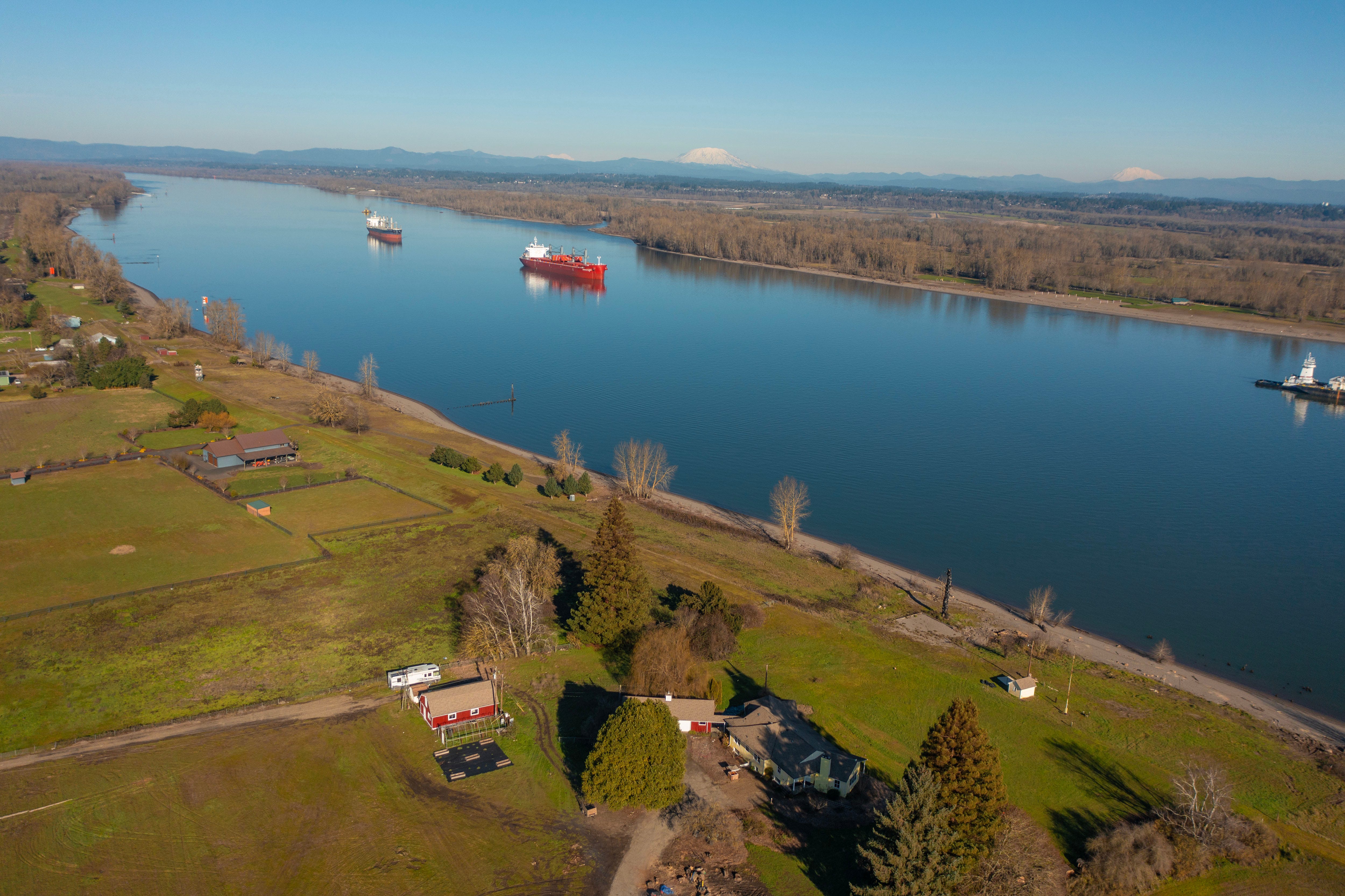
Let’s orient ourselves. Below my drone, that’s the main stem of the Columbia River, which flows roughly west through the Columbia Gorge and past Portland but then whips directly north at Sauvie Island, which is in the foreground. During the winter, when the riverbank’s deciduous trees are bare, you can see massive cargo, container, tanker and vehicle carrier ships sailing between the Port of Portland — 10 to 20 vessels a day — and ports generally in China, South Korea and Japan. These ships feel surprisingly close when you’re down on a Sauvie Island beach.
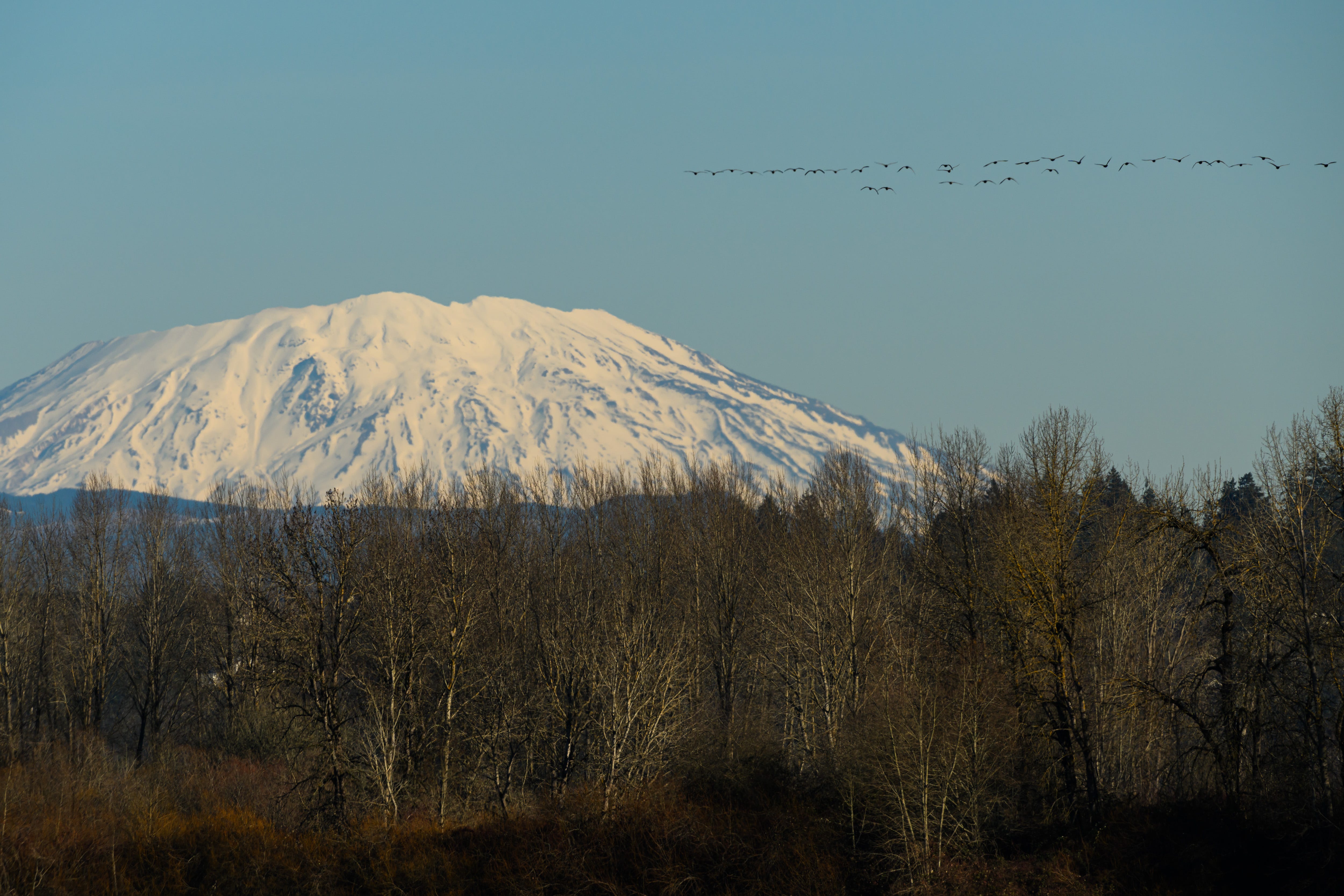
Some of the very best Portland-area views of the Mount St. Helens volcano are from Sauvie Island. From the spot where I took this photo (GPS N 45.7784983, W 122.7788133), the distance to the south rim of Mt. St. Helens is 40.1 air miles. By comparison, the air distance to the volcano from Portland’s Council Crest Park is 53.8 miles. So from Sauvie Island, you’re nearly 35% closer to the mountain’s 8,363 foot summit than you are in town. And in crystal-clear winter skies, from Sauvie Island you often can score a few bonus-volcanoes: Mount Ranier (14,411 feet) to the north; Mount Adams (12,280 feet) farther to the east; Mount Hood of course (11,249 feet); and way to the south, Mount Jefferson (10,497 feet).
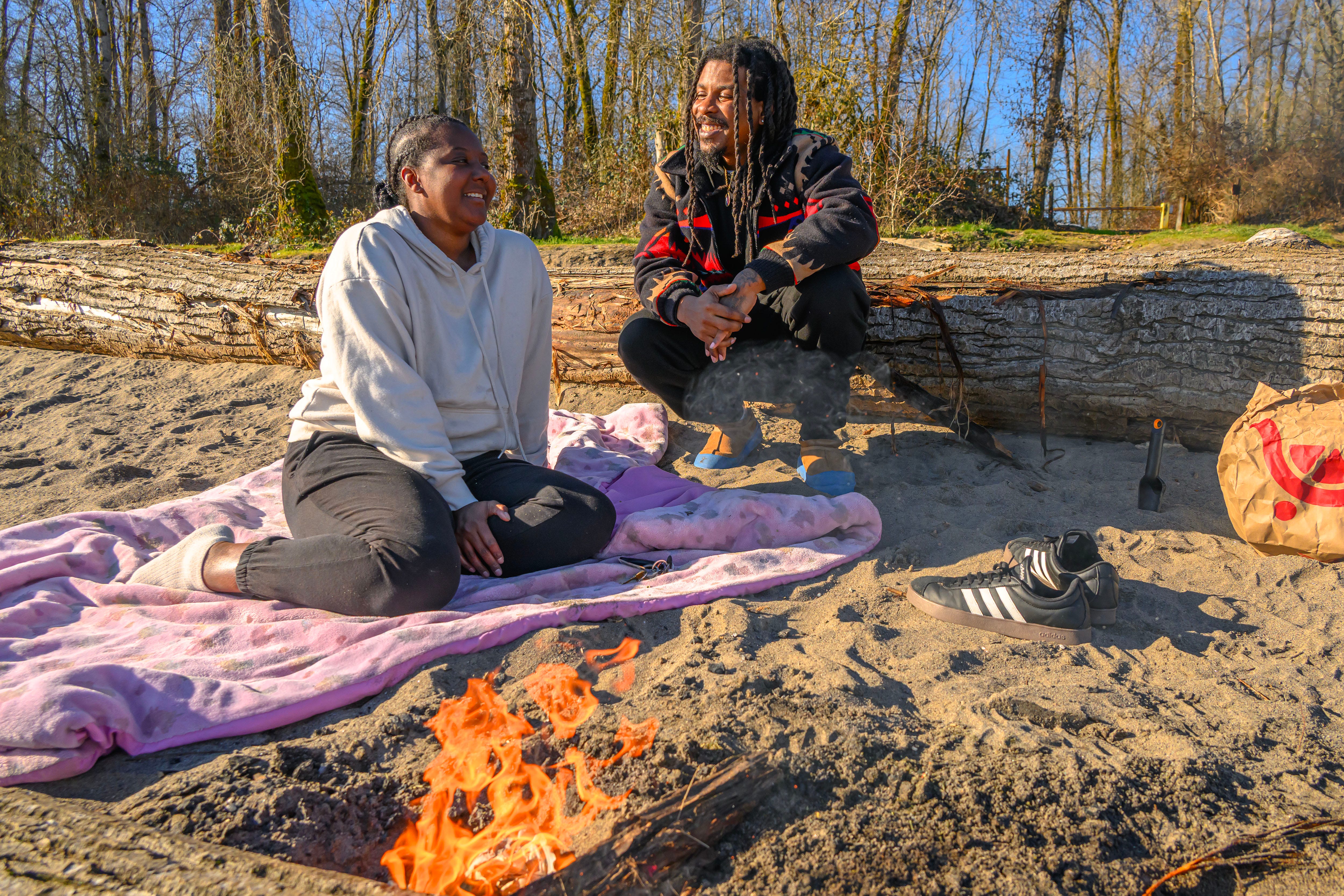
It looks like Alexandria and Jay Elliott had things perfectly dialed in the morning I bumped into them on a Sauvie Island beach, staying warm in 45-degree-ish weather with a fire they got going with some driftwood. The Elliotts have figured out something a lot of other local folks still haven’t. Sauvie Island can get mobbed in the summertime. Of the 800,000-plus visitors every year who traipse to the network of trails and beaches and the Sauvie Island Wildlife Area, just a scattering of folks come out during the winter. On the nearly entire day I spent photographing on the island, the Elliotts were the only ones I ran into just chilling and enjoying the place. The Elliotts say they’ve been coming out from Northeast Portland twice a week for about two years now —“sneaking away,” Alexandria told me, “when all four of our kids are in school.”
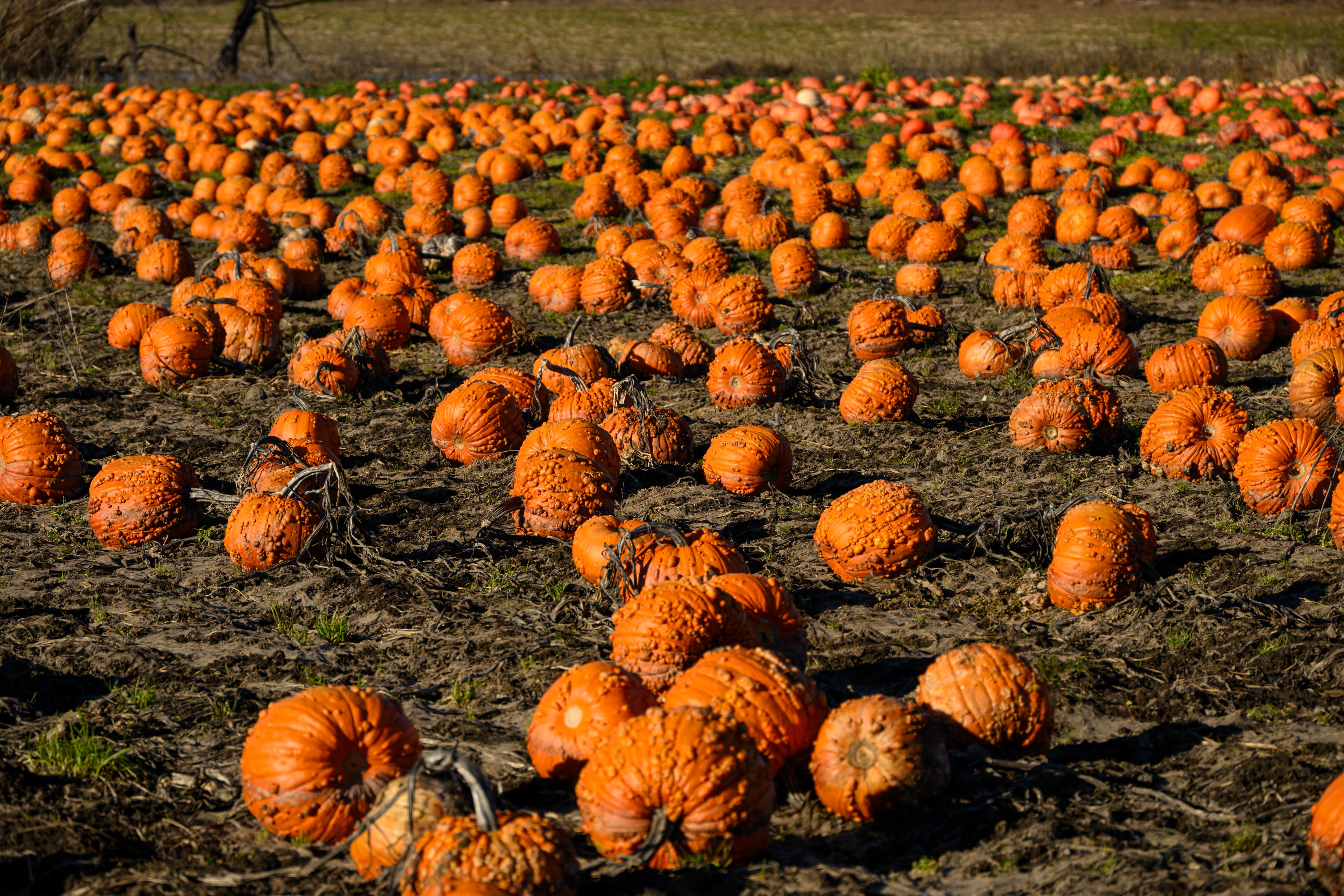
Pumpkins are an interesting sight on Sauvie Island in the winter. The U.S. Department of Agriculture calculates that every year America grows about 750,000 tons of pumpkins. But on Sauvie Island, as elsewhere, the Halloween U-pick crowd generally shuns pumpkins that have warts, or are misshapen, or whose stems are missing. I could not ferret out any figures on what percentage of American (or Sauvie Island) pumpkins never get plucked from the field — but this field and a few others on the island suggest the percentage is not small.
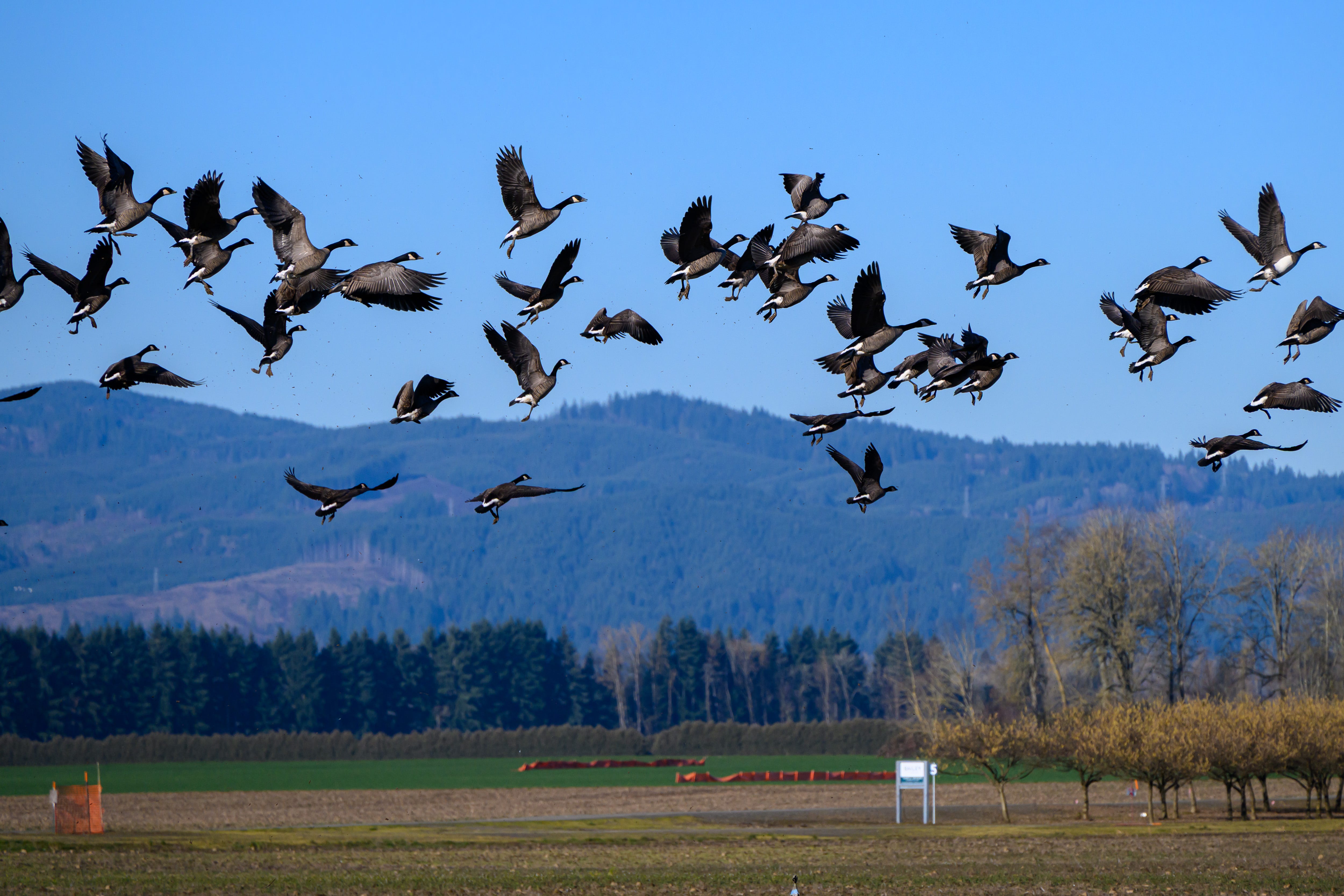
The soil on Sauvie Island, having been deposited over millions of years by countless Willamette and Columbia River floods, is famously fertile. (See pumpkins, Sauvie Island.) Even when nothing much is sprouting during the winter, there’s some amusing proof of the great soil here. I discovered this when I photographed this flock of Canada geese taking off from a muddy field. One indicator of soil richness is how sticky it is. (Sticky soil has clay in it, which helps it hold nutrients and water.) What did I spot in this flock? Up close, if you click to enlarge the photograph, you’ll see hundreds of flecks of persistent airborne mud, plummeting back to earth off our geese’s little yellow webbed feet. The Sauvie soil is that good — the stuff is that sticky.
To view other photographs of mine, further afield than Sauvie Island and NW Portland, visit waldenkirsch.com.
Walden, beautiful photos!
Beautifully written and photographed. Thank you.