

By Bob Weinstein
There’s a particular frustration that comes from watching people elected to solve problems spend their energy protecting their own power. Oregon’s 2026 short session was five weeks of that—producing three clear examples of politics triumphing over public interest.
One bill that should have passed easily died. Two bills that should never have passed sailed through. Together, they reveal a Legislature too captured by insiders, too hesitant to do the obvious right thing, and too comfortable operating in the shadows.
Let’s take them one by one.
1. Needles near schools: How common sense died
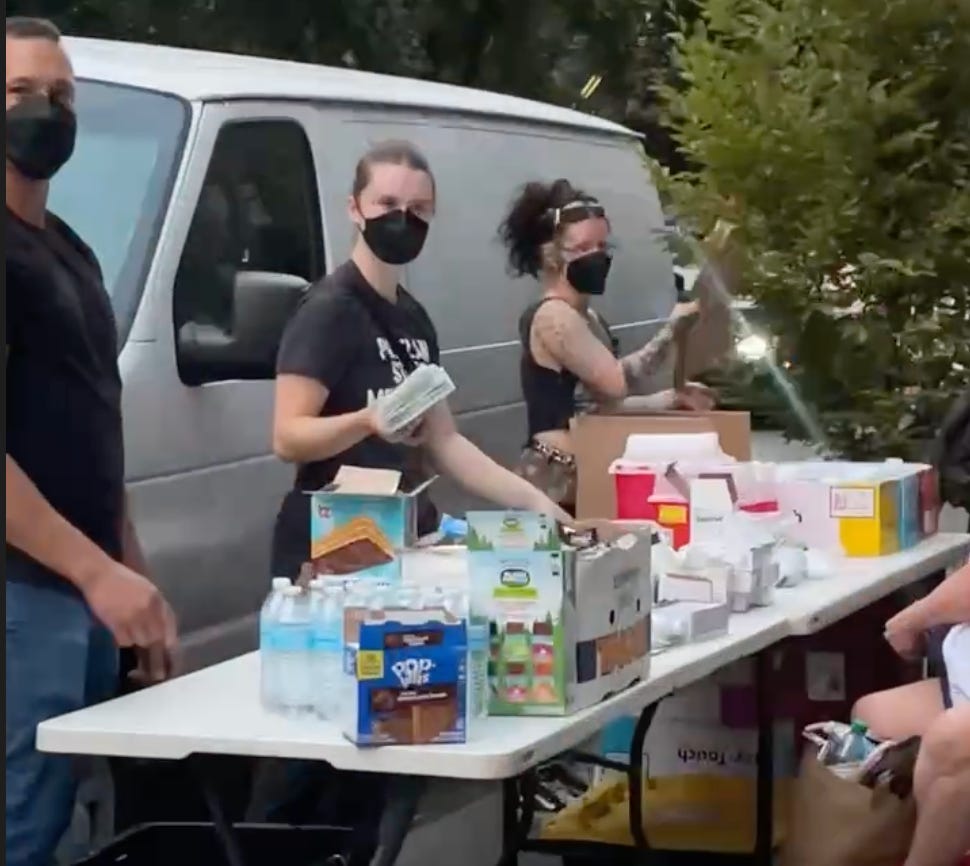
The most baffling failure was a proposal to ban the distribution of free needles and drug pipes within 2,000 feet of schools and daycares. Or even within 1,000 feet.
It didn’t eliminate needle exchanges. It didn’t ban harm-reduction programs. It simply said: Don’t distribute drug equipment near schools. That should have been the easiest vote of the session.
The bill grew out of years of advocacy from parents, neighbors and small business owners in Northwest Portland — among Oregon’s hardest-hit overdose neighborhoods — who watched discarded needles and drug paraphernalia accumulate along their children’s routes to school.
The idea had bipartisan support and overwhelming public backing. Yet it died.
Why? A small bloc of lawmakers led by Sen. Lisa Reynolds insisted that any restriction, no matter how limited, constituted an attack on harm reduction. Reynolds argued that limiting needle distribution near schools would endanger public health.
For many Portland parents, the message was unmistakable: when forced to choose between ideological purity and neighborhood safety, Salem chose ideology.
2. Public meetings rollback: Legalizing the secrecy Portland has been fighting
While that common-sense protection was blocked, another bill advanced that good government and press freedom groups warned would gut Oregon’s public meetings law.
Oregon’s public meetings protections are robust for a reason: The public’s business should be conducted in public.
In 2023, the Legislature strengthened those protections by banning “serial communications”—the practice of officials talking privately in a chain, effectively forming a secret quorum outside public view.
This year’s bill was sold as a technical fix. The Oregon Government Ethics Commission’s executive director disagreed. Susan Myers warned lawmakers that the bill would enable secret deliberations by majorities of city councils and other public bodies. “Government decisions,” she reminded them, “must be arrived at openly.”
Press advocates were equally blunt. Writing for the Oregon Newspaper Publishers Association, retired journalist Therese Bottomly warned the bill “sows confusion” and would ensure “more of the public’s business would be done in a shroud of secrecy.”
The timing could not be worse. Portland’s new city council is already under scrutiny for its own compliance with public meetings law. Weakening transparency now sends exactly the wrong signal.
The Oregonian editorial board urged a veto. They’re right. The governor should reject the bill and demand a real fix next year—one that protects the public’s right to know.
3. Campaign finance: Cash spigot stays wide open
The third failure involves campaign finance reform.
Oregon has long been one of the few states with virtually no limits on political contributions. In 2020, voters overwhelmingly approved a constitutional amendment allowing lawmakers to finally impose limits.
It was a clear mandate: Rein in big money.
Lawmakers dragged their feet for four years. Then, under pressure from a stricter ballot initiative, they passed a 2024 law establishing contribution caps beginning in 2027.
Now they’ve moved to dismantle it before it starts. The bill that emerged was rewritten by insiders to serve major donors and powerful political players—the very people voters asked to be reined in.
As The Oregonian reported, the bill keeps the “cash spigot flowing” through:
High contribution caps that benefit incumbents and major donors
Loopholes for party committees
Carveouts for politically connected organizations
Complex rules that obscure money flows
The result? The same old system where enormous sums of money continue pouring into political campaigns. Longtime reform advocate Dan Meek pulled no punches, calling it “the bill to destroy campaign finance reform in Oregon.” A representative of the League of Women Voters of Oregon called the bill “a complete betrayal.”
This isn’t implementation of voter intent. It’s circumvention of it.
Three Issues. One Pattern.
Different topics, same pattern.
On school zone safety, lawmakers chose ideology over evidence.
On public meetings, they chose secrecy over accountability.
On campaign finance, they chose self-preservation over voter instruction.
These are not abstract policy debates.
They affect the parents walking children to school. The residents who expect open government.
Voters who believed their constitutional mandate would actually mean something.
What makes these decisions so striking is how far they diverge from ordinary public opinion.
Ask most Portlanders — including many who support harm-reduction programs — whether drug paraphernalia should be distributed next to schools. The answer is obvious.
Ask whether elected officials should be able to deliberate about public business and coordinate votes outside public view. The answer is just as clear.
Yet inside Salem’s political bubble, these become controversial. At some point, voters need to cut through the noise and send a simple message:
To hell with politics. Do what’s right. For Portland. For Oregon.
I look forward to Dan Meek and his org putting a ballot measure forward to limit campaign finance. Salem has lost their way. It’s nothing more than a puppet show with the ideologically captured unions (SEIU, OEA) pulling the strings. And it’s the same reason why we can’t get moderate democrats to primary most incumbents.
Portlanders have tried to "stay nonpartisan" for too long. There are clear distinctions between what one would hope to happen in the future. I believe a strong conservative candidate who doesn't see themselves are regionally limited is the way to go. Someone who can bridge the rural city divide and who will strengthen the fundamentals. Police who arrest people who violate public laws. Prosecutors and judges who punish them appropriately. A practical and humane civil commitment system. More police. More inpatient psychiatric care in local hospitals. Fix the roads. Strengthen education. The current leaders and government are in many cases making the problems we are trying to solve worse. It is as if our current national representatives who are horribly misguided and destructive to an American future, have filtered down to the local level where the political establishment is ten times worse. It will get better, but when?