


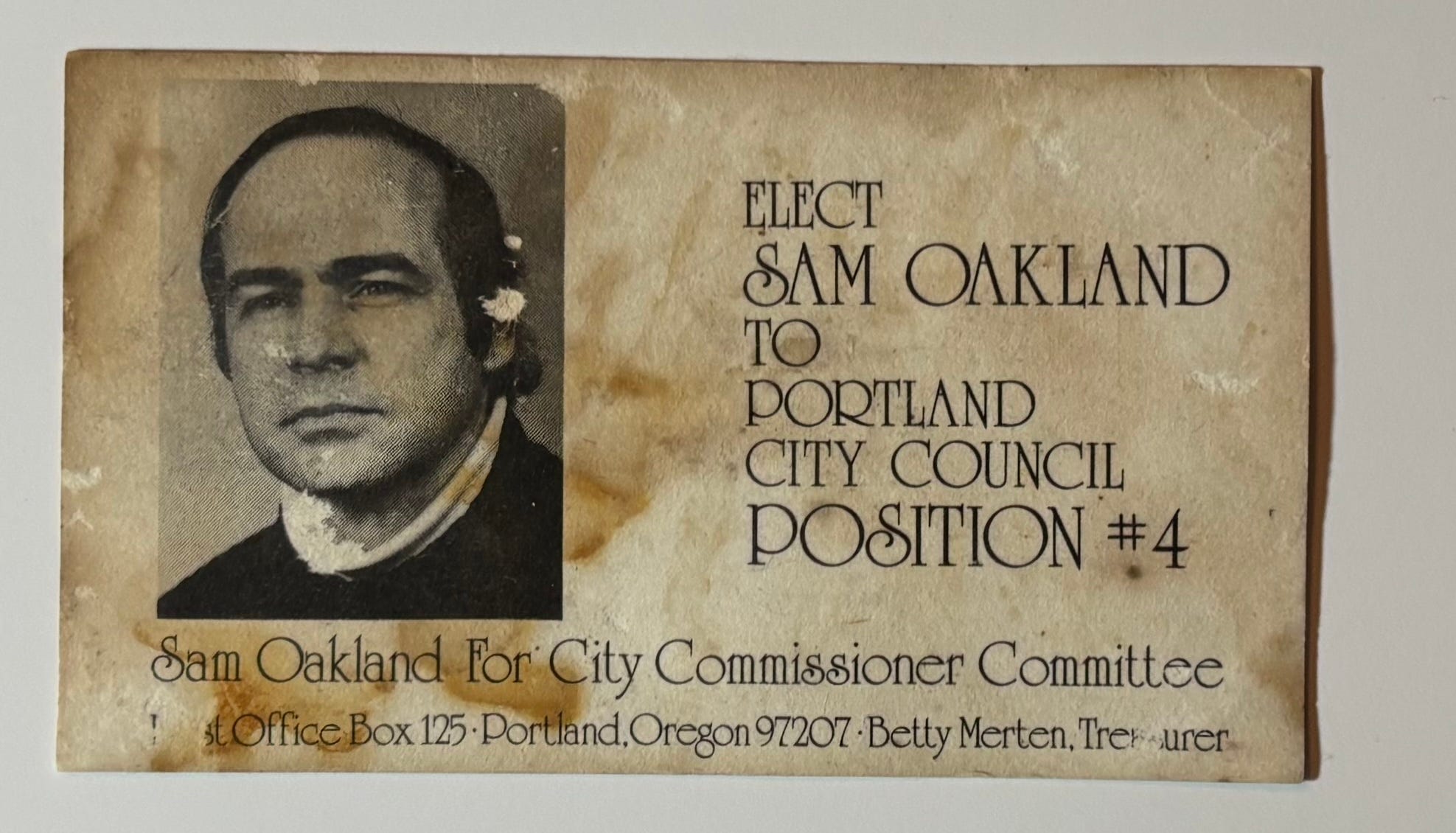
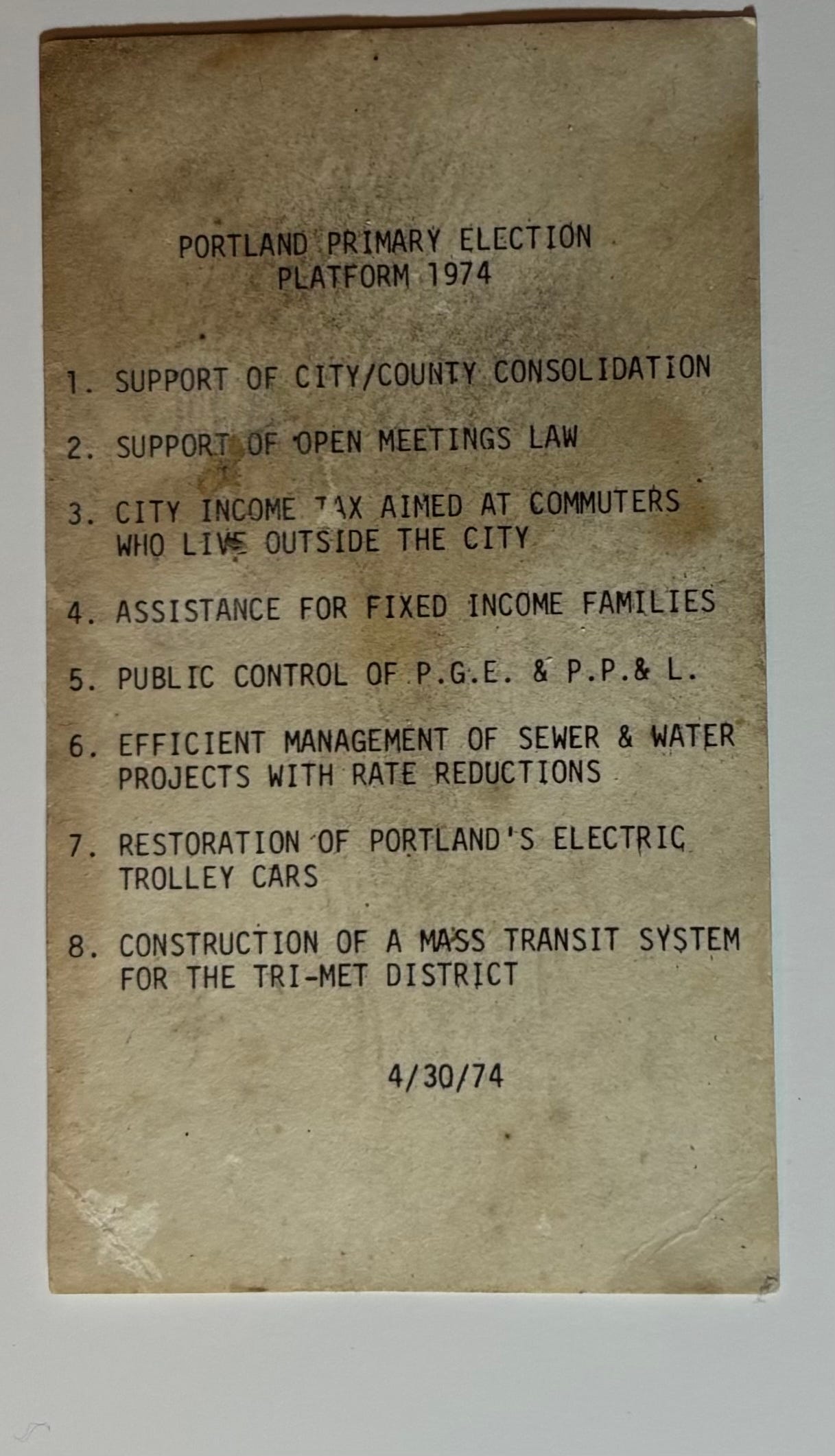
Martha Connell recently found a 50-year-old business card while tending the apartment building she and her husband own.
The humble card had served as a campaign flyer for Sam Oakland, a City Council candidate in 1974. She had met Oakland somewhat later when he was working in a lawnmower shop, and they discovered some common connections, including her fascination with his “crazy, overgrown garage” on Northwest Thurman Street that was akin to a local landmark.
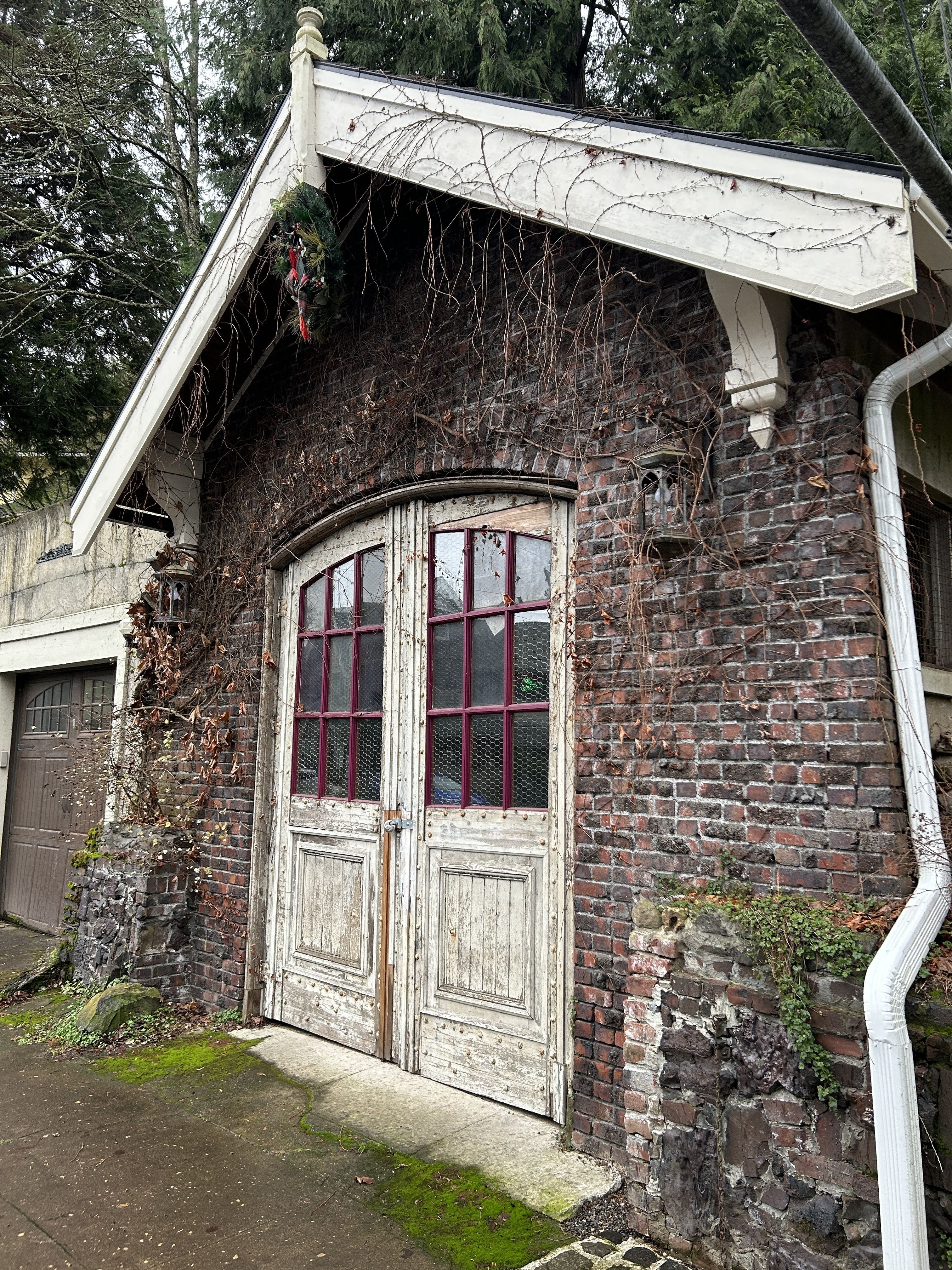
Oakland would become known for many things, though few may recall that he once worked at a lawnmower shop. When he died at age 80 in 2014, obituaries struggled to encapsulate a man whose life knew no boundaries.
He was called a poet, professor, reformer, environmentalist and gadfly, and—other than living in an 1888 house for most of his life—never stayed in one place too long.
At age 16, Oakland quit high school to join the Navy during the Korean War. He later served as a Peace Corps volunteer in Albania on his way to becoming a world citizen, receiving four Fulbright grants to teach in Finland, Italy, Belarus and Moldova. He also taught and studied in Norway, England, Spain, Macedonia, China, Australia and Siberia.
International flags adorned the world traveler’s porch.
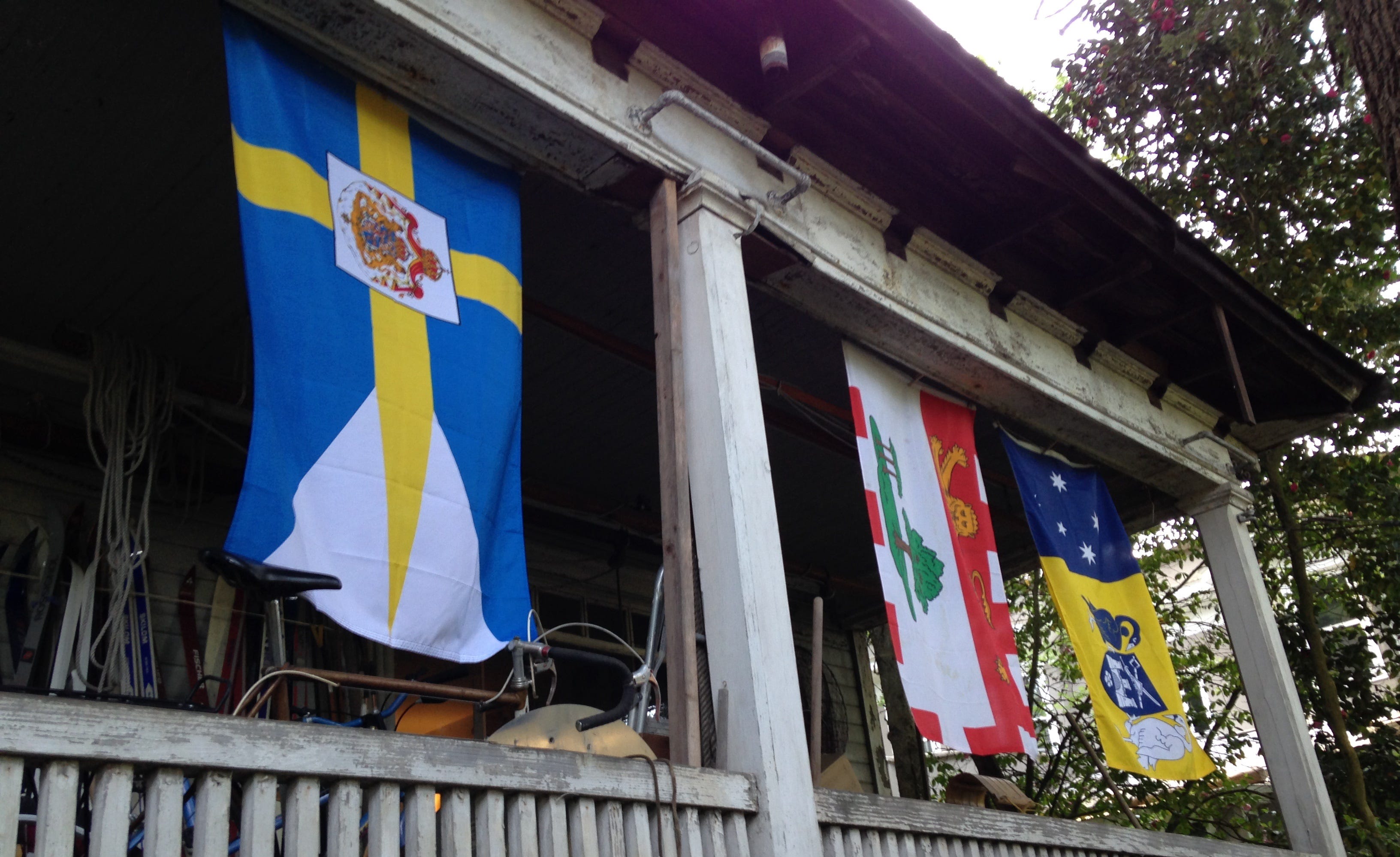
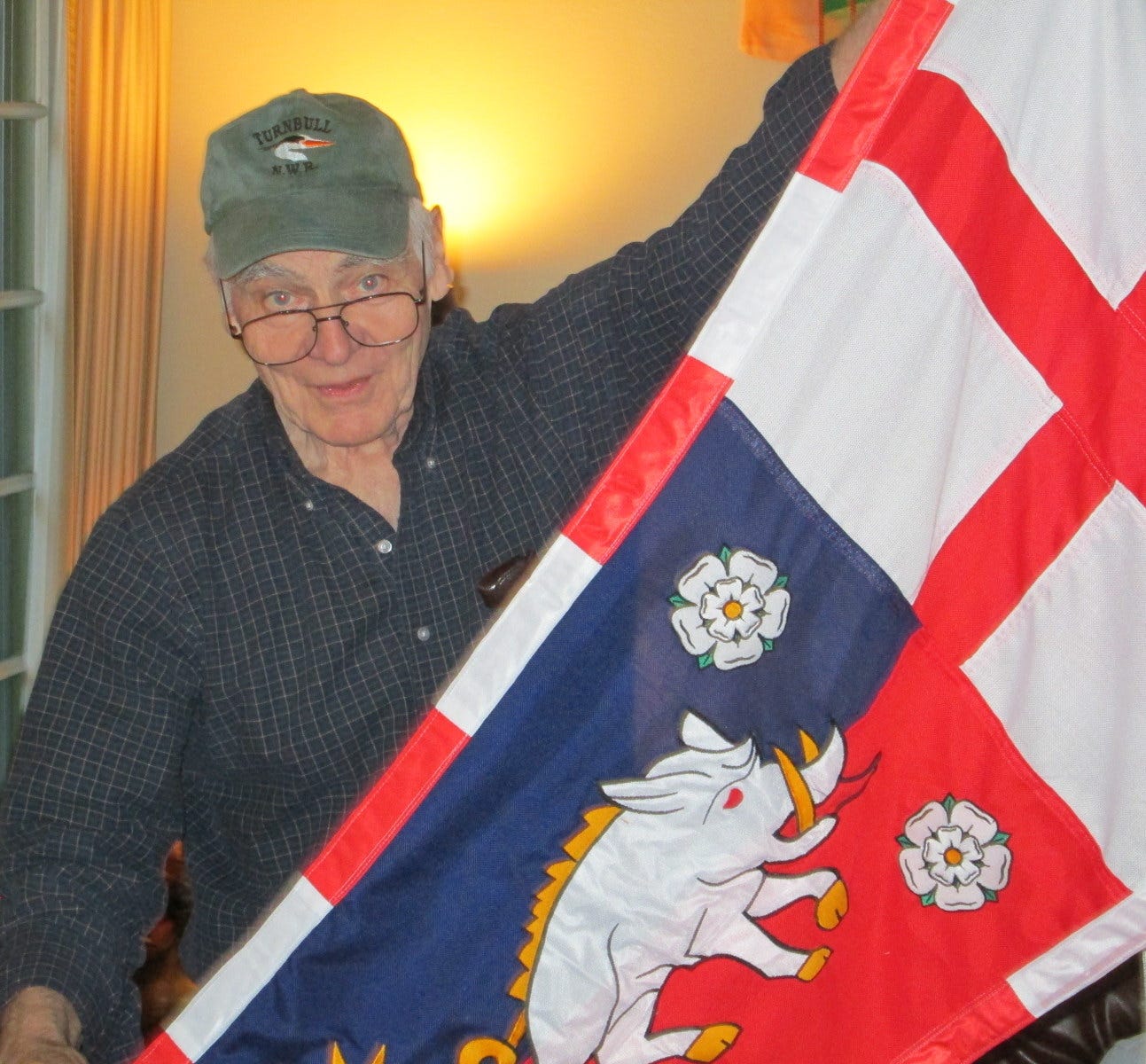
“By the end of his life, he was ordering custom-made flags of obscure and historical designs from a seamstress in Dublin,” said Ted Kaye, a Willamette Heights neighbor and fellow flag lover who produced the Portland Flag Association newsletter. Only Oakland would brandish a replica banner of Richard III of England.
Oakland may have lived in the past and fallen behind on yard maintenance, but in a larger sense, he was always ahead of his time.
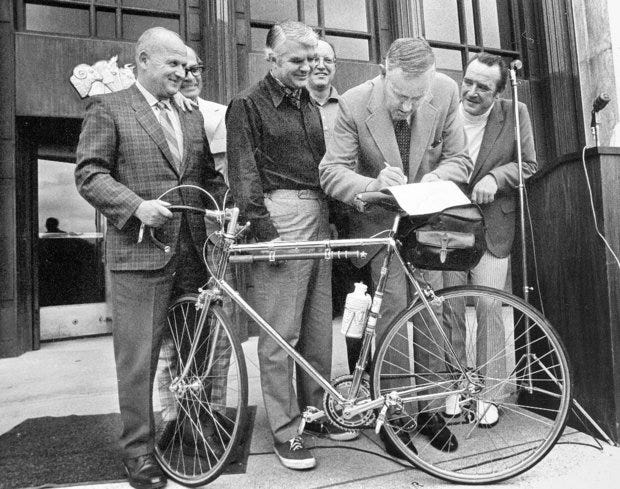
He pioneered Oregon’s bike movement, founding the Bike Lobby in 1967 and leading a campaign for passage of the 1971 Bike Bill that was commemorated by a photo of him with Gov. Tom McCall at the state capitol.
Local historian Steven Johnson wrote about a rally Oakland organized in 1970:
“400 bicycle enthusiasts gathered on Swan Island in North Portland to draw attention to a four-point petition that Oakland had written. The petition called upon the city to create bike lanes on major thoroughfares and bridges; bike parking facilities near schools, department stores, supermarkets, restaurants and in city garages; bike racks on city buses; and the consideration of bike lanes and parking facilities in plans for future developments within the city.”
Some of his campaigns were not as successful. He took only 4% of the vote in the 1974 city primary, and later runs for the U.S. Congress, Multnomah County commissioner, Oregon superintendent of public instruction and Multnomah County sheriff also fell short.
He did not give up easily. He tried to prevent the closure of Portland’s oldest post office when the Pioneer Courthouse was remodeled in 2004. He also sought to stop construction of a garage for five judges in the building. The project, however, went ahead.
But Oakland’s 1974 platform is a testament to political insights that would later prove prescient.
Number 1 on his list?
“Support for city/county consolidation.”
His rationale for merging the jurisdictions may have been lost, but perhaps his thinking is reflected in the current fledgling campaign to accomplish a goal that was so clear to him 50 years ago.
To suggest how open-minded Oakland was, when he ran for county council, his campaign manager was a man who had a "Bo Gritz" sign on his house. Sam wasn't preoccupied with guarding his image.
Wonderful story about an active curious and widely experienced mind bringing his ability to connect dots to his home City. We certainly need those minds today. Instead we have the myopic and short sighted and ideological.