


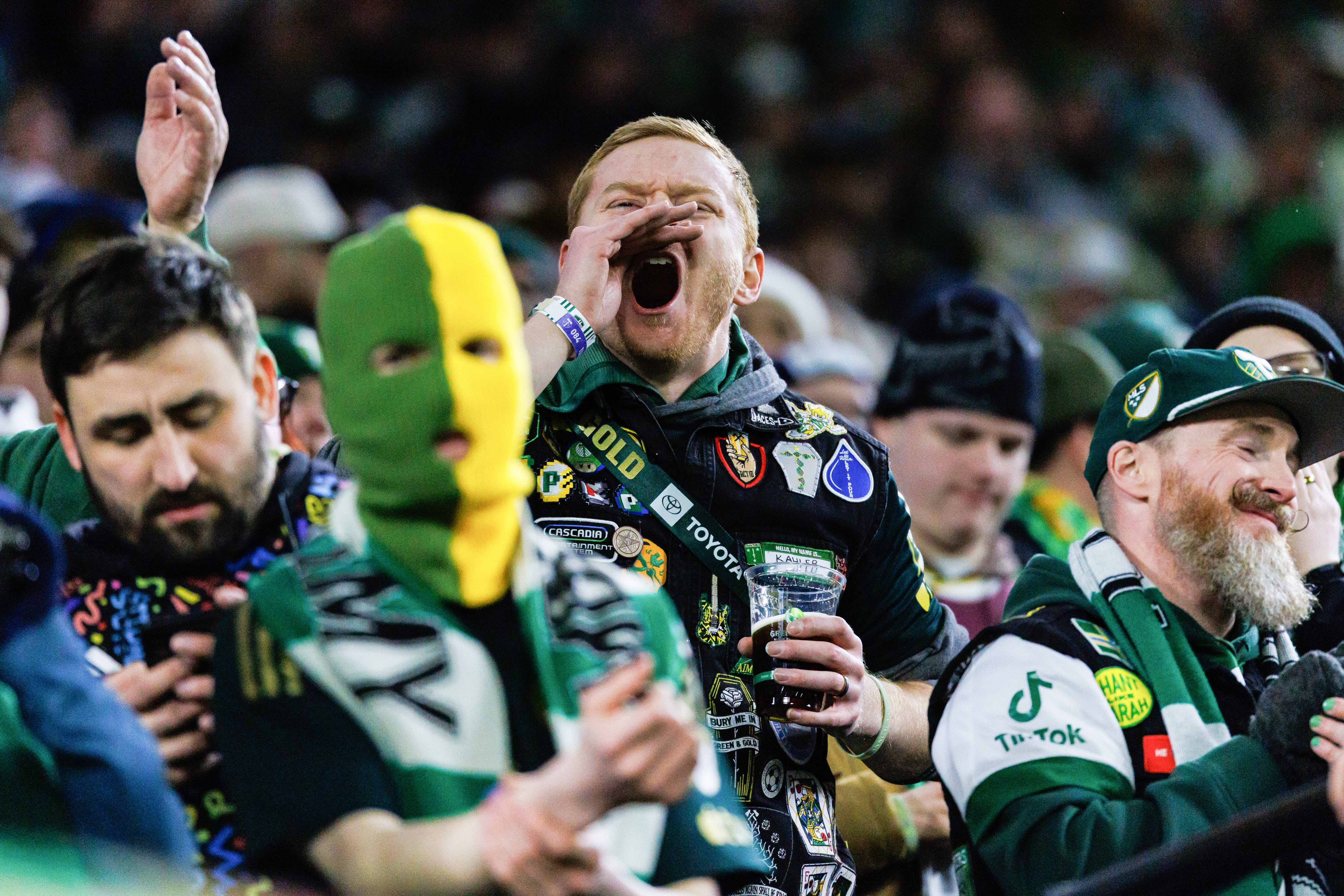
Amidst threats of the city’s other men’s professional sports franchise leaving town unless they receive a $600 million public subsidy, the Portland Timbers opened their season in front of 22,210 fans on Saturday night at Providence Park.
Their taller counterparts, the Trail Blazers, are most typically linked to Seattle, a city which itself lost its SuperSonics to Oklahoma City in 2008. Five years later, Seattle had appeared to have snagged a replacement in the Sacramento Kings.
However, an eleventh-hour deal kept the team in Sacramento with an agreement to build a new, high-tech downtown arena. The Golden 1 Center, named for a local credit union, opened in 2016 and was financed by $255 million in bonds backed by municipal parking revenue and $302 million from the new ownership group, led by software magnate Vivek Ranadivé. The building is perhaps best known for shooting a gigantic purple beam of light into space after Kings wins.
After the Golden 1 Center opened, Ranadivé became enamored with referring to it in variations of the phrase “the 21st century cathedral,” a metaphor comparing himself to a medieval pope. In the end, Sacramento’s arena has turned out to feel much more like a megachurch than a cathedral.
In Portland, however, the Timbers and Thorns do in fact play their games in a cathedral.
Providence Park is a masterpiece, or at least as close as you can find these days. This is somehow true despite being three different structures pasted together: the Multnomah Athletic Club (President Teddy Roosevelt laid the clubhouse’s cornerstone in 1911, then the building was replaced with the current structure beginning in the late 1960s) comprising the south end; the modern grandstands on the east end, built in 2011 and enlarged and roofed in 2019; and the main stadium structure on the west and north ends, originally called Multnomah Civic Stadium, circa 1926.
The building’s defining feature, however, remains the roof of the latter, which replaced the original in 1982 and is made of glued laminated timber (aka “glulam”) from Oregon. At the time of its construction, the state had fallen into economic ruin in large part due to the disintegration of the timber industry, its backbone for the last hundred years, and was transitioning into an economy anchored around tech firms in the Willamette Valley’s Silicon Forest, a term which had been coined just a year earlier in 1981. It is fitting, then, that today’s stadium features a massive electronic advertisement underneath the roof’s curved northwest corner for First Tech (“THE CREDIT UNION FOR PEOPLE IN TECH”).
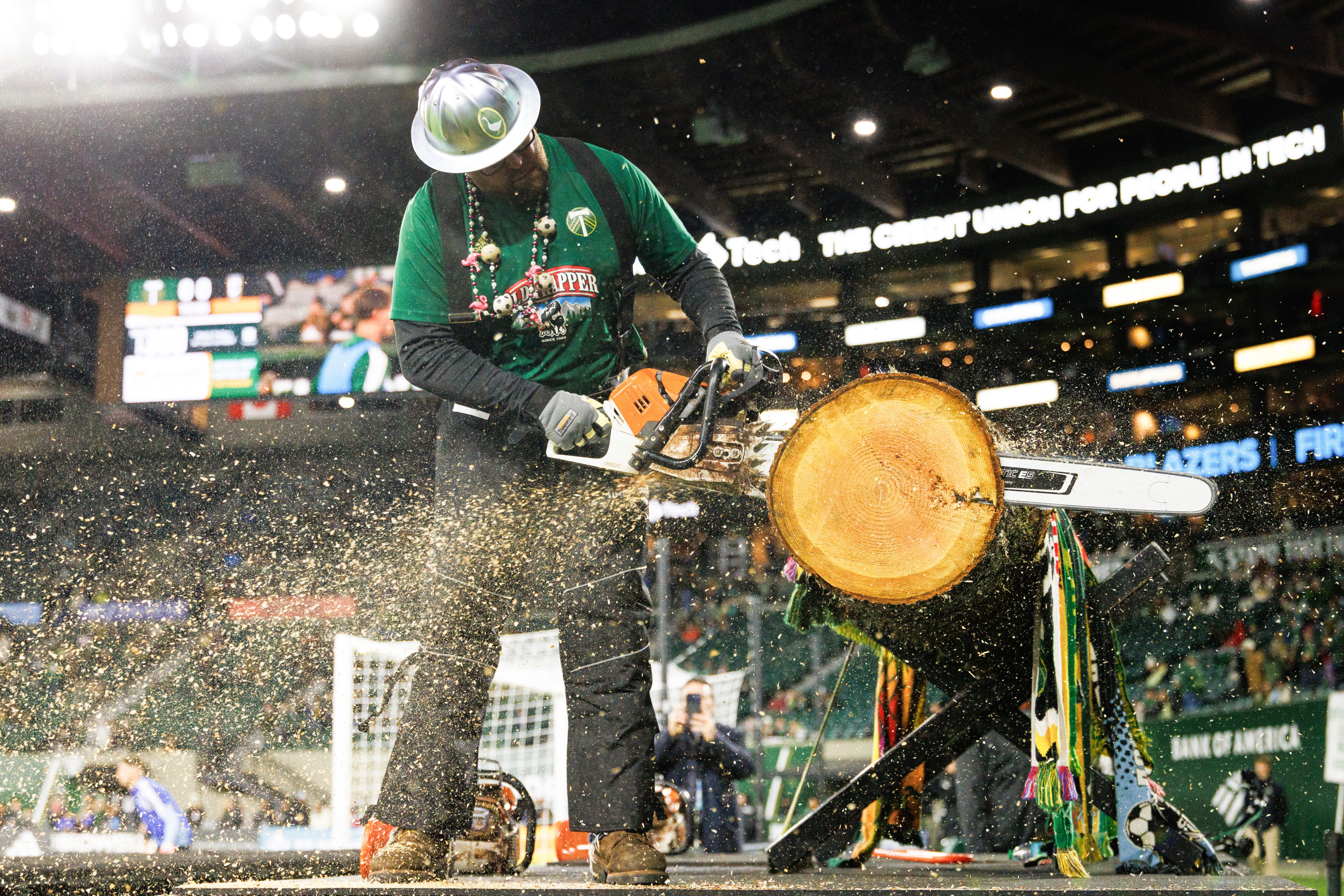
Providence Park is one of the few remaining pre-war structures left in America that can be legitimately compared to Boston’s Fenway Park (1912) and Chicago’s Wrigley Field (1914) — also often referred to as cathedrals.
What makes Portland’s cathedral different, other than having a corporate name denoting divine providence and not a gum conglomerate, is that you can walk into it and see the equivalent of all four historical estates slotted into in their respective places.
The first estate, the clergy — those who control the cathedral and its events — are represented by Timbers ownership.
Merritt Paulson, the son of former Goldman Sachs CEO and U.S. Treasury Secretary Hank Paulson, bought the Timbers when they were still a minor league entity in 2007, about a year before his dad started handing out TARP loans. (Paulson the Elder was part of the original investment and remains attached.) Ownership has spent the past half decade caught up in a sexual abuse scandal and a subsequent coverup that saw them alienate the fanbases of both the Timbers and the Thorns, the latter of whose players were the victims of a coach hired and protected by Merritt Paulson and former general manager Gavin Wilkinson. Paulson sold the Thorns in 2024 to the Bhathal family, who now also own Portland’s WNBA’s expansion team, the Fire.
To say that fans remain at war with Paulson would be an understatement. It is hoped by many that Paulson will sell the Timbers following this summer’s World Cup, which though jointly hosted by the United States, Canada and Mexico, won’t see any games hosted in Portland. It is expected that the event will lead to a significant increase in the value of MLS franchises. The league was founded after momentum from the 1994 World Cup, also hosted in the U.S. on Saturday night. (Paulson was, presumably, in his owner’s box in the northwest corner under the First Tech sign.)
The cathedral is also home to the second estate, the nobility — members of Multnomah Athletic Club, aka MAC — who based off a deal arranged when they sold the stadium to the city in 1966, have free views of games in perpetuity because the club is legally barred from building seating that would obstruct them. A few dozen MAC members watch games from a private balcony, giving a distinctly patricians-watching-chariot-races vibe to the whole affair.
Then there’s the third estate, the commoners, in this case represented by the fans who spread out across the west and east grandstands and are fairly tame. They cheer and drink beer and bring their children and generally have a nice time.
The fourth estate, the media, sits in a windowless box which hangs down from the west side of the roof and can only be reached via an elevated catwalk, which is a problem for, say, any reporters who fear both heights and earthquakes. The view of the field is essentially the same as that of FIFA video games.
This is where this metaphor falls apart. There are only supposed to be four estates. But at the north end of Providence Park you see, hear, and feel the Timbers Army, the fifth estate.
Professional soccer came to Portland in 1975 with the now-defunct North American Soccer League (NASL) and the original Timbers. After a few glorious years where fans established Portland as Soccer City USA, the league folded in 1982.
In 2001, the team returned in minor league form, and the Timbers Army was born. Longtime member Shawn Levy described its genesis in a booklet published ahead of the team joining MLS via expansion ten years later:
“It started in 2001 as a seed: a dozen or two thick-skinned, fun-loving, leather-lunged souls standing behind the North End goal in the first rows of Section 107 and creating 90 minutes of noise throughout every match — banging laundry buckets, taunting opposing keepers, and singing non-stop about their love of soccer, of Portland and of the Timbers.”
In the early days, Levy tells The NW Examiner, the group had a small “teardrop trailer” that functioned as its headquarters on game days. Things have since evolved. Having formed an umbrella nonprofit, the 107 Independent Supporters Trust (107IST) and merging with the Rose City Riveters – the Thorns’ supporters who similarly sit in Section 107, unfurl massive ornate banners called tifos before games and make huge amounts of noise – the new organization moved on from its humble trailer. Two years ago, they began operating out of a two-story building kitty-corner from the northeast corner of Providence Park. They sell their own merchandise, which is generally both cheaper and better designed than what’s sold in the official club stores. Their membership fee is $30. There is beer.
The 107ISTs now have thousands of members; they could constitute an actual army. They have a democratic structure and fund services throughout the community, having built scores of fields and futsal courts around Portland and provided tens of thousands of dollars in scholarships. They’re essentially a union for sports fans, something that has no precedent in American sports.
Like many similar organizations throughout labor history, they make you wonder what, exactly, the reason is that they couldn’t just be in charge themselves.
Saturday night’s home opener was one of many anniversaries: 100 years of Providence Park, 15 years since the Timbers’ MLS debut, 25 years since their USL debut and the MLS-single-club-record 400th appearance of beloved, 16-year veteran defensive midfielder Diego Chara..
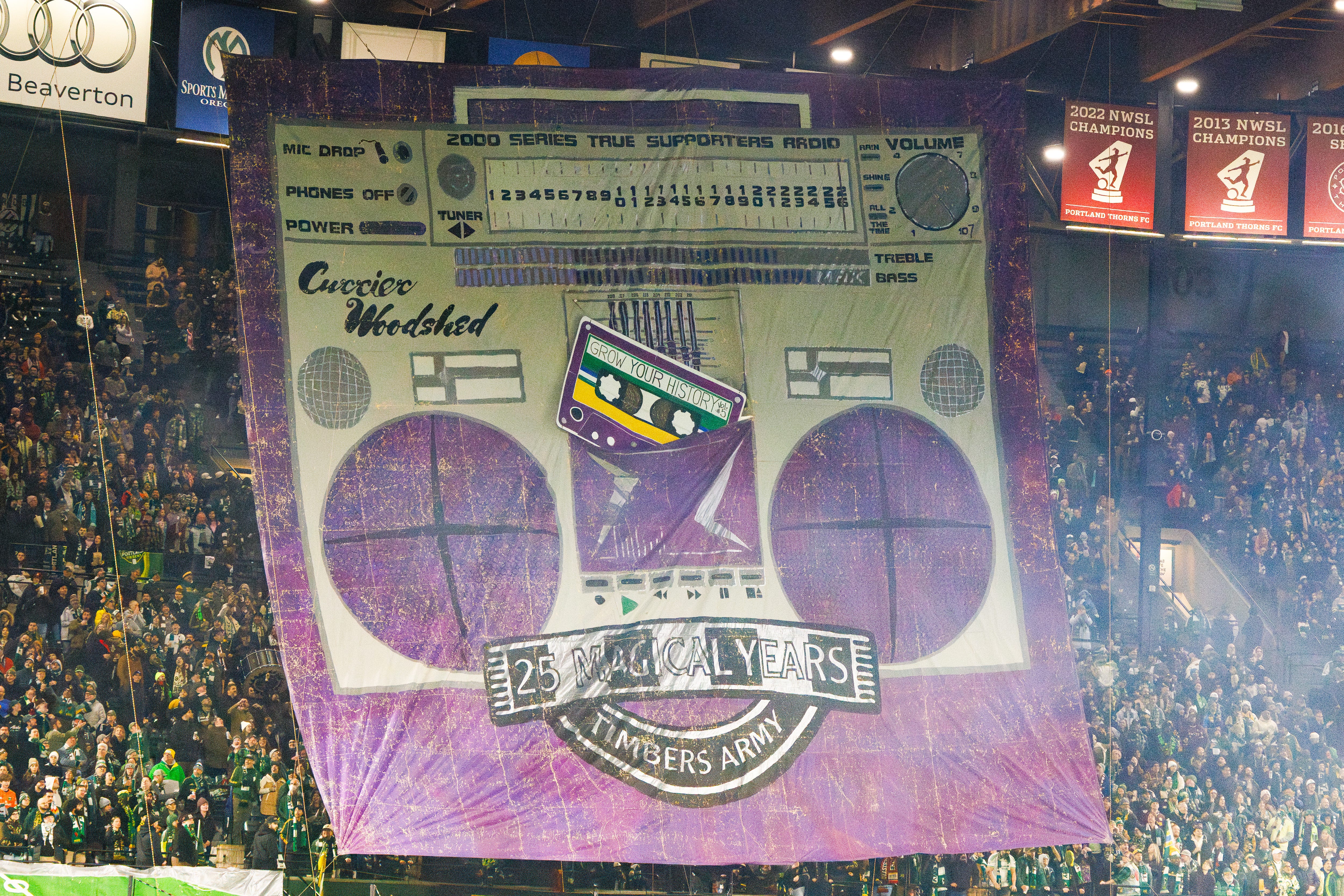
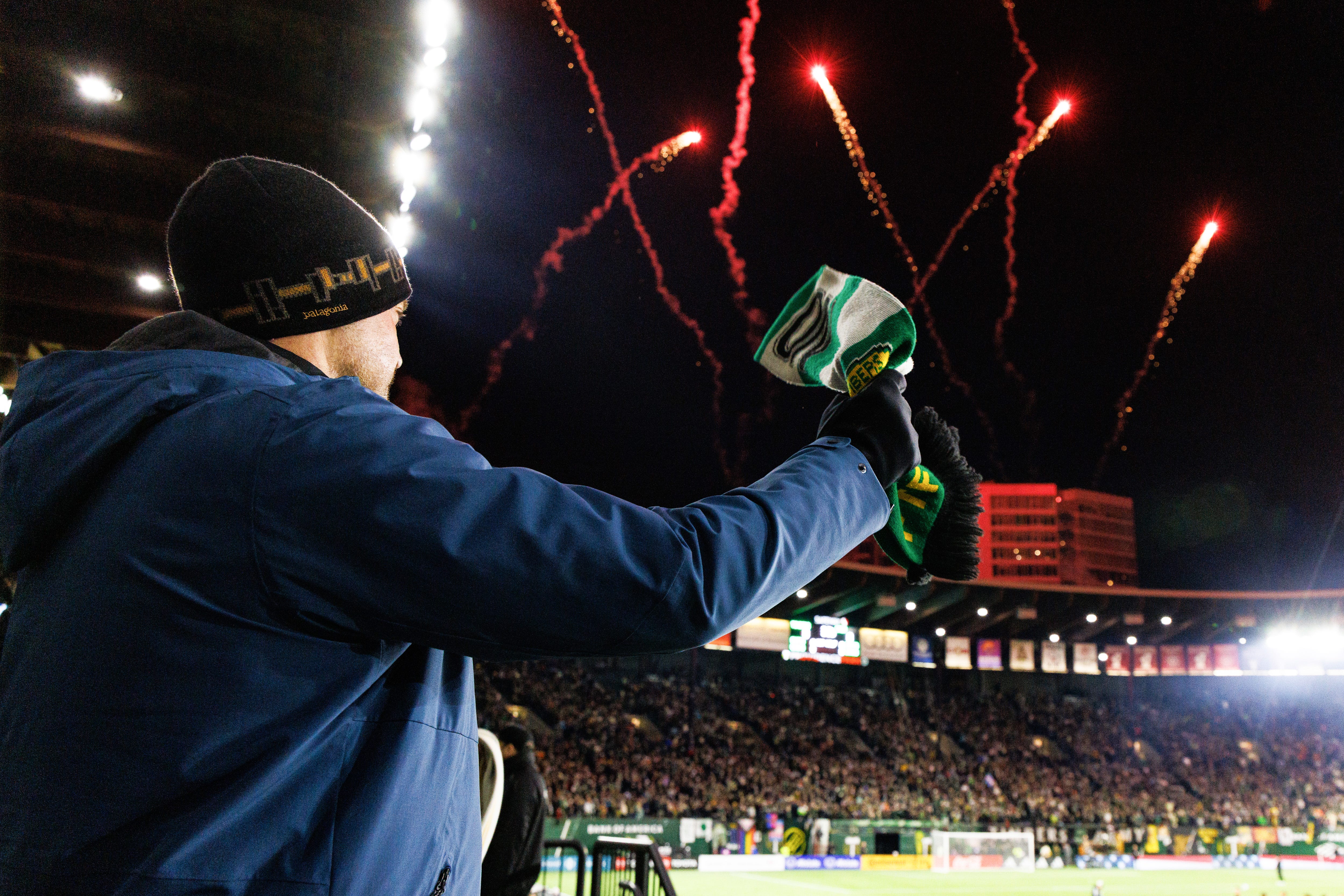
The Timbers also paid tribute to Black Excellence Night, with a rendition of “Lift Every Voice and Sing” flowing into “The Star-Spangled Banner” shortly before kickoff. (A very frightened pigeon nearly came to its end after flying through a maze of red fireworks shot up during “the rocket’s red glare”.) The Timbers’ Army unveiled a tifo celebrating their 25th anniversary, which featured a tape labeled “GROW YOUR HISTORY” being inserted into a giant cassette player. Everybody went crazy.
The match kicked off. It started raining. The Timbers immediately gave up a goal in the sixth minute to the visiting Columbus Crew. It seemed as though the night would be over before it started after they nearly scored another, until the Timbers countered with two goals of their own in the 14th and 20th minute. Columbus equalized shortly before halftime. Longtime KGW weatherman Matt Zaffino appeared on the jumbotron to tell fans that there was worse weather ahead.
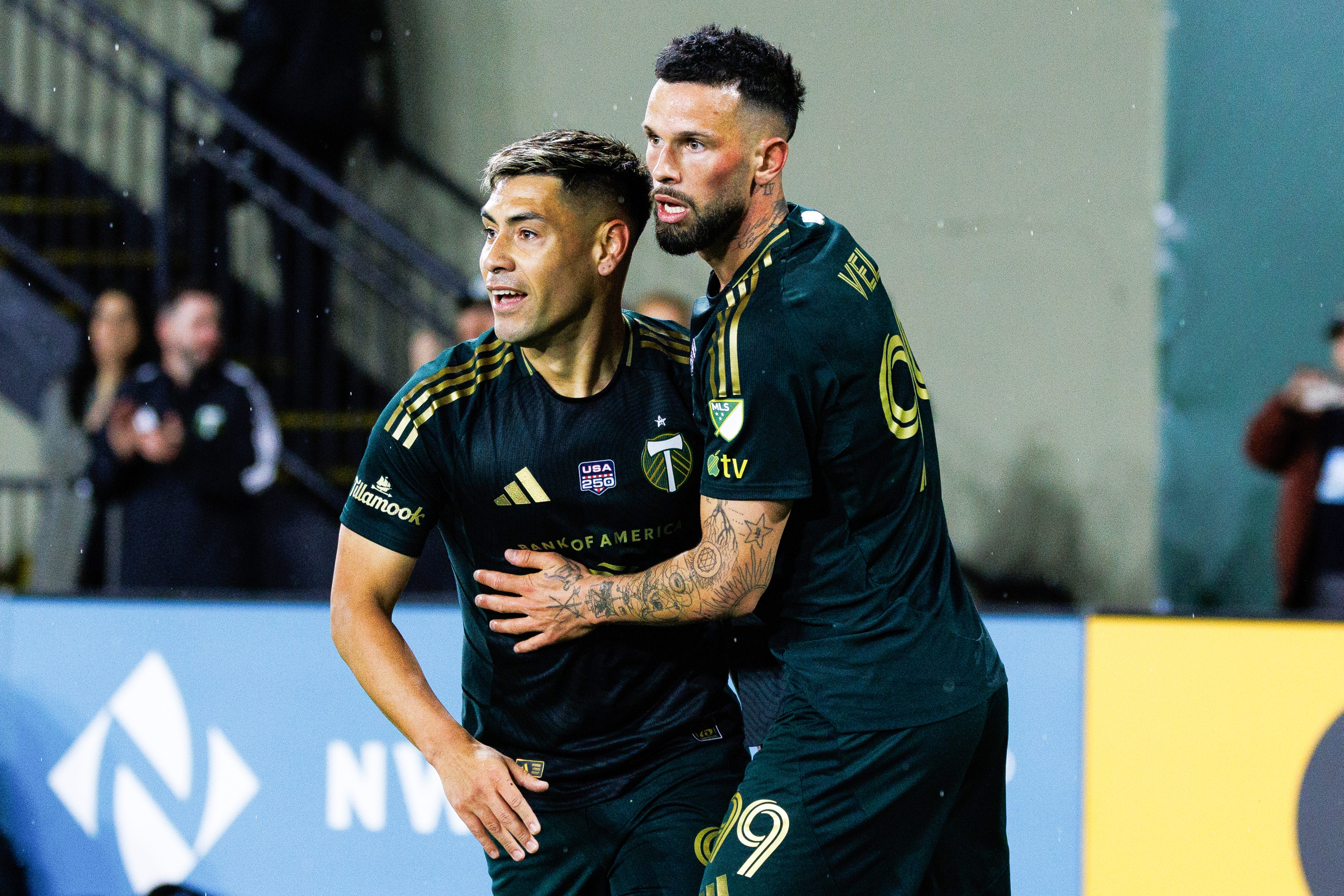
As the match wound down, it appeared the teams would draw. A deflected shot on Columbus’ end in the 88th minute seemed to sit still in the box for an eternity, until Timbers midfielder Ariel Lassiter appeared and slammed it into the back of the net. Euphoria filled the stadium for the final five minutes until the whistle blew, with the voices of 20,000 people echoing off the vaulted ceilings. It kept raining, and everybody went home.

wonderful writing
The MAC building was not built in 1912 by any means. More like the early 70s. Easy fact to check.