


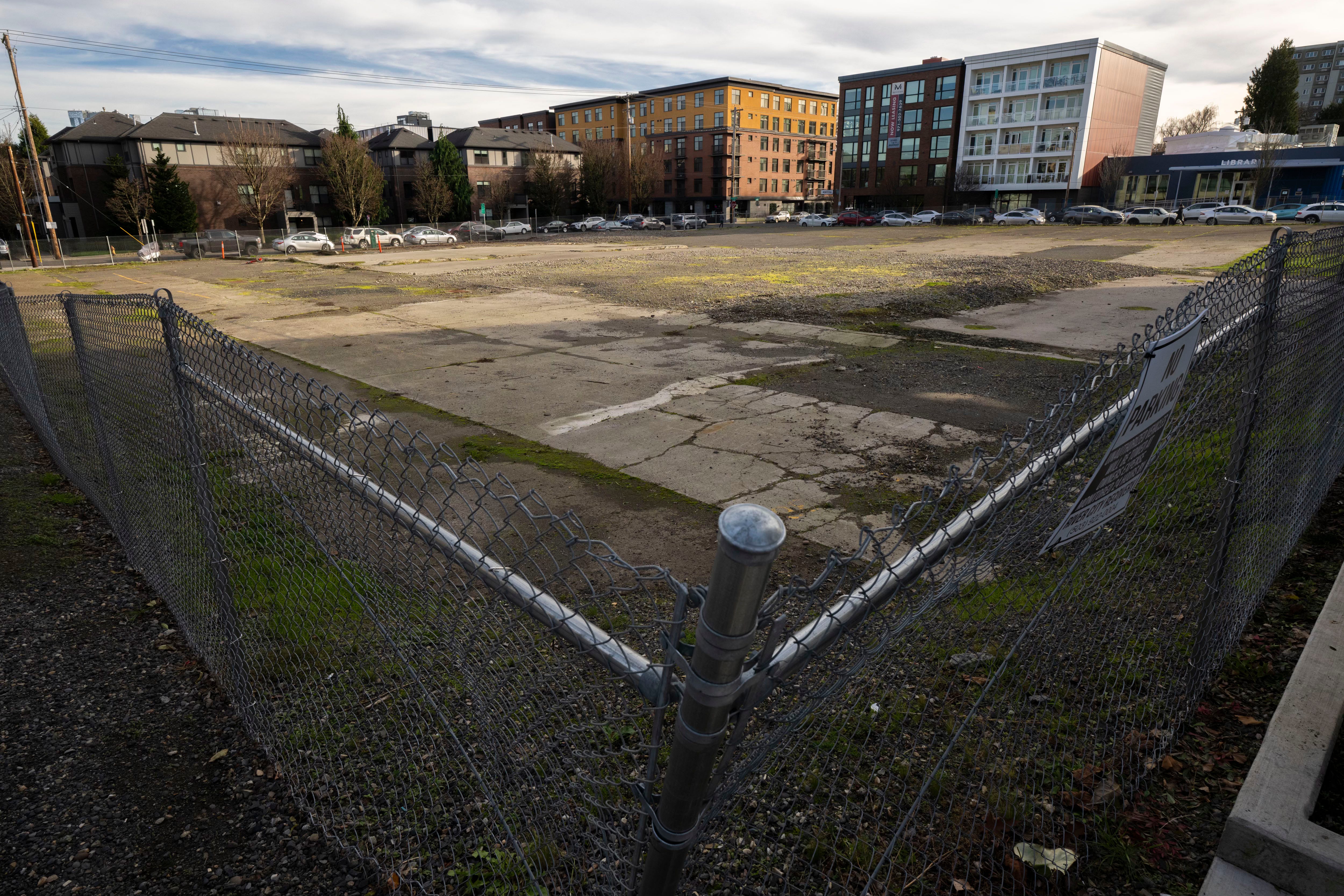
For more than a decade, the city promised to build a park at Northwest 20th and Pettygrove.
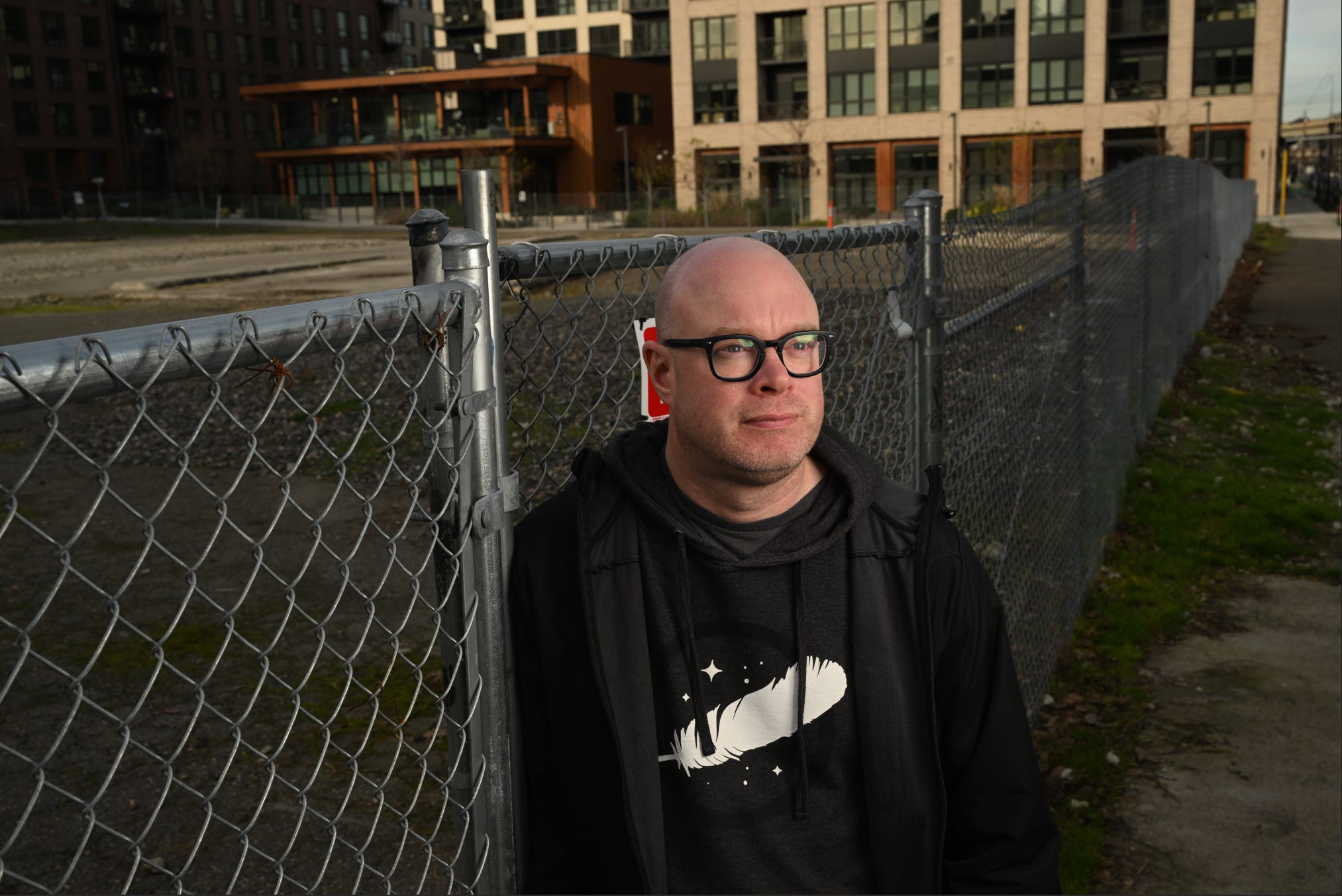
Yet a “fenced-off pile of dirt” and no timetable to begin construction is all Northwest District Association President Todd Zarnitz sees.
Worse, Portland Parks & Recreation finally admitted—after years of assurances that progress was near—that there is no money for the project and no commitment to find it. That contradicts years of bureau updates affirming that the project was funded and a project manager hired.
Zarnitz dug into public documents recently and made what he called “a stunning discovery.” The Central City Parks System Development Fund—the primary source of the park’s funding—was indeed dry. But the money hadn’t gone to nearby infrastructure mitigating the impact of growth, as state and local law requires.
Two major expense items jumped out from a city financial report:
A $45 million loan to the Fire and Police Disability and Retirement fund in mid-2024 to cover a cash-flow deficit until tax receipts expected that November. In 2025, the City Council approved another loan for $50 million for the same purpose, turning a onetime bailout into a troubling pattern.
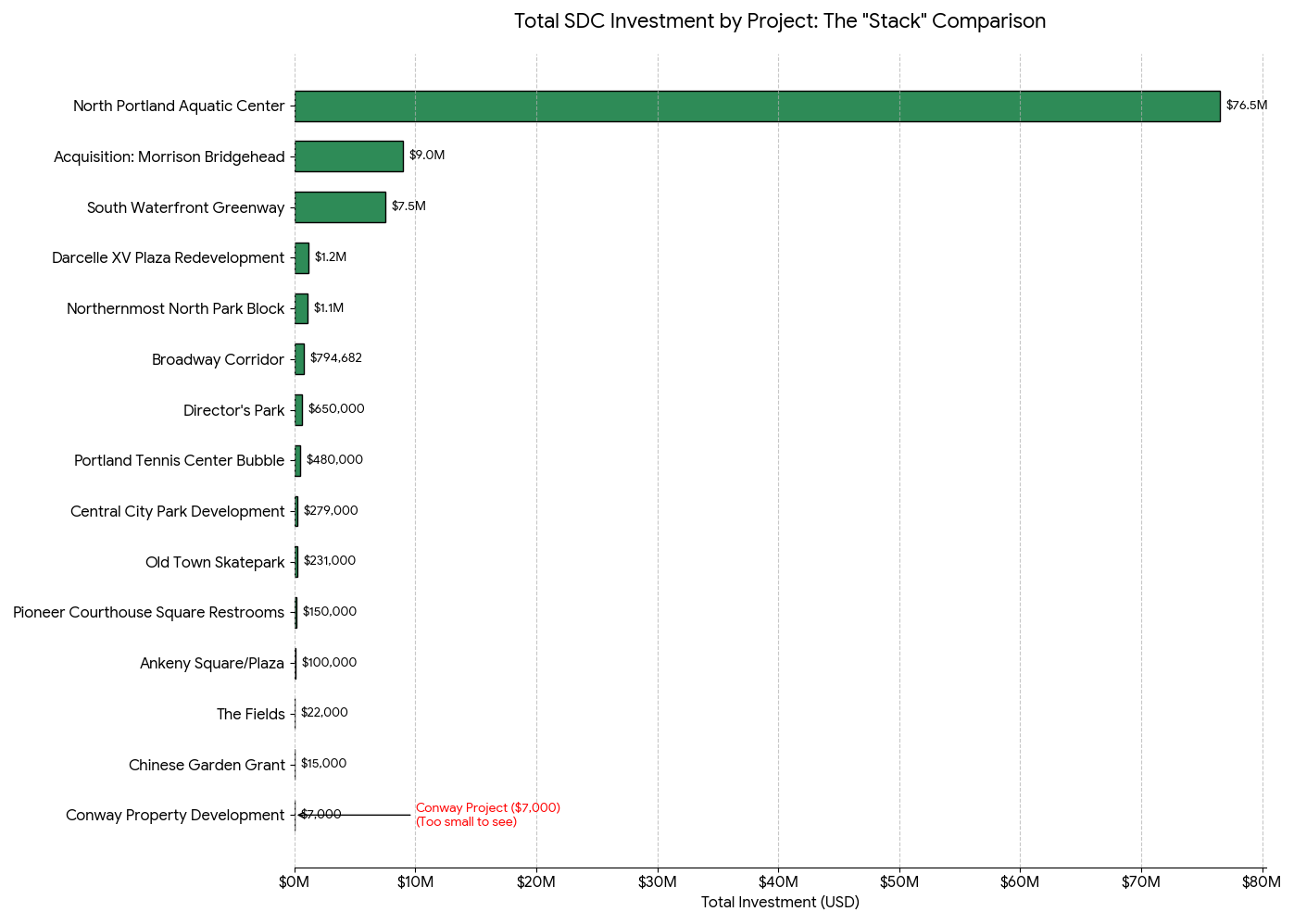
$60 million was transferred out of the Central City SDC zone by City Councilor Dan Ryan to build an aquatic center in North Portland.
Neither made sense to Zarnitz. The retirement fund transfer seemed to violate state law dedicating SDC funds exclusively for capital projects. And diverting the money to a swimming facility about four miles beyond the boundary was particularly galling. The proposed Northgate Park Aquatic Center had been in the news, but few knew the primary source of its funding.
“We didn’t understand that those funds were from our account,” Zarnitz said. “I didn’t understand it was our money until recently.”
Now he can’t get the subject off his mind.
“Apparently Dan Ryan grabbed what looks to be the ENTIRE uninvested Central City area SDC collections, and committed that money to the North Portland Aquatic Center.”
Ryan was commissioner of Portland Parks & Recreation when money for the pool was pulled from the Central City zone two years ago. That step was quick and easy. Under state law, a local jurisdiction can modify its list of approved projects within 30 days if notice is given to those who have requested it. NWDA representatives were unaware of the decision or what they could have done to challenge it.
Bret Horner, who has been managing the Slabtown Park project for PP&R, never informed NWDA representatives of the subtle opportunity that had slipped past them. In an email last March, he finally revealed, “All available parks SDC funds have been allocated already by former commissioner Ryan last year.”
Horner justified the out-of-area spending.
“PP&R does track where revenue collection and expenditures occur through the years,” he wrote in another message, “with the goal of making sure we are distributing funds for park improvements throughout the city and to make sure funds don’t get spent exclusively or too significantly in one area of the city vs. the other areas. This happens in tandem with an annual exercise to prioritize projects for SDC funding based on a variety of criteria (service level, household rating and equity rating).
“Parks SDC funds are also prioritized to be spent in areas that have fewer resources and are highly rated based on the criteria previously mentioned—fewer parks and with fewer experiences like sports fields, playgrounds and picnic areas.”
Horner did not mention the city code limiting such transfers. While City Code 17.13.110 allows SDC revenues to be distributed anywhere in the city, at least 43% of the funds must be spent in the local district where they were generated.
John DiLorenzo, an attorney with Davis Wright Tremaine who has brought several successful suits against the city of Portland, doubts the city’s 43% rule would stand up to constitutional challenge because it allows a geographical separation from the site of the fees extracted and the mitigation provided.
Ryan evasive
The NW Examiner asked Ryan why he moved funds from the Central City to North Portland.
“While serving as parks commissioner, I advocated for a number of projects and made my priorities clear, including the North Portland Aquatic Center,” read a statement he issued. “I am well aware of the city’s deficit in swimming facilities, especially in North Portland, and did everything I could to advance the NPAC.”
Ryan was less attentive to the public pool deficit in Northwest Portland, which has not had one since the tiny, four-lane lap pool in the Metropolitan Learning Center fell into disrepair and closed in about 2008.
“The Parks Bureau staff ultimately brought the project to fruition, including the details around funding and execution,” Ryan’s statement said of the aquatic center. “The specific financial tradeoffs were not the focus of my engagement.”
Ryan did not respond to these follow-up questions:
Why was the Central City fund depleted to the degree that the bureau could not fulfill its prior and much more modest commitment to Slabtown Park? (Various documents list the park allocation as $3 million to $5 million.)
Had he jumped into campaign mode while he was still parks commissioner of the entire city?
Ryan moved the funds to the North Portland aquatic center in December 2023, when commissioners were elected citywide under the old city charter. A city press release touted the action: “Commissioner Ryan directs nearly $60 million in development fees to North Portland Aquatic Center.”
A month later, he declared his candidacy for the newly created District 2 seat. Bringing home the bacon to their local constituencies is something candidates brag about, but Ryan had procured the funds when his mandate was still to serve the entire city.
We wanted to know if the councilor recognized these dual loyalties and the favoritism he showed to his home district while he was parks commissioner. It was a question he did not acknowledge.
Neglected quadrant
This was not the first time Northwest Portland would get the short end of SDC allocations that its construction projects produced. Although there are only two official SDC zones—Central City and non-Central City—the Parks Bureau keeps more specific breakdowns of investments by projects and subareas.
The division into two zones also blurs the Northwest District role in that the development hub in recent years—Slabtown, also called the Conway Master Plan area—is designated as within the Central City zone.
In no other city zoning or policy categories is this area considered part of the Central City. Zarnitz suspects the Slabtown area was “gerrymandered” into the Central City zone to minimize the share of SDC revenues attributed to Northwest Portland. For the past 15 years, Slabtown has been the mother lode of new construction in the district, if not the westside. Meanwhile, the public infrastructure that should have accompanied it has not materialized.
The 2025 Parks & Recreation SDC Annual Report lists investments for the Northwest area since 1999. Only $148,000 has been spent in that area over 26 years, and $110,000 of that was for the Washington Park South Entry Project, which was not in Northwest Portland at all. Take that out, and Northwest Portland has received one-tenth of 1% of total SDC investments in the city. The other two projects—an entry to Forest Park along Highway 30 and acquisition of park land in Linnton—were also outside the Northwest District, so it is no exaggeration to say the neighborhood has gotten nothing in the whole deal.
That’s how Zarnitz sees it:
“We’re doing the lion’s share of work in building dense, urban, vibrant neighborhoods, and that money should have been spent to make those neighborhoods the most successful they can be. That’s the purpose of that money being raised.”
Daunting optics
But Zarnitz’s organization is ambivalent about the imbalance he sees. It came out at a recent meeting of the NWDA Planning Committee.
“This city has very few public pools, and they’re hard to find places for, and North Portland is under-parked,” NWDA board member Regina Hauser said. “I do not like the optics of the neighborhoods you identified complaining that money was stolen from them to benefit North Portland. I just don’t think that’s a good idea.”
“Regina is right—the optics of us whining about it are going to get us nowhere,” added Roger Vrilakas, a member of the association’s Planning Committee since the 1980s. “I’m much more interested in trying to fix the essence of the problem, which is state law that says SDC funds can only be spent on capital projects, not maintenance. That’s the problem.”
It certainly is one of the problems. Northwest and North Portland have both lost use of public pools due to insufficient resources to repair and maintain them.
“I appreciate the optics,” said Steve Pinger, another longtime NWDA representative, “but I think what we have taken as being the third rail in a lot of political discourse in this city is not so much the third rail anymore. I think we’re simply trying to sort out what’s appropriate for the city to be doing with the resources that they have. And right now, the city’s going broke, so everything’s on the table.”
Reconciling a peculiar loan
Noel Johnson, a local developer who lives in the Northwest District and has long been active in neighborhood affairs, has been critical of Portland’s management of system development charges for years. He personally compiled a list of every housing development built in the district since 2000 to show that the neighborhood was getting a paltry return on the growth it shouldered.
But he said the most striking evidence that the city can’t be trusted to manage SDCs is the $45 million loan to the Fire and Police Disability and Retirement fund classified as an investment in Northwest Portland.
He called it “crazy” … and worse.
“The City Council’s decision this past July, and also in July 2024, to use $50 million of parks fees for something other than offsetting development is most probably illegal… let alone unethical,” Johnson said.
Johnson referred to Oregon Revised Statutes 223.307, which states that “reimbursement fees may be spent only on capital improvements associated with the systems for which the fees are assessed including expenditures relating to repayment of indebtedness.”
“With the state law, only if one interprets the use of ‘expenditure’ to exclude loans, would ORS 223.302-307 allow for ‘interfund’ loans to come from SDC funds,” he continued.
“That is a hard sell. A fiduciary with another person’s money is not legally in the clear if they say they just ‘loaned’ the money to their friend, instead of investing it like they were supposed to.”
Zarnitz also sees something fishy in the way Parks SDC account managers handled the loan. He called the terms friendly to the borrower and not faithful to city code.
Portland City Code 17.13.110 A. states:
“All monies derived from the Parks and Recreation SDC must be placed in the Parks and Recreation SDC Account. Funds in the Parks and Recreation SDC Account must be used solely for the purpose of providing capacity-increasing capital improvements as identified in the adopted Parks and Recreation SDC-CIP [Capital Improvement Plan].”
As neither Johnson or Zarnitz are lawyers, we asked two local attorneys to review their claims. Both agreed with their conclusions and had further concerns with the city’s management of the SDC program.
Portland Parks & Recreation was asked to comment on the two loans to the disability and retirement fund. An addendum will be posted if a response is received.
At some point people in Portland need to stop constantly being paranoid about “optics” (which usually equates to anticipation of one or more special interest representative or group claiming false or otherwise misplaced outrage to push their agendas) and start worrying about common sense, actual fairness, and reality.
Btw, I grew up and still have family that live only a short distance from the North Portland aquatic center in question - that area is doing much better than the Pearl District/NW as far as safety, new businesses coming in, cleanliness, and park maintenance. Claiming any sort of NW elitism at this point to shut down valid complaints over city hall wrong-doings is a very tired trope.
Superb reporting. I support law suits on this matter.