


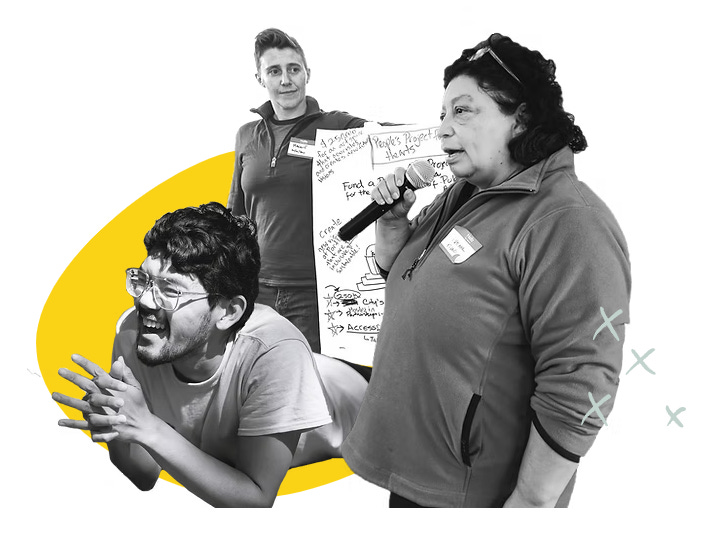
A participatory budgeting initiative, Measure 26-267, is on the November ballot, and anyone claiming to know how it would work is guessing.
Campaign manager Eddie Kurtz of Your 2 Cents, who made his case at a Downtown Neighborhood Association meeting last month, said it’s about time the taxpayers got to decide where some of their money goes.
His most repeated lines were, “It’s only $16 million from an $8 billion budget,” and the reason public officials oppose it is, “They don’t want to give up control.”
The money raised would be spent on projects selected by citizens participating in a yet-to-be-defined process. It could not go for staffing or government operations, which leaves capital improvements, such as playground equipment in parks or public benches.
Kurtz said the program would rebuild sagging trust in local government. Similar programs in other cities have been popular, he said, as evidenced by the number of people who participate by proposing projects or helping to select them.
Kurtz insisted that the measure would not raise taxes. Though technically true, it would drain money from the general fund, which in turn would either reduce funds for existing programs or lead to higher fees or taxes. It would also involve an administrative apparatus, a layer of overhead uncapped in the ballot language.
This is not about giving voters a stronger voice in the spending priorities of their city. It’s a small grants program that would motivate a narrow spectrum of individuals and groups having a cause. Our neighborhoods already have access to several small grants programs administered by Metro, the Office of Community & Civic Life and the Oregon Community Foundation. These programs are beneficial, but they to not produce the transformational city engagement Kurtz touts.
Our local governments are plagued by voter-initiated levies raising far more money than is needed or can even be spent. We fund housing and homeless services, clean energy and kindergarten for all with guaranteed revenue streams that are not balanced against other spending commitments. A warm generality or touching image can draw votes from people who cannot know if the dollars to be generated are wildly out of proportion to the need.
Once the money is approved, recipient agencies will insist they need it all—if not now, then in future generations. Other cities have approved participatory budgeting systems, but none so generous and so permanent. And several of these have been overturned after a brief experience with the outcomes. Measure 26-267 is not a trial—it would permanently divert 2% of the city’s general revenues.
There are $16 million reasons to vote NO on this measure. Here’s one more:
As far as I can tell, the measure does not limit spending to capital projects. It invites residents to submit “project ideas” for spending available funds, but never defines what qualifies as a “project.” The money could therefore go to a broad range of programs and activities, not just public capital projects.
And here's the fundamental accountability problem: the same groups pushing this measure, backed by dark money from sources they refuse to identify, could submit proposals seeking a share of the money. In effect, organizations that help create the system could—and probably would— also seek to benefit from it.
Who will decide which proposals get funded? What prevents politically connected groups from steering public money toward their own priorities? And why should voters approve an open-ended spending mechanism before these questions are answered?
Portland needs transparency and accountability. Not a blank check for a scheme—or gimmick— shaped by undisclosed interests.
A NO vote is well-deserved.