



For Elliot Lavine, November is always a special month for Saturday Morning Classics, a time when as the end of the year approaches, Lavine becomes even more introspective and thoughtful in his film choices. Perhaps something about the end of daylight saving time or the falling leaves? Time to decompress, as brisk and crisp turns to chilly and raw? So many reasons to turn inward this month and contemplate the real world, then spend a few hours each Saturday morning, escaping into cinematic fantasy.
This is our monthly look at coming attractions for Cinema 21’s popular Saturday Morning Classics. Film programmer Elliot Lavine curates a theme every month, and we let you know what’s coming to the big screen each Saturday at 11 a.m. at our iconic neighborhood theater at 616 NW 21st Ave.
Note: There will be no Saturday Morning Classic movies in December. But have no fear, the classics return with a vengeance in January with a month of Hitchcock. On second thought, maybe there will be something for you to fear come January.
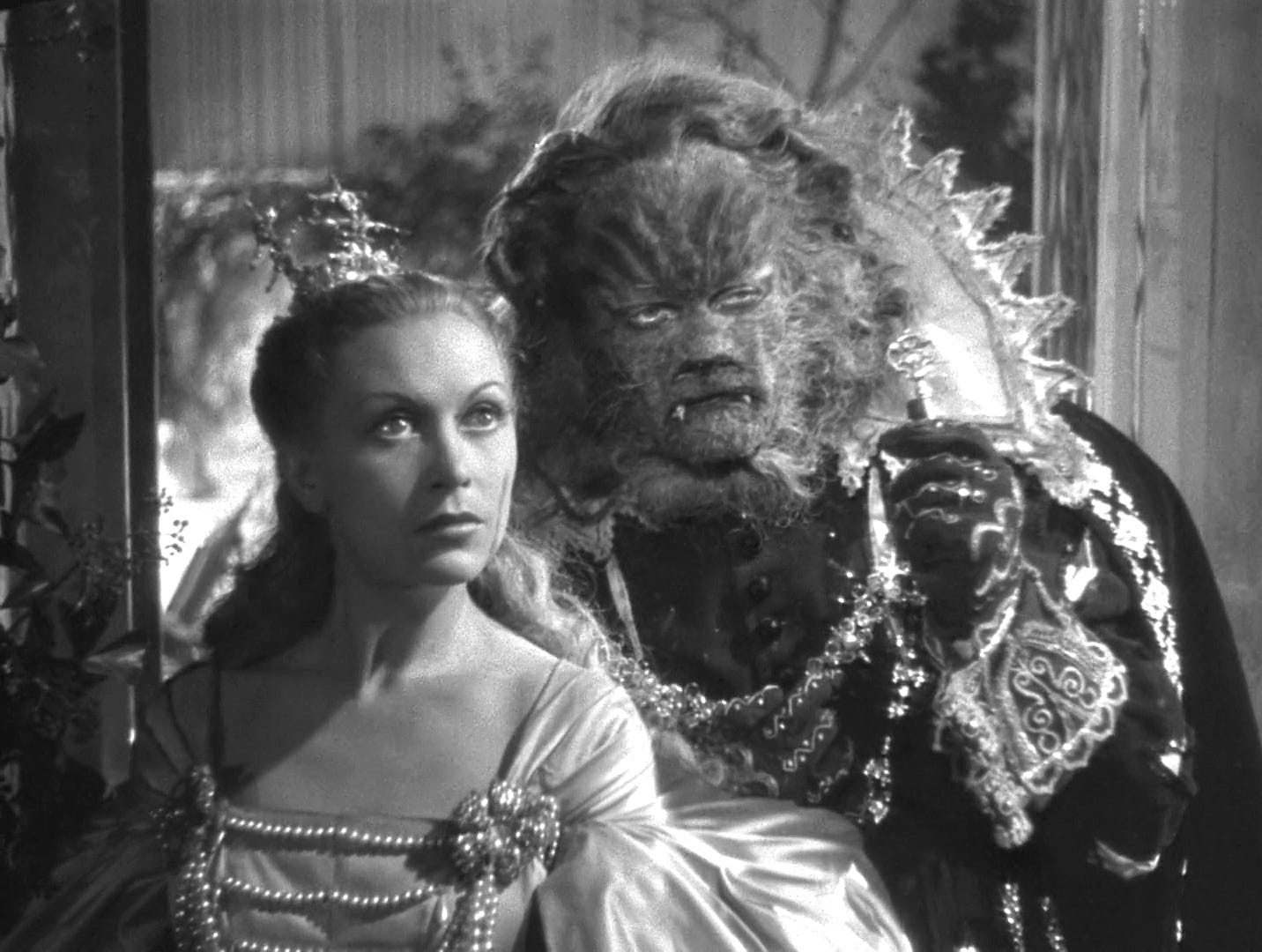
BEAUTY AND THE BEAST (La Belle et la Bête) (1946) at Cinema 21 on Nov. 7. Director: Jean Cocteau
Cocteau considered himself a poet first. That shows in his approach to filmmaking. Instead of words, the French director often uses surrealistic images and dreamlike scenes and sequences. Lavine calls “Beauty and the Beast,” “a poetic masterpiece by any standard … a moody rendering of the classic fairy tale, evoking mesmerizing images out of its endlessly romantic shadows.
This is film magic, shot in black and white. That was magic before the more colorful Disney remakes. And I am not knocking the sweeter and sanitized Disney versions. My daughter and I enjoyed them.
But Cocteau’s “Beauty and the Beast” is a film for grownups. It is filled with darkness, dread and desire. There is also old-fashioned trick photography using mirrors, slow and reverse motion, rather than today’s highly technical visual effects. Cocteau’s “tricks” may seem archaic by today’s standards, but they create their own wizardry. And oftentimes, simple is better.
The Beast in Cocteau’s story is a lonely, misunderstood man. The film critic Roger Ebert said the film’s message is that “anyone who has an unhappy childhood may grow up to be a beast.” Cocteau made this film in France just after the end of World War II and the Nazi occupation of France, when many French children had suffered unhappy childhoods.
Starring Jean Marais as the Beast and Josette Day as the Beauty.
Interesting facts:
France’s economy was shattered by World War II. Everything was in short supply. Cocteau was forced to film in black and white, but that ended up working to the film’s advantage, giving it a mysterious and supernatural quality.
To create living human carvings, Cocteau hired small children who were made up with plaster to look like stone figures.
Jean Marais spent five hours in makeup daily to transform into the Beast. It is a remarkable costume complete with claws that smoke, but it has to be said, some modern-day movie-goers will look at Cocteau’s Beast and see Lucas’ Chewbacca.
Favorite lines: “Love can turn a man into a beast. It can also make an ugly man beautiful.”
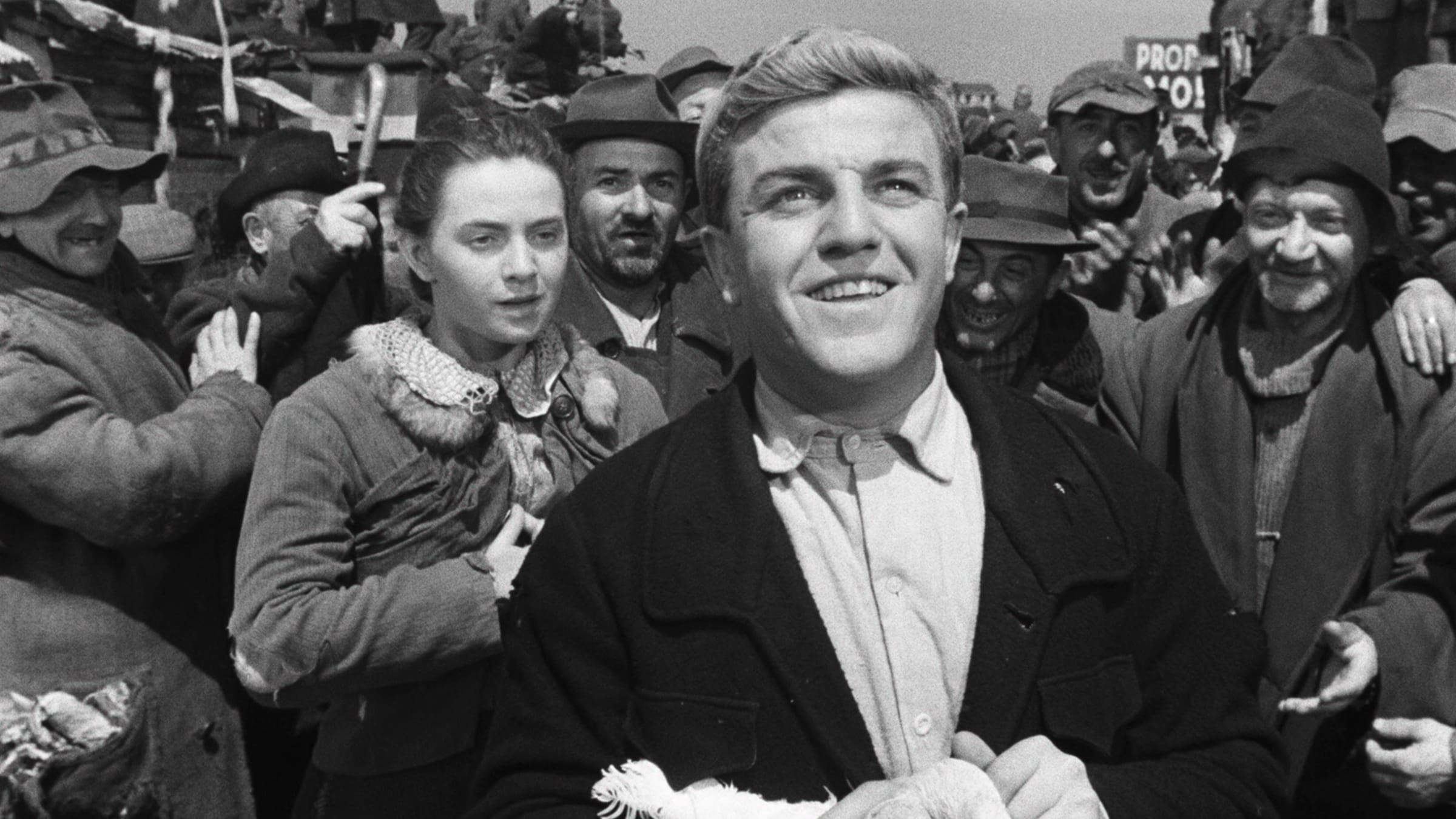
MIRACLE IN MILAN (1951) at Cinema 21 on Nov. 14. Director: Vittorio De Sica
Still post-war, still Europe, still black and white. But this time, the mystical, surrealistic fairy tale takes place in Italy in the years after the war and after the collapse of the government of fascist dictator Benito Mussolini. Lavine says the film “presents a gritty, neo-realistic slice of impoverished life on the streets in Milan, Italy.”
Despite that, this movie starts in the most charming way, when a slightly shriveled but sprightly nonna named Lolotta goes out to water her cabbage patch. She hears and sees a crying baby hidden among the leafy food staple of post-war Italy. (And of course, it is a baby boy, because according to European legend, baby boys come from cabbage patches, baby girls come from rose bushes.)
Lolotta raises the orphan boy as her own, lavishing her attention, optimism and magical spirit on her dear Toto. But Lolotta dies when Toto is just 11. He is sent to an orphanage, eventually ages out and finds refuge with vagabonds, beggars and derelicts sheltering in boxes on the fringes of the city.
The sights and sounds of the post-war poverty are “heartbreakingly real,“ says Lavine. But he adds that De Sica transcends “the banal into a mystical fairy tale, lifting itself into the realm of mystical surrealism, bringing us closer to the spirit of the people it depicts.”
Toto is his Lolotta’s boy and his sunny disposition is infectious. He turns this ragtag group of squatting destitute souls into a close-knit community. Just as that happens, oil is discovered on the land and greedy, top-hatted, fur-collared businessmen swoop in to claim the land. We know how this movie will end.
But not exactly, because the ghostly spirit of Lolotta appears. Doves and angels fly. And the poor eventually fly away on broomsticks for a better world where when a man says “buongiorno,” he really means it.
Critics have praised De Sica for linking magic with moral truth. And the film possesses a sly Chaplin-like sense of humor.
“Miracle in Milan” is considered a classic of Italian cinema. It won the Grand Prize at Cannes in 1951. Still, Lavine tells me, it rarely plays anymore on the big screen.
Emma Gramatica plays Lolotta. Francesco Golisano plays Toto.
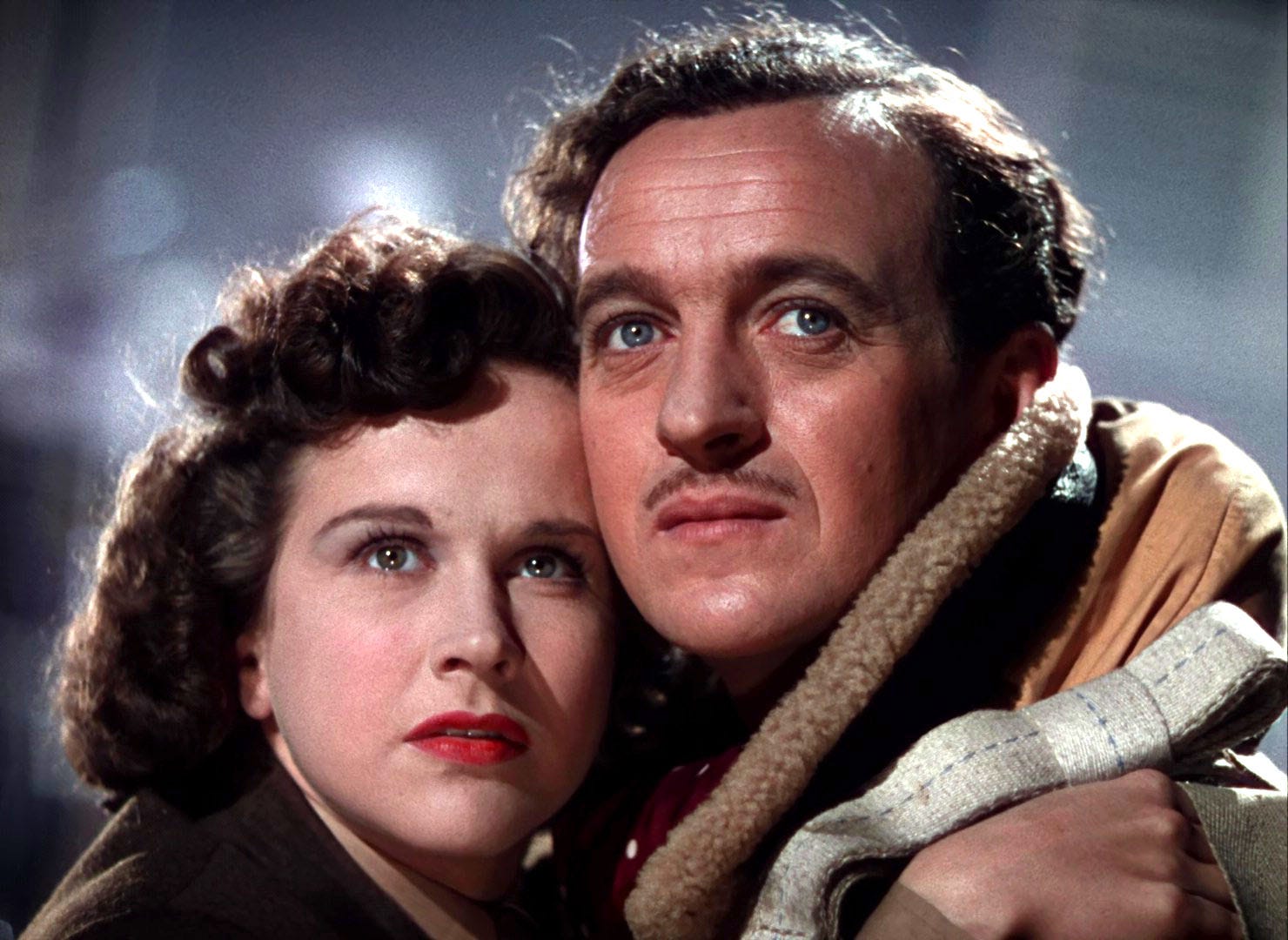
A MATTER OF LIFE AND DEATH (1946) at Cinema 21 Nov. 21. Directors: Michael Powell and Emeric Pressburger
There is so much going on in this film. It is political, philosophical and fantastical. Lavine calls it “an unusual mix ... It’s one of those films that needs to be seen to be believed and once seen can never be forgotten.”
It is also a war story and a love story.
Set in England during World War II, a Royal Air Force pilot gets ready to plunge to his death. He has to bail out of his burning plane without a parachute. But before he does that, he contacts an Allied radio operator to tell her what he is about to do.
David Niven plays Peter, the dashing hero. Kim Hunter is June, the American radio operator working in England. She becomes the last witness to his last words. After some witty and heartfelt banter between the two of them, he signs out, and she can do nothing to prevent his death.
This is England, more than four long years into the war that had killed almost half a million British soldiers and civilians. The story is set in the last days of the war, just before Hitler surrenders.
Our hero cheats death. He wakes up on an empty beach, not sure where he is or what has happened. Is he on land or is he in the hereafter? (We are told from the very first that the pilot’s life and imagination was shaped violently by war, as was likely true of many returning soldiers — but if we dwell on that too much, we may miss the film’s enchantment.)
Pilot Peter is alive, and June finds him. They fall in love, quickly.
Alas, a celestial messenger from the above and beyond comes down to earth to tell the loved-up couple that the pilot’s life should not have been spared. He should have died. His survival is the result of a clerical error made above in the afterlife. The lovers are devastated, but Peter is given the opportunity to argue for his life in a court up in the celestial hereafter.
To mount that defense, Peter climbs the stairway to heaven, where court is in session.
There are no bright halos in this depiction of the hereafter. No soft, round cherubs. It is stark, sharp and angular. The geometry creates a futuristic landscape that is clean and sterile and interesting, but utterly unfriendly.
Directors Powell and Pressburger film the celestial afterlife scenes in crystal-clear black and white. In contrast, they film England in vivid Technicolor. Terra firma appears far more inviting and promising
Will earthly love triumph over this life-and-death bureaucratic snafu? Of course, this is romance and fantasy. But how we get there is the movie’s vision. Lavine calls it brilliant.
Interesting facts:
After the war, the British government’s film board suggested to the directors that they make a film with the intent of improving relations between the British and the Americans, who together had just defeated fascism.
There were some tensions between the two allies after the war as the world realigned. America was ascending, while Great Britain was in decline. Also, there were still a lot of American soldiers in Britain after the war. The British resented them, commonly saying American GIs were “overpaid, over-sexed and over here.”
While the British government proposed the idea for the film, it did not have any involvement in the story or the movie itself.
There were 106 steps in the motorized escalator to heaven built for the film. The contraption was driven by a 12-horsepower engine so it could move forward and backward.
When the film was released in the U.S., it was titled “Stairway to Heaven” instead of “A Matter of Life and Death.” Interesting, because the afterlife in the movie is not called heaven. The directors did not want to limit themselves by creating heaven, with all that implies.
However, American distributors did not want the word “death” in the title, thinking that would deter war-weary Americans from going to movie theaters.
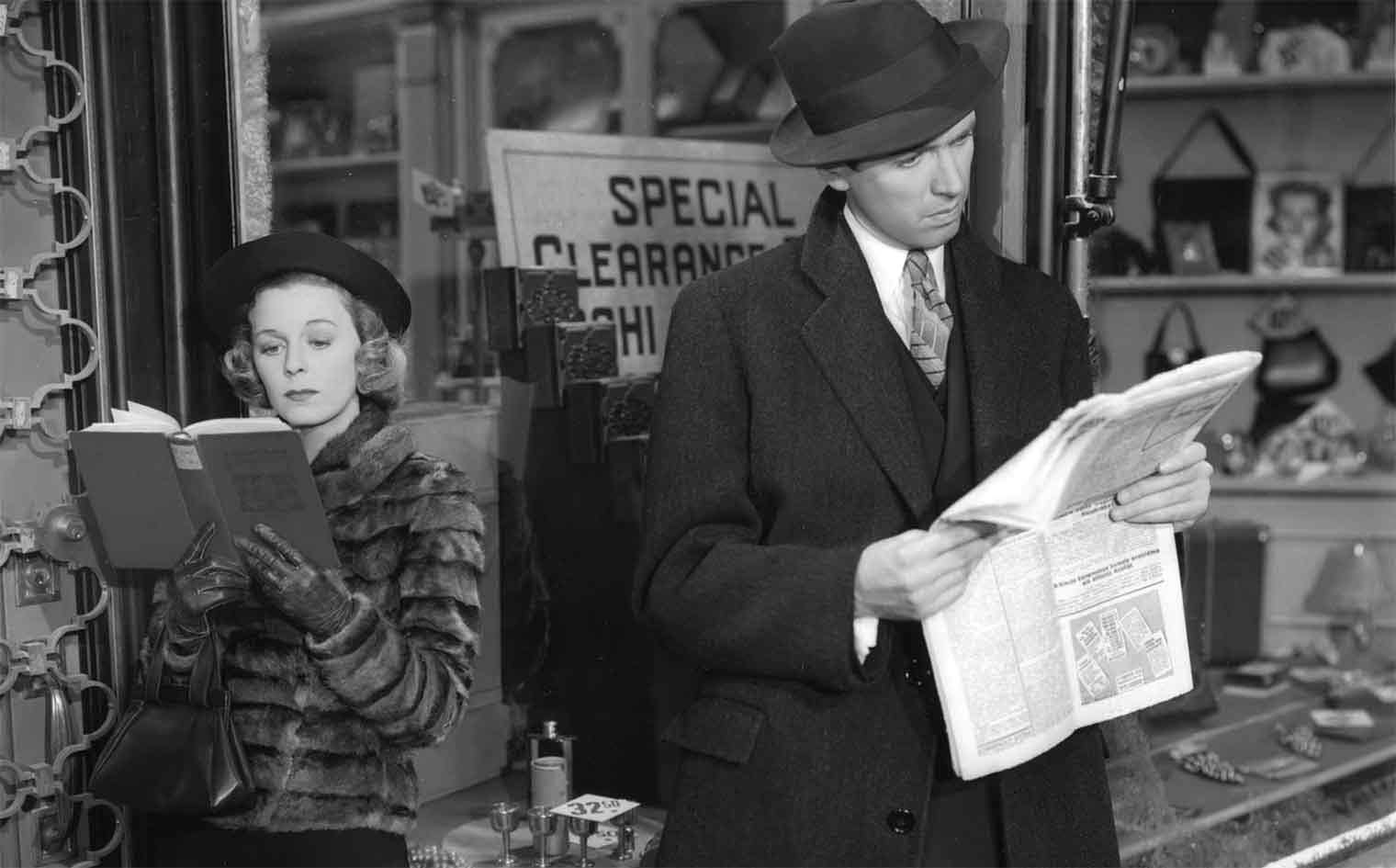
THE SHOP AROUND THE CORNER (1940) at Cinema 21 on Nov. 28. Director: Ernst Lubitsch
This is the one American film in November, though it is directed by a German immigrant and based on a 1937 Hungarian play “Parfumerie” by Miklos Laszlo. Lavine says that “only a genius European director could pull this one off with such style and class.”
Compared to the other films in this month’s Saturday Morning Classics series, you might think this film is a simple romantic comedy, but Lavine says Director Lubitsch showed “what a little sophistication could bring to a film like this.”
The film is shot in black and white. It takes place in a leather goods shop in Budapest during the Depression just before World War II.
Jimmy Stewart and Margaret Sullavan portray two bickering sales clerks. They’re both lonely, but each has an anonymous secret pen pal to whom each can pour out their hearts. Of course, they don’t know their secret pen pals are one another.
In person, they quarrel. In their anonymous letters, they fall in love.
A first meeting and date, and a Christmas Eve dinner between the two will reveal all, which makes this a nice pre-Christmas movie to end November.
Great repartee between Stewart and Sullavan fills the plot-twist storyline with both trepidation and charm.
The plot may seem old hat to us now, especially after the popularity of 1998’s “You’vGot Mail.” That, of course, is a remake for the electronic age of “A Shop Around the Corner.”
Interesting fact:
Meg Ryan in “You’ve Got Mail” owns a bookstore called “The Shop Around the Corner” — Director Nora Ephron paying explicit homage to Lubitsch’s film.