


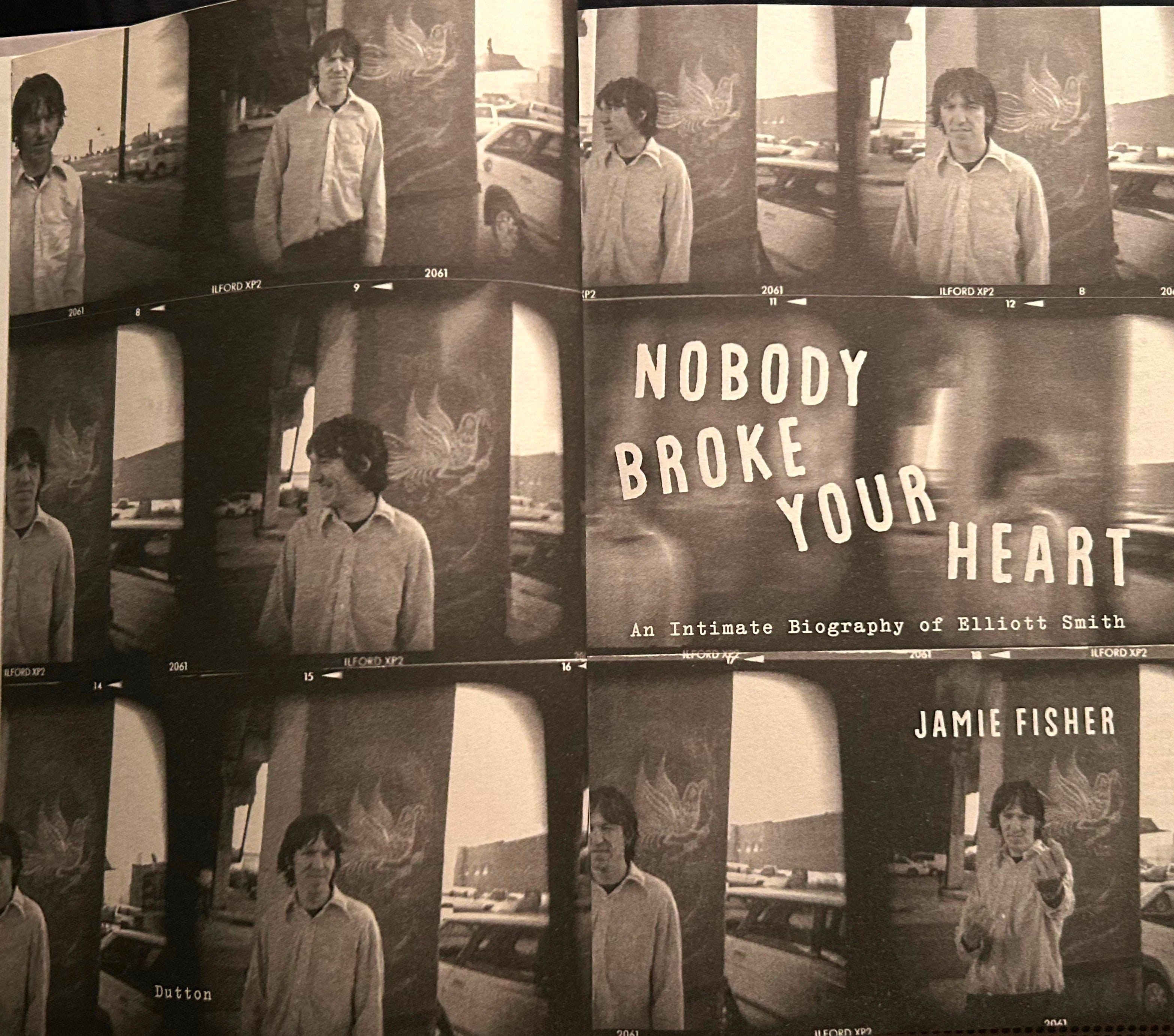
Jamie Fisher’s first book, “Nobody Broke Your Heart: An Intimate Biography of Elliott Smith,” comes out next week. Fisher, a Portland-based researcher, book reviewer, and fact-checker for the New York Times, brings her skills to bear here. She traveled to Austin, New York, L.A., Portland and Paris to write it. Over four years, she tracked down almost everyone who knew him.
We learn about snatched moments in the recording studios. Bar napkins folded into flowers. Smith’s time as a baker at Old Town’s long-gone second-floor La Patisserie. A trip to Powell’s, where he bought the copy of “Ferdinand the Bull” that he took to have tattooed on his arm. A nephew watching his fret hand and trying to reconcile that sound with the strumming hand. A picture emerges.
He was a loner who needed someone around all the time. Melancholic but also very funny. A romantic who hurt people he loved. Someone who often told his friends that he probably “wasn’t in it for the long haul.”
Fisher and I met at the Rose Gardens, one of Smith’s haunts. Roses are a recurring motif in his lyrics; Smith came here with his little sister and a girlfriend.
I asked her why she wrote the book.
“I started listening to him a lot during the pandemic,” she said. But the articles she had read about Smith didn’t capture aspects of his personality she glimpsed in videos and interviews: his wry humor, his kindness toward strangers, the love he had for family and friends. Fisher writes extensively about Smith’s songwriting and craft, but it’s the person she seems most interested in.
A certain generation, she said, has absorbed the idea that the tragedy of Smith’s life was that his friends didn’t save him from himself.
“If there’s a corrective here that I hope the book addresses,” Fisher said, “it’s that his friends loved him very much. They really, really tried.”
Smith emerges as a thinker, a reader, a gentle observer.
“He placed a lot of value on love,” she said.
The mythology surrounding Smith flattens and distorts him. The sad, solitary singer may be easier to understand than the complicated person who could be both withdrawn and desperate for someone to stay up all night with him—suffering and funny, gentle and capable of hurting people.
“There is that archetype of the suffering artist,” Fisher said. “But I don’t think you need to have the suffering to make the art, I think you can be happy and you can make great art. And the songs he wrote when he was happy are just as enduring as the ones he wrote when he was miserable.”
Some people talked on background, others on the record.
Fisher particularly wanted to speak with Fritz Michaud, the producer who worked with Smith on his last album “From a Basement on the Hill.” Michallik could have offered insight into Smith’s final plans for the record, including songs that were being considered. She also wanted to speak his close friends, Sam Coomes and Janet Weiss of Quasi.
”But they wanted their memories to remain private which I totally understand,” she said.
For some people she contacted, she says, talking with her about Smith was good.
“This has been a deeply meaningful project for me on a lot of levels,” Fisher said. “A lot of people have a lot of pain they have held onto, and questions they’ve held onto where talking to someone was ultimately helpful.”
There were a lot of little discoveries along the way.
“Just hearing over and over about his sense of humor,” she said. “It’s not a discovery for me, but I get this from hanging around his fans, this idea that he was always suffering.”
The people who knew him say that’s not so.
Fisher could not say much about the competing theories surrounding his death, including speculation that he was murdered. She pointed to the legal sensitivities surrounding the case, which remains open.
If Smith were alive today, what would she want to talk to him about?
“I probably would just want to talk about the books he was interested in, and not so much about his music. I saw how much he disliked talking to the press. But he was always reading something—Charlemagne, “The Invisible Man.” So I’d be interested in non-industry stuff.”
How much did Portland shape Elliott Smith?
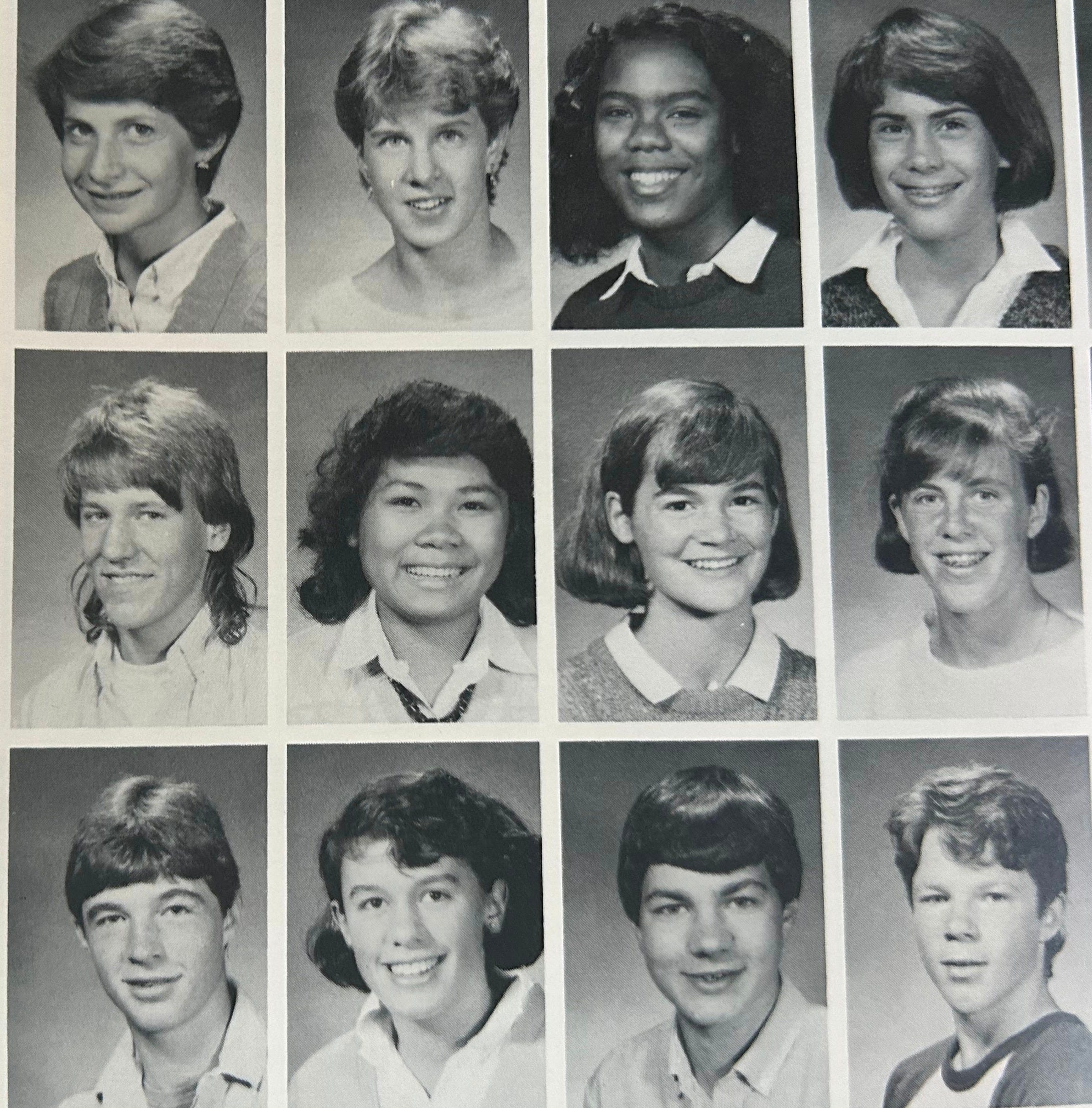
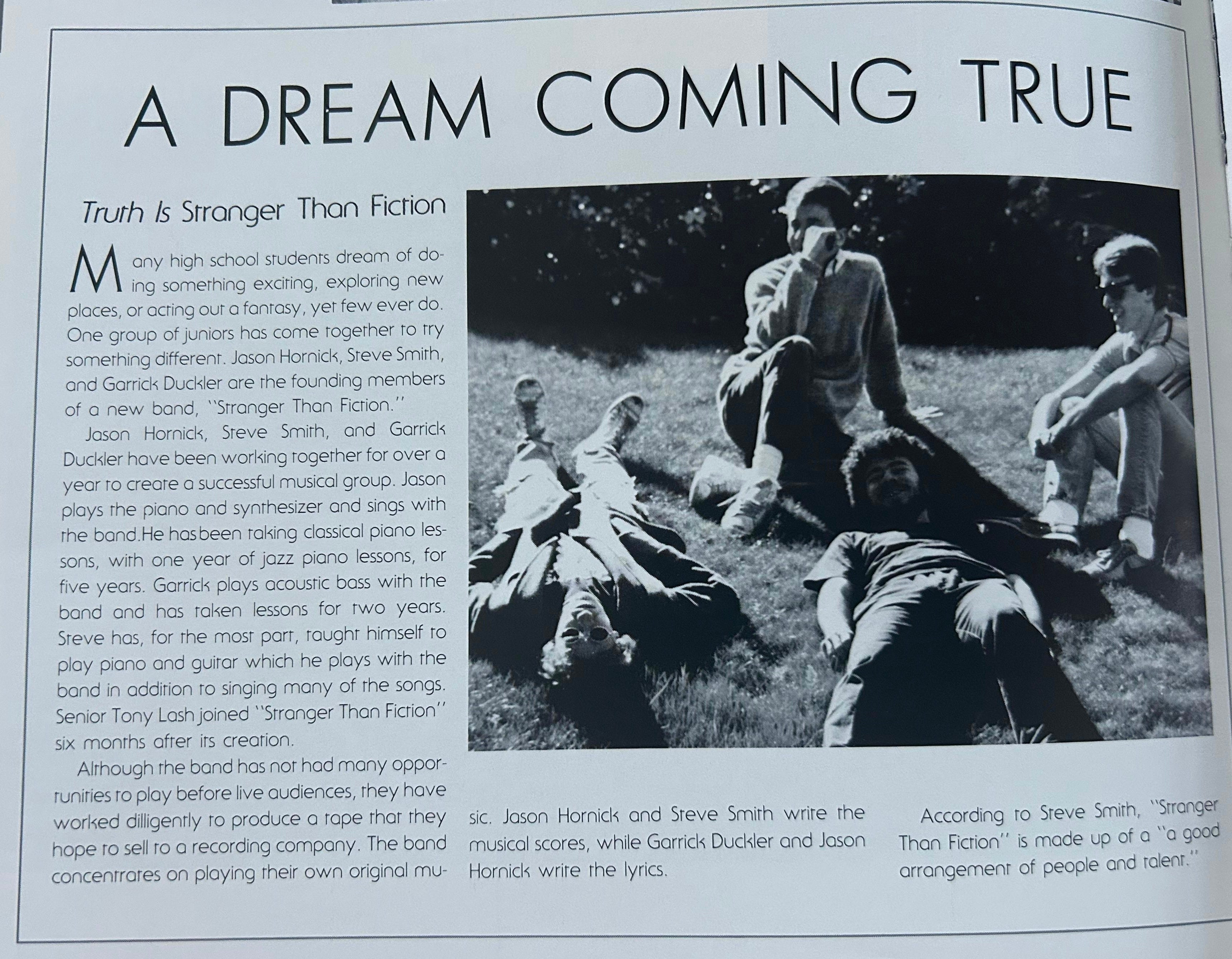
“A huge amount. He comes into his own as an artist here. In high school with his first band, Stranger than Fiction, and then coming back to Portland after college and starting Heatmeiser. And so many of songs have place names tucked into them—Alameda and Condor Avenue.”
You have to be careful not to read too much into his songs, though, she laughs. Condor Avenue wasn’t especially important to Smith, but it was to his close friend, Garrick Duckler, who actually wrote the lyrics.
Fisher appears at Powell's, 1005 W Burnside St., on Aug. 25 at 7 p.m. in conversation with Larry Crane, who started Jackpot! records with Smith, and is the archivist for the Elliott Smith estate.
An Elliott Smith benefit concert is planned for Dec. 16 at Tomorrow Theater, 3530 SE Division St. Proceeds go to Outside/In and the SIMS Foundation, which provides mental health and addiction recovery services for musicians.