


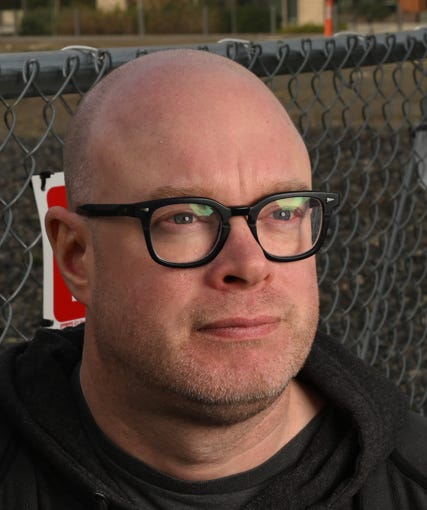
The new chair of the District 4 Coalition wasted no time putting his cards on the table. Before taking the gavel, Todd Zarnitz circulated a 1,000-word manifesto.
Zarnitz was not calling for more power to the assemblage of 30-plus neighborhood associations he now leads; just the opposite. He thinks the coalition should have less.
“We are a support service, not a substitute for local leadership,” he wrote. “The District 4 Coalition is currently drifting toward a ‘flow up’ model, acting as a ‘super neighborhood association’ and central power broker.
“We must immediately implement a ‘flow down’ strategy that democratizes access to the city.”
When he engaged coalition representatives directly at a March 2 board meeting, the clear distinction between top-down and bottom-up got hazy.
“I don’t understand what you’re [saying], said Don Baack, a Hillsdale Neighborhood Association representative. “I understand what your words say, but I don’t know what that means physically. … I think we’re getting off track.”
Former coalition chair Vadim Mozyrsky said, “I hope this is not a one-or-the-other type of deal, and I think the conversation is: Can we have both?”
“This was presented as either neighborhoods are able to advocate for their own needs, or we have to go through the District 4 Coalition to get things done. But I’m not sure whether those are exclusive.”
Mozyrsky described a “united we stand, divided we fall” reality in which neighborhoods joining voices increases their power.
Sylvan Highlands Neighborhood Association representative Sally Kneuven said her association is small and needs the coalition’s support to tackle major land-use issues.
“I’m not advocating yes or no,” said board Vice President Kent Snyder, instead focusing on a “desperately really high priority” for holding a board retreat.
“We have a new executive director,” Snyder continued. “This is a perfect time for us to get together and say, ‘What services does the neighborhood association see? How can this coalition best serve those? What is our purpose?’ And we should do it right away.”
If Snyder’s suggestion was intended as a deflection, the board did not follow up. No plans for a retreat or vision assessment were made.
Marshall Gannett of the Arlington Heights Neighborhood Association wants to pursue the questions Zarnitz raised.
“I read your draft presentation, and I thought it was a breath of fresh air, frankly,” Gannett said.
“There’s an agenda here that I’m expected to buy into and support, and I got the feeling that the coalition viewed itself as—like you said—a big neighborhood, and we were all going to leverage the power of all the individual neighborhoods into some agenda that didn’t originate with us.
“I really think we should take a really careful look at the philosophy that is embodied in what you’ve written and discuss it. I’m a big supporter.”
Glenn Traeger of the Pearl District Neighborhood Association said, “It seems, after reading your paper, that you want to get the coalition away from policy building and to more distribution of information, getting back to basics. … I think that’s great.”
Marita Ingalsbe of the Hayhurst Neighborhood Association agreed with Mozyrsky that “we need flow down and flow up depending on the situation” but thanked Zarnitz for “thinking through this and bringing this topic up.”
Reflecting a week after the meeting, Zarnitz told the NW Examiner “I’m not sure I’m getting anywhere” in advancing his bigger picture of the coalition’s future.
“It’s not there yet,” he said, though perhaps things could move in a month or two.
He’s not sure adopting a resolution or policy document would get to the heart of the situation, which may take “pushing the culture a little bit.”
Zarnitz is not the first person to suggest a limited role for neighborhood coalitions. City Code 3.96 outlines the duties of entities within the Portland neighborhood system.
A district coalition will:
A. Provide training and orientation, information and support services to neighborhood associations within the areas of neighborhood associations served;
B. Facilitate communication between people and government;
C. Promote public participation within the areas of neighborhoods served on issues of livability, safety and public policy;
D. Promote, encourage and support the participation of members of diverse communities within the areas of neighborhoods served; and
E. Administer contracts or memorandums of understanding and operate the district coalition in accordance with standards.
I've been asked to give examples of the differing approaches in action. The creation of coalition-wide committees on policy topics such as land-use, public safety, etc., reflects centralization and can diminish the role of each neighborhood association to act independently and on its unique concerns and circumstances. Coalition-wide policy committees were not part of the Westside coalition before charter reform was enacted.
Kudos to Todd for starting a healthy conversation about the role of District Coalitions. I’ve been a strong supporter of Neighborhood Associations throughout my career and will continue to be.