

By Thomas Dodson
What? Fentanyl is not legal in Portland. But in looking into the definition of de facto in my post last week on the horrible policy of needle distribution paid for by Multnomah County residents, I came to the same conclusion that others have had, and probably many readers have accepted without saying so.
By giving the tools of intravenous use of narcotics to individuals addicted, we are communicating that it is okay for them to engage in illegal actions. And it is obvious that nobody is following them around to arrest them when they finally, if not already, are in possession of illegal substances.
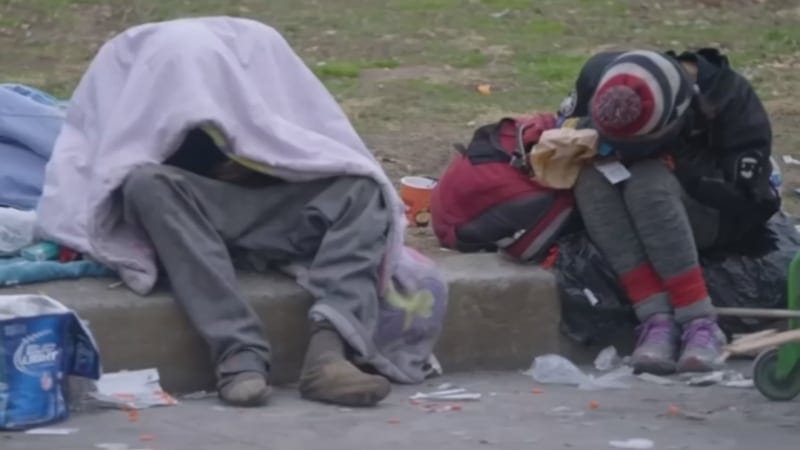
Isn’t it evident that bolstering illegal behavior would have consequences? How far does the city go to insist on law and order and how does it do so? Given the public mess created by discarded needles, the negative effect that open use of intravenous drug use in the city has upon business, tourism and the psyche of people who witness it, the death by overdose caused by the very needles we distribute so that people can use illegal drugs that have uncertain potency and contaminants, and the social and occupational impairments associated with narcotic addiction, I hope that we join other states that have rejected the public health policies that have contributed to the above.
And what about those states?
Texas, which has some of the finest medical institutions in the country and has chosen to make it illegal to pass out needles has an overdose death rate of 20 per 100,000 residents, compared to Oregon, where 36 per 100,000 residents die of overdose.
Idaho is the same. No needle distribution and death from overdoses, like Texas, 20 per 100,000. Iowa death by overdose per 100,000 residents 14.9. Nebraska 11.8. South Dakota 11.3. Mississippi 8.6.
The point here is that all of these states have overdose death rates less than or much less than half of Oregon’s, and none of them have needle distribution. If Oregon’s public health campaign to market needles to individuals with intravenous drug addiction is decreasing overdose deaths as they proclaim, why are our rates so markedly higher than states that don’t have needle distribution programs?
Community interests have a role in deciding public health policies. If infectious diseases were the only health factor involved in pushing needle distribution upon citizens, it would be one thing. But it is not, and even if it were, the evidence for the effectiveness of needle distribution in reducing HIV and Hepatitis C, is evidence not confirmed by a single double blind controlled study. The claims of needle distribution as decreasing overdose deaths are contradicted by others who have studied it. And states that have no needle distribution have lower overdose rates than Oregon by far.
What are those community interests?
How about public safety, civility and beauty. I have yet to find one person who would like to live across the street from a needle distribution site. They become a site to network among other addicted people to find the best drugs and save them a lot of time. I am sure they become sites of drug distribution themselves, and who is going to arrest them?
One can understand decisions that were enacted in the past to alleviate illness, but it is wrong to continue policies that are detrimental. We have made significant advances in treating HIV and hepatitis, efforts that have saved many lives with advanced medications. I hope the public health community takes the off ramp and discontinues needle distribution to a program that is causing more harm than good to our communities.

It is state sponsored euthanasia……there is no safe way to use fentanyl. Oregon should prohibit the use of these drugs in public and absolutely not provide the implements of destruction to users. Such wrong-headed policy, masked in compassion……”harm reduction” is an Orwellian phrase.
Thank you, Thomas! This is powerful information that policymakers can use to stop the distribution of needles. Let’s hope the County begins the process by passing a first step in limiting their distribution around schools (thank you to neighborhood activist, Michelle Mila, and others for working to get this law passed — First reading before the Multnomah County Commissioners is May 21). Next: City Hall!