


If you step up to a ticket window at the bus station and ask how much it costs, you will hear, “Where are you going?”
To belabor the obvious, you cannot know how much it costs to go somewhere if you don’t know where that is.
That proposition has not been obvious to people running the coalition of neighborhood associations in our part of town. When the smaller coalition of 11 inner Westside associations ballooned under charter reform to more than 30 associations in three quadrants of the city, cries went up that the new arrangement demanded far more work with only a slight increase in city funding.
They were right, but it was still beside the point. Knowing where you came from does not dictate where you should be going. The reset opportunity begged for deeper thought. Now some are finally asking: Why are we here? What do we want? What is the best way to get there?
Under a city ordinance, the primary purpose of the Office of Community & Civic Life and the coalitions it underwrites is to serve neighborhood associations. That’s why the city contracts with coalitions to provide operating funds and to establish standards of performance.
In the absence of a clear vision, the Westside coalition office has for decades been staffed by an executive director and three or four assistants offering administrative assistance and various degrees of guidance on issue advocacy. More recently, the staff launched coalition-wide committees on topics such as land-use and public safety.
This pattern is what caused District 4 Coalition President Todd Zarnitz to recently issue a manifesto declaring that the coalition should not be a “super neighborhood association and central power broker. … We are a support service, not a substitute for local leadership.”
It may take a while for the discussion to go anywhere. Initial reactions diverted into the matter of whether associations should sometimes make joint statements, which most agree are appropriate at times.
But the central question is: Can the paid staff do anything that helps associations be more effective? They can certainly relieve activists from technical and administrative chores, such as taking care of online and email registries, filing taxes and reports required by governments, etc., headaches likely to bog down a succession of volunteers having to learn the protocols.
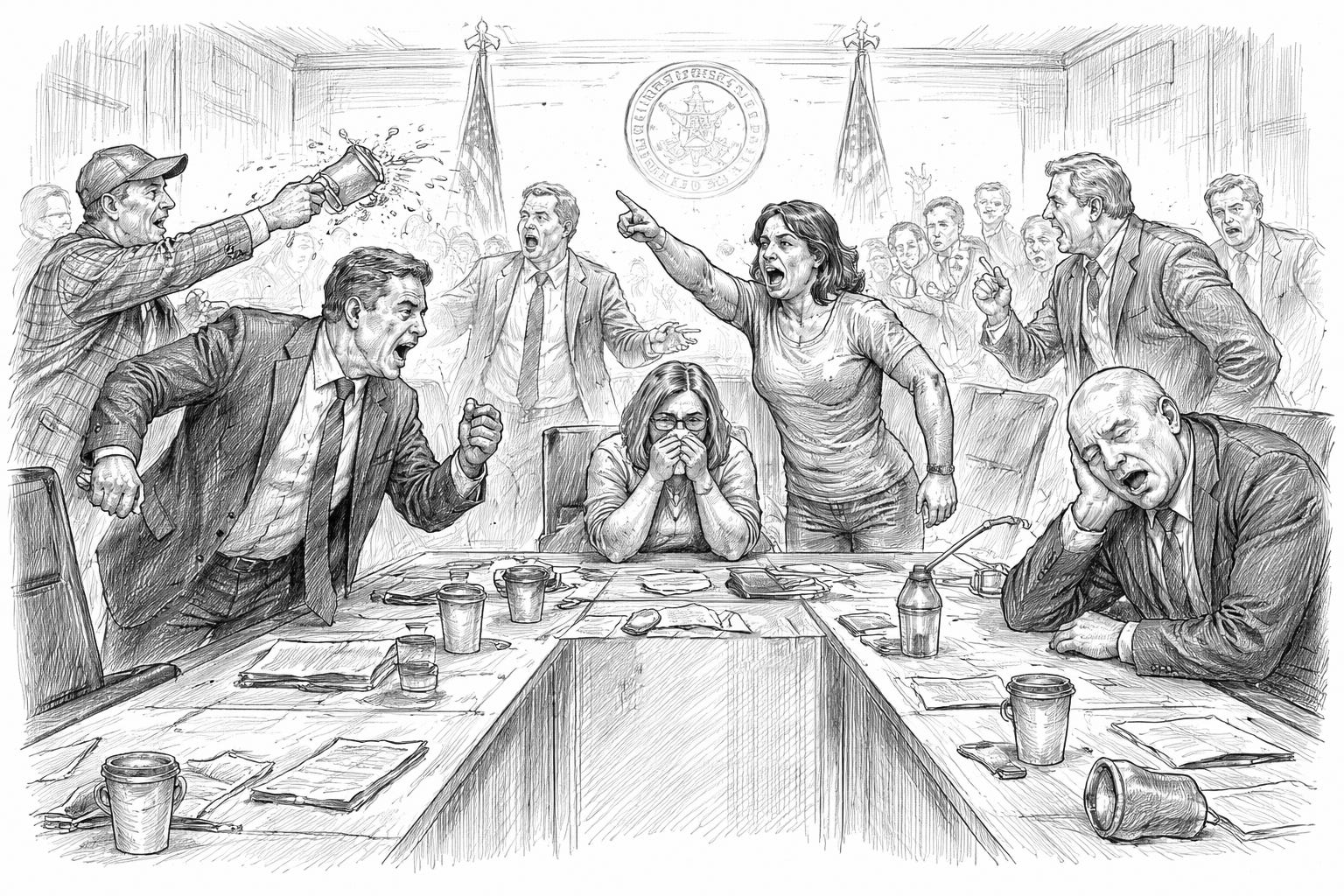
But hiring and supervising a staff is another kind of headache that has proven even further from the wheelhouse of neighborhood leaders. In the past decade, the most bitter disputes that have divided the coalition’s board members have played out as power struggles over which faction could weaponize the staff against the other side.
At one point, coalition leaders attempted to expel the Goose Hollow Foothills League from the coalition because the league’s president wrote a letter accusing a board officer of meddling in their internal affairs. That led to two years of hostilities, during which coalition staff stifled league actions.
Disagreements among coalition board members often turn to accusations of mistreating staff. Last year, a grievance was raised by staff against a board member for rude behavior.
I was even dragged into the abyss five years ago when the coalition board determined that I was creating a hostile work environment for a transgender coalition employee because I had written an editorial contrary to their point of view. I was banned from attending coalition meetings—though they were legally required to be open to the public—for three months and scolded for not stating my pronouns.
This all-encompassing pettiness would largely disappear if there were not workers to put in the middle of it.
Meanwhile, several independent citizen groups addressing neighborhood issues have cropped up and are quite effective. They have been frequently mentioned in the NW Examiner: Friends of Couch Park, Stadiumhood Neighbors and Friends of Wallace Park. They do not have paid staff, freeing them to devote their energies to addressing the most critical problems and opportunities around them.
Instead of laborious three-hour sessions arguing over rules and procedures, these independent groups tend to hold freewheeling gatherings to coordinate activities, spark ideas and enjoy each other’s company.
Administering a city contract may not be the route to neighborhood empowerment. In fact, it may be more of a millstone. Coalitions can be mini-bureaucracies that mimic City Hall, or they can be people having fun doing what they do best—building their community.
Legally questionable accusations of creating a hostile work environment are the latest way of retaliating against individuals who fail to toe the line in progressive spaces.
What no one really wants to say is that most neighborhood associations have very low engagement, are made up of busybody booster types, hate making any waves, and are captured by the equally useless busybodies in the city's government. It's central to the Portland Way: got a problem? Create a bureaucracy, levy a fee, and then let the bureaucrats do what bureaucrats always do: become arrogant rent-seekers bent on imitating cancer cells.
Portland's "neighborhoods" are codified--just arbitrary lines on a map. Real neighborhoods, as Jane Jacobs wrote, are another matter--organic, sometimes chaotic, improvisational, and often insular...all qualities that offend the city's collectivist leadership.
Leave neighborhoods alone. Remove the clammy hands of "planners." Send the bureaucrats packing.