

By Jason Jordan
Ken Thrasher and Phil Keisling are right about one thing: Oregon’s Bottle Bill deserves to be even stronger (“We’re calling for a pause—and reset—on Oregon’s Bottle Bill”).
On that, we agree completely. Where we part ways is on the idea that a pause is the path to get there.
The work they’re calling for is already underway, and stopping now would be a critical step back for our state. The Oregon Beverage Recycling Cooperative has spent the past several years listening to neighbors, retailers, community organizations and local leaders. We’ve heard the concerns about Delta Park. We’ve heard from neighborhoods worried about where redemption activity concentrates and what that brings with it. We take those concerns seriously, which is why we are taking action.
Delta Park is closing at the end of July. Additionally, we collaborated with a broad stakeholder coalition to pass SB 992, legislation designed to modernize the Bottle Bill and redemption system and create new models for access.
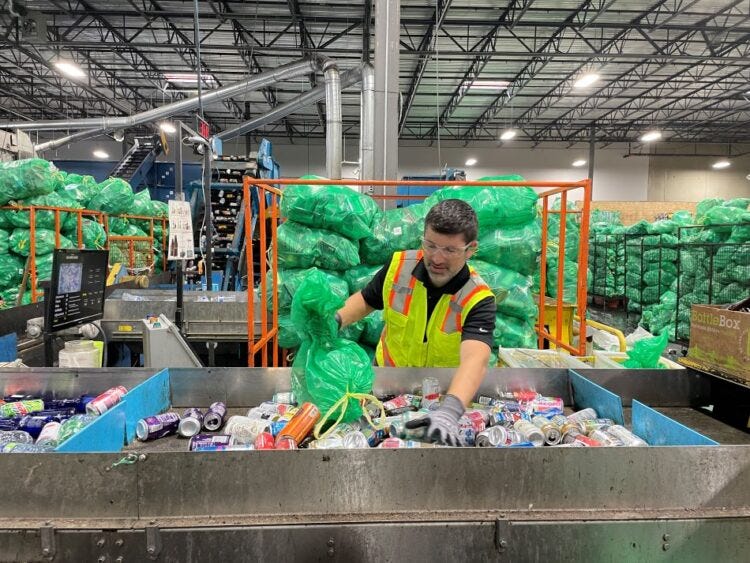
We are working to expand our green and blue bag programs, which let Oregonians use their deposit to donate to charities or convert it to retail credit. These programs offer a more convenient way to redeem containers, letting people drop off a full bag in seconds rather than using the reverse vending machines at retail partner locations. We are also providing financial support for the People’s Depot, a new brick-and-mortar redemption site opening in Southeast Portland operated by a community partner, not OBRC.
We are also starting to evaluate cashless redemption options. That pilot may have an initial launch at the new People’s Depot location, and we hope to expand it in the future. Thrasher and Keisling make a reasonable argument around the issues with cash payouts, and we share the goal of reducing immediate cash payouts from the system.
However, eliminating cash entirely requires care. Thousands depend on deposit redemptions to afford basic necessities. Any transition must bring those Oregonians with us, not leave them behind. Non-cash alternatives such as EBT credits, gift cards and utility offsets are worth pursuing, and we remain open to that conversation.
On transparency: OBRC’s model is an asset. No state dollars fund this system. We publish regular financial and impact reports. We welcome scrutiny and are prepared to engage with any stakeholder who wants to understand our model.
Portland is going through a crisis, and the stress it places on public-facing services is real. Bottle redemption, like public libraries and transit, bears a disproportionate share of that burden. The answer is to keep solving for the real crisis, not to step back from services that Oregonians across the income spectrum rely on.
We didn’t get 55 years out of the Bottle Bill by standing still. We got here by adapting. That’s exactly what we’re doing now, and we’d welcome Ken and Phil as partners in that work.
Jason Jordan is the president and CEO of the Oregon Beverage Recycling Cooperative, which operates BottleDrop and is the steward of the Bottle Bill.
Lipstick on a pig.
The giveaway is the admission that the bottle bill isn't really about cleaning up the state but that, "Thousands depend on deposit redemptions to afford basic necessities." This was never intended to be a social subsidy program and just another way to keep the poor poor--and attached to crap government programs.
Jason Jordan's letter is polite, well-written, and dodges every hard question in the original op-ed.
Read it again and notice what's missing. Thrasher and Keisling named a specific problem: OBRC's own plan to move a bottle drop to Powell and Milwaukie, next to one of Portland's busiest and most dangerous intersections. Jordan doesn't mention it. Not once. That's the project the proposed pause was meant to stop, and it simply vanishes from his reply.
He talks instead about "the People's Depot... operated by a community partner, not OBRC," as a point in his favor. But that phrase is the whole game. When OBRC funds a site but has a nonprofit "community partner" run it, OBRC keeps the money and hands off the operational and legal risk. The op-ed flagged exactly this pattern with the earlier alternative-access proposal. Calling it community partnership doesn't change what it is.
On transparency, watch the switch. The op-ed asked one question: OBRC keeps tens of millions every year from deposits people never redeem and from selling scrap aluminum — where does it go? Jordan answers a different question: "No state dollars fund this system." Nobody said they did. The point is that the dime on every can that never comes back stays with a private, distributor-run cooperative instead of going to the public, and OBRC won't open the books on it. "We welcome scrutiny" is not the same as showing us the numbers.
And count the commitments in the letter. There aren't any. It's "starting to evaluate," "may have an initial launch," "we hope to expand," "worth pursuing," "we remain open." No deadline, no dollar figure, nobody on the hook for anything. That's the language of an organization that wants credit for being reasonable without agreeing to do one specific thing.
He's right about exactly one thing: pull cash out overnight and the poorest people who rely on it get hurt. Fair. But that cuts against him too. The moment you admit thousands depend on this to survive, you've admitted a recycling program has quietly become a cash assistance system nobody designed — one that sends people foraging through trash bins, sometimes onto private property, to collect it. That's the problem on the ground. "We're already adapting, so don't make us pause" isn't an answer to it. The pause is aimed at the very projects he's asking us to trust him to finish.