


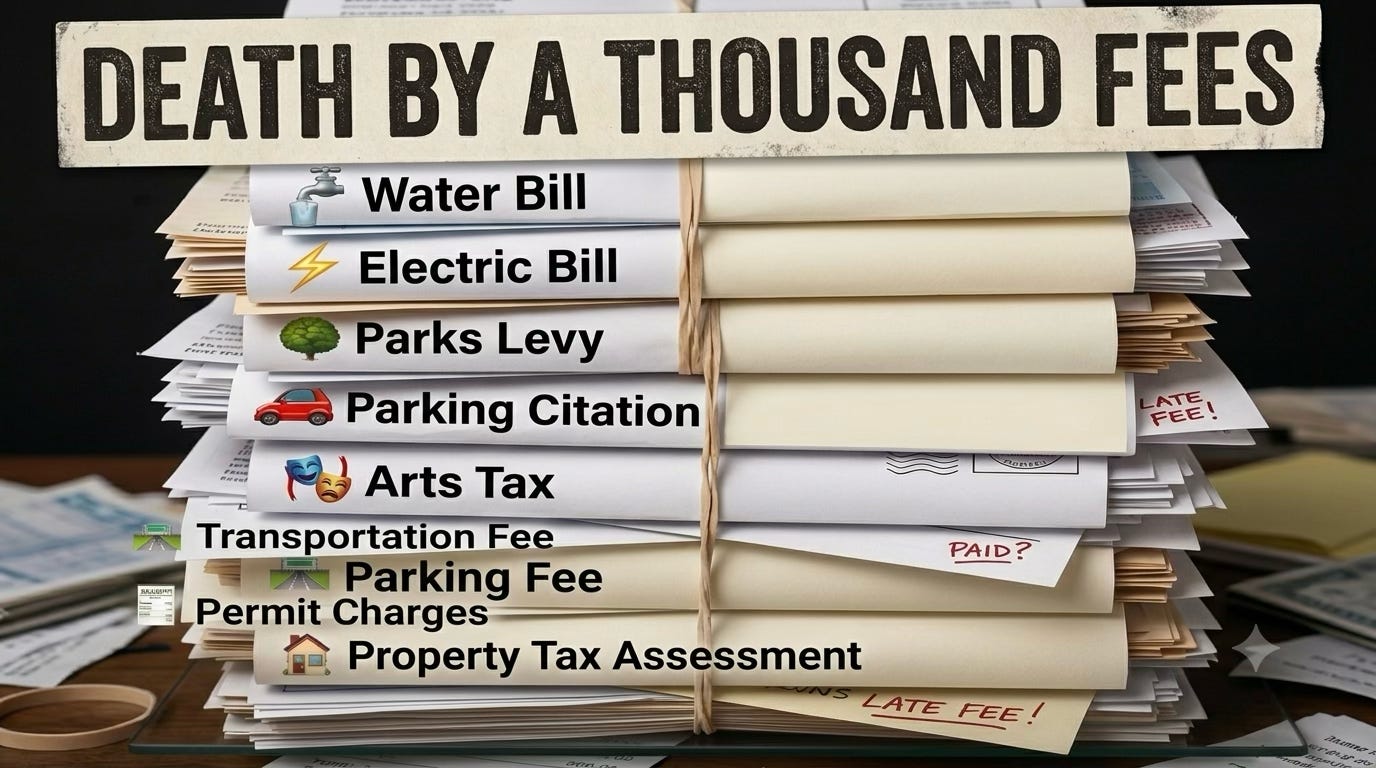
Just days after news reports documented what Portland families already know—that the cost of living in our city continues to climb under a steady accumulation of taxes, fees, utility increases and surcharges—City Hall decided it’s time to make downtown parking more expensive.
Beginning July 1, parking meter rates in downtown Portland increased from $3 to $3.20 per hour. Event parking around Providence Park and the Moda Center will cost more. Annual parking permits are also increasing. Even the transaction fee charged through Parking Kitty is going up.
By itself, a 20-cent increase may not sound like much. But this isn’t about 20 cents.
It’s about one more increase piled on top of dozens of others. And it’s about a city government that keeps asking more of its residents while giving less and less thought to what they can bear.
Pattern undermines
In the past year, Portlanders have been hit with a steady stream of new taxes, fees and rate increases: a new Transportation Utility Fee, a new Street Damage Restoration Fee, higher water rates, higher sewer rates, higher electric bills, the recently approved Parks Levy increase and the major increase in the Arts Tax. Property taxes continue to climb as well.
Each increase is defended as reasonable. Each is relatively small, but together they tell a very different story.
Portland is becoming steadily more expensive, not because of one major decision, but because of dozens of smaller ones.
Residents are doing their part. They balance household budgets, absorb rising costs and make difficult choices every month. They have every right to expect their government to exercise the same discipline before asking them to pay more again.
Won’t help downtown recovery
City leaders have said downtown revitalization is one of Portland’s highest priorities.
They’ve spent the past several years trying to coax people, shoppers and employers back downtown after a painful stretch of vacancies and lost foot traffic.
Downtown recovery depends on making Portland easier to visit, but every new tax, fee and rate increase makes it more expensive to live, work, shop, dine and do business in Portland. Business owners in downtown, the Pearl and elsewhere have already warned that raising rates makes it harder to persuade people to return. If we want downtown to recover, our policies should welcome people back, not make every visit a little more expensive than the last.
You cannot tax and fee your way into a revitalized downtown, certainly not while simultaneously making it more expensive to park there, eat there and get a ride home.
Higher parking rates land hardest on the workers who keep those businesses running. Downtown employees earning $20 an hour can lose roughly 15% of their hourly wage to park for a single shift. For someone driving from outside the city because transit isn’t practical, that’s not a discretionary expense. It’s the cost of showing up for work. Those are the people this city has a duty to protect. Not squeeze.
Likewise, customers deciding where to shop, eat, attend an event or spend an evening compare the total cost of the outing. Parking has become part of that calculation.
Every additional charge makes suburban shopping centers and online alternatives just a little more attractive.
Council didn’t follow own rules
The parking increase raises another issue that deserves public scrutiny. Council policy requires legislation to include a discussion of its fiscal and budgetary impacts. Yet when the council approved these parking increases in May, one of the most basic questions was left unanswered:
How much additional revenue will Portland collect from higher parking rates?
The required “fiscal and budgetary impact” was not identified during council’s consideration of the ordinance, despite council policy requiring that information.
Even more striking, according to recent reporting by The Oregonian/OregonLive, weeks after the ordinance was adopted, PBOT was still unable to estimate how much additional revenue the higher parking rates would generate.
That is not a minor procedural lapse. It is a failure of basic governance.
Before government asks residents to pay more, it should be able to explain precisely why the increase is needed, how much it will generate and how that money will improve public services.
Without that information, neither taxpayers nor policymakers can evaluate whether the increase is justified, whether it meaningfully addresses PBOT’s financial needs or whether it undermines broader efforts to revive downtown.
Transparency should precede fee increases. Not be an afterthought.
Enough is enough
Portlanders understand that streets must be maintained, and transportation infrastructure costs money. But PBOT now expects to receive roughly $69 million a year from its new utility and street restoration fees alone. That is not a small amount. It reflects a significant sacrifice Portlanders have already made. Before asking Portlanders to pay even more through higher parking rates, the bureau should explain why those substantial new revenues aren’t enough and demonstrate that it has exhausted every opportunity to prioritize spending and improve efficiency.
It’s not one fee. It’s the accumulation, and the accumulation has become too much.
The council should stop this increase before it adds one more burden to households, commuters, employers, downtown businesses and Portlanders who are still trying to believe in the city’s future.

Mitch Green didn’t pay his property taxes. Do as I say not as I do.
The Growing Cost of Living in Portland
Estimated Annual Impact for a Typical Portland Household
Tax / Fee Increase
Estimated Annual Cost
Transportation Utility Fee $144
Street Damage Restoration Fee $100–150*
Parks Levy Increase +$130
Arts Tax Increase (2 adults) +$30
Water & Sewer Rate Increases ~$75–125*
Electric Rate Increases ~$75–150*
Flood Safety Benefit Fee $14
Higher Parking Costs ~$100–250*
Permit & Transaction Fee Increases. Varies
Estimated Additional Annual Cost
Typical Portland Household: Approximately $700–$1,000+ annually
Households with regular downtown commuters: $1,000–$1,500+ annually
*Estimates vary depending on household size, assessed value, utility usage, and commuting patterns.