


If people forced to live in fear no longer enjoy basic peace and freedom, why are the violators of those social requisites treated as if only their rights matter?
That is the question Portland should be asking after the bombing of the Multnomah Athletic Club.
Early Saturday morning, Bruce Whitman, a disgruntled former employee with a years-long fixation on the club, drove a rental vehicle packed with propane tanks and improvised explosive devices through the front entrance. Police say the vehicle contained roughly 20 propane tanks, explosive powder and multiple pipe bombs. He drove around inside the first floor before fire and explosions engulfed the lobby. Some devices detonated. Many did not.
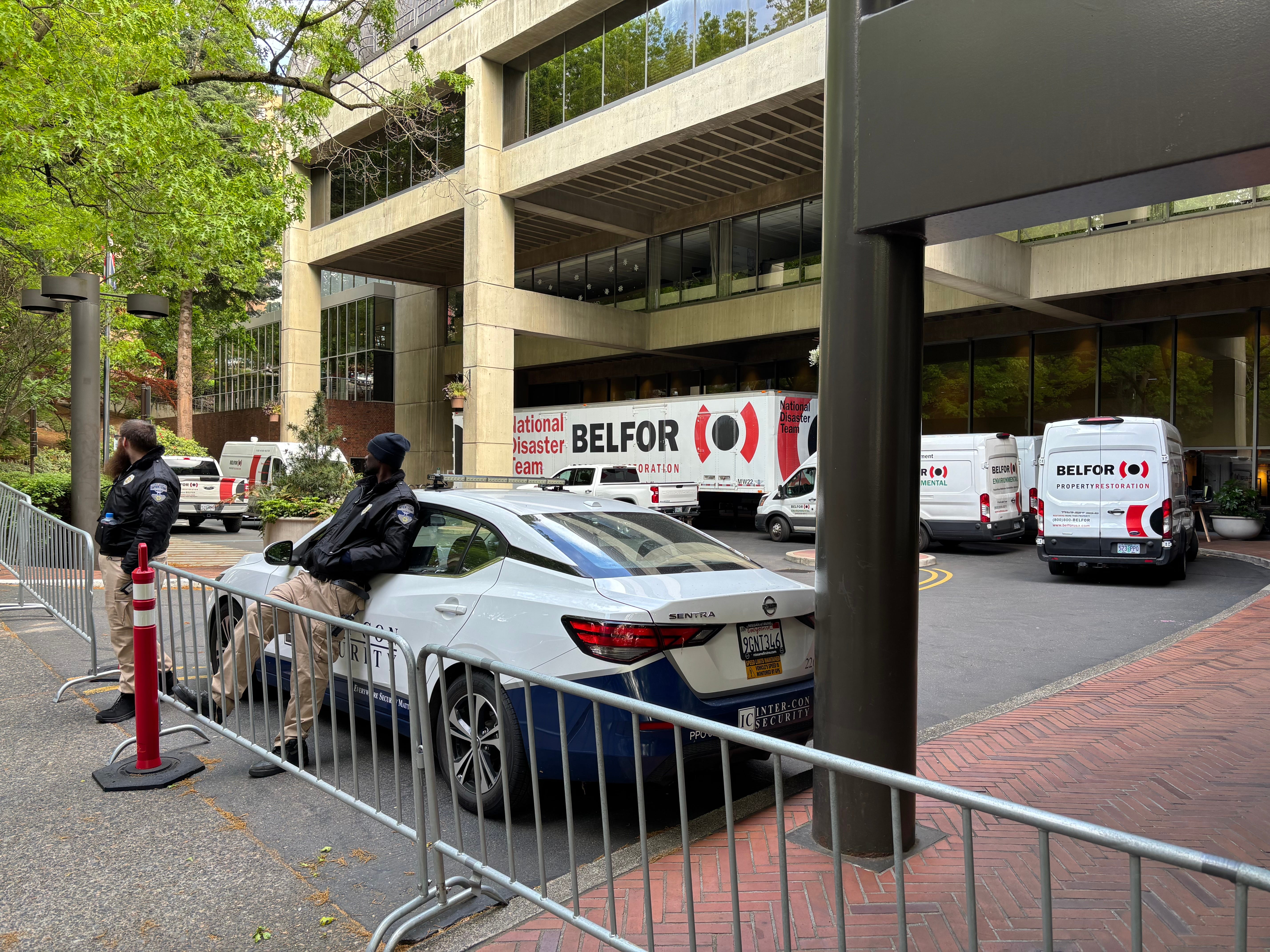
“It is simply luck,” Portland Police Sgt. Jim DeFrain said, “that we didn’t have a much larger blast.”
Luck.
This was not some unforeseeable act of random violence. It was the predictable result of years of escalating threats, obvious mental deterioration and a legal system too paralyzed to act until after catastrophe.
According to court records, police reporting and Whitman’s own family, he had spent years fixated on the Multnomah Athletic Club after it fired him. He repeatedly threatened club members and alarmed neighbors. Portland police’s Behavioral Health Unit had been trying to work with him for five years. Officers twice pursued firearm removal orders. In 2022, police initiated a peace officer hold, Oregon’s early involuntary commitment process, but it did not result in durable civil commitment. In February 2026, amid another major crisis, he was hospitalized again and later released.
His mother said he had been diagnosed with schizophrenia and bipolar disorder. His cousin put it even more bluntly:
“He should be locked up right now and getting care. But the system failed him and luckily didn’t fail somebody else with their life because of his actions.”
Instead, he was free to rent a vehicle, fill it with explosives and drive it into one of Portland’s most prominent institutions.
That is systemic failure.
Multnomah County District Attorney Nathan Vasquez said what many public officials have been reluctant to admit:
“This incident is a sobering reminder that mental health crises don’t just happen in a vacuum. They have a public safety footprint.”
Vasquez is describing a system that identifies danger, intervenes briefly and releases people back into the same environment with little more than a referral slip. Oregon needs more than just the authority to seize guns. He supports expanding pathways for long-term outpatient treatment and stronger monitoring of high-risk individuals who have demonstrated violent fixation.
This debate is usually framed as compassion versus punishment, liberty versus control, as if protecting public safety were inherently cruel. That framing is wrong, and it forecloses the conversation before it starts. .
A civilized society has obligations in multiple directions at once: to protect the vulnerable, to preserve liberty, to respect human dignity and to uphold basic fairness between people. When we protect only the autonomy of the person in crisis while ignoring the terror imposed on everyone around him, we are not defending justice. We are abandoning it.
Who matters too?
MAC members whose cars were flagged down, or their homes visited, with threats to kill.
Concerned neighbors who watched a man’s downward mental spiral and urge that he receive mental health treatment.
The family begging for help before their son becomes violent.
We cannot keep treating their suffering as the acceptable price of protecting someone’s theoretical autonomy while he descends into psychosis.
Public trust depends on a simple principle: The innocent should not be asked to bear endless risk so institutions can congratulate themselves for avoiding hard decisions.
Nobody is calling for a return to the shameful era when institutionalization entailed abuse for convenience or control. Civil liberties matter. The bar for forced treatment should be high. But high cannot mean waiting until someone builds a car bomb.
A right to refuse treatment cannot be absolute when a person is plainly incapable of rational judgment and presents a mounting danger to others. A legal framework that protects the autonomy of the bomber more effectively than the safety of the people he terrorizes is not morally serious.
Even Portland police acknowledged the contradiction. Sgt. Josh Silverman put it plainly: Mental illness often means people do not believe they need help, making a purely voluntary model deeply flawed. He also said the Behavioral Health Unit used every available tool under Oregon law and still could not prevent this outcome.
That should terrify every family trying to get help for a loved one in crisis.
If a man can spend years threatening people, lose access to firearms, alarm police, terrify his family, undergo repeated intervention and still end up driving a bomb into the MAC before the state can meaningfully intervene, then the law is not protecting liberty. It is protecting failure.
This should be the straw that breaks the camel’s back. Not because it happened at the MAC. But because the warning signs were impossible to miss, and the outcome was dramatic enough that the usual excuses no longer work.
Freedom must be balanced with safety. And compassion must include the people living in fear, not just the person causing it. If Oregon cannot reform its broken civil commitment laws after this, one has to ask:
What exactly will it take?

100000%!!!
People suffering mental illness do not - often / sometimes - recognize thier illness. I know this from my neighborhood. Body autonomy should NOT equate public danger. Backwards Portland, backwards.
And NOW is the opportunity to change this direction. Vote!
Thank you for saying plainly what many Portland residents have been living with for years—and are currently being told to ignore.
Across this city, neighborhoods are dealing with the daily reality of open drug use, repeat theft and vandalism, and unacceptable public behavior tied to addiction and untreated mental illness. This isn’t abstract—it’s lived experience.
And yet leadership—from the Multnomah County Commissioners, chaired by Jessica Vega Pederson, to the Portland City Council under mayor Keith Wilson, and up through the Oregon State Government—continue to defend strategies that are not delivering safety, recovery, or stability at the street level.
Hundreds of millions of dollars are being spent annually through the Joint Office of Homeless Services and the Supportive Housing Services Measure. These were sold to voters as transformational investments. Yet many neighborhoods only experience worsening conditions year over year. When budgets have to (inexplicably, every year) be cut, public safety is always considered expendable, while unnecessary pet projects (and associated fraud) are never looked into or touched. We are living this right now, as the mayor and city council further gut citizen facing services that are already inadequate.
At the same time, Oregon continues to rank near the bottom nationally in access to mental health care. That gap shows up visibly in our public spaces every day, as people cycle through crisis, brief intervention, and release without lasting stabilization.
As the NW neighborhood knows all too well, expansion of low-barrier shelters has moved forward quickly, without adequate systems in place to manage surrounding impacts. Communities are expected to absorb the consequences, while accountability for outcomes remains non-existent.
This is the core failure: not a lack of funding, not a lack of stated compassion—but a lack of measurable results and a refusal to change course when policies aren’t working or to use common sense or relevant public input when implementing them in the first place.
Civil commitment reform also has to be part of this conversation. The current threshold is so high that many people in repeated, visible crisis (as in this case) are left to deteriorate until they reach an emergency threshold. That is neither humane nor sustainable. Any serious approach must include both expanded treatment capacity and the ability to intervene earlier when someone cannot care for themselves.
So here are the questions for county commissioners, city council, and state leaders:
- How much more funding will be approved before outcomes actually change?
- How many more programs will be expanded without measurable improvement?
- And how long are neighborhoods, individual citizens, and businesses, expected to carry the burden of policies that aren’t delivering results?
Frankly, this cannot continue to be treated as a technical problem within the same political framework that created it. The upcoming election cycles at the city, county, and state level are where this direction either continues—or finally changes.
There are very few current officeholders I have confidence will both acknowledge the reality and be willing to fundamentally change course. Many of them have had plenty of time already to display their ability to do this and they have failed. If that’s going to shift, it starts with voters paying close attention to who is willing to break from the status quo, demand measurable outcomes, and finally prioritize public safety.