


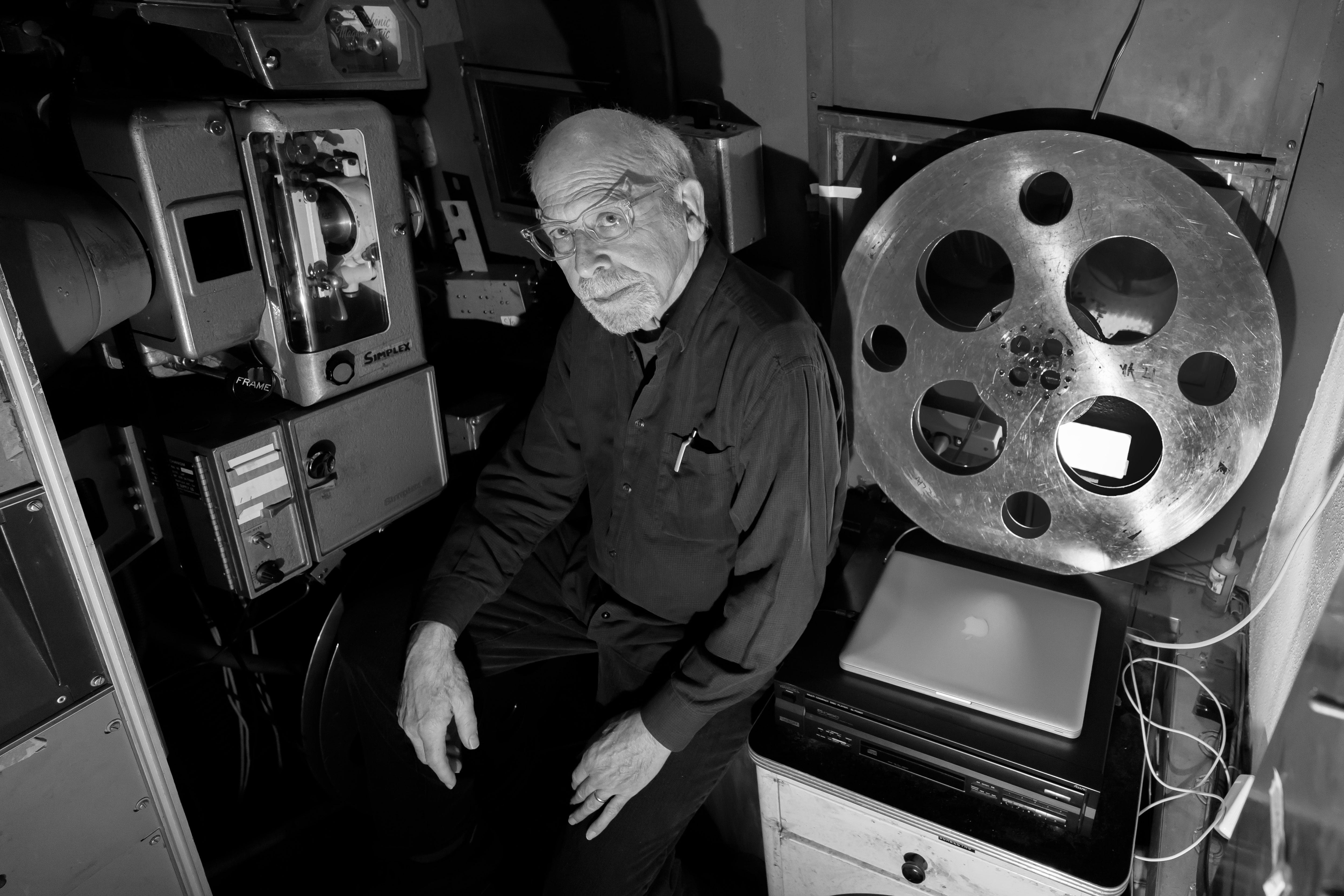
This is our monthly look at coming attractions for Cinema 21’s popular Saturday Morning Classics. Film programmer Elliot Lavine selects a theme every month, and we let you know what’s coming to the big screen at our iconic neighborhood theater at 616 NW 21st Ave.
The screwball comedy as a movie genre emerged in the early 1930s during the Great Depression—probably, Lavine says, as a way for folks to forget their troubles.
Lavine defines screwball comedies as “wildly absurdist, raucous and improbable fiascos, featuring an abundance of characters we can charitably call screwballs.” And he says that often it’s the female characters who come out the best. “Female characters—often sexy, smart and sometimes rich—generally carried the ball, while the exasperated men did their best to cope with the frenzied pace surrounding them.” Funny, how that happens.
To purchase advance tickets for the Saturday Morning Film Classics series, visit Cinema 21. All showings in the Saturday morning series are at 11 a.m.
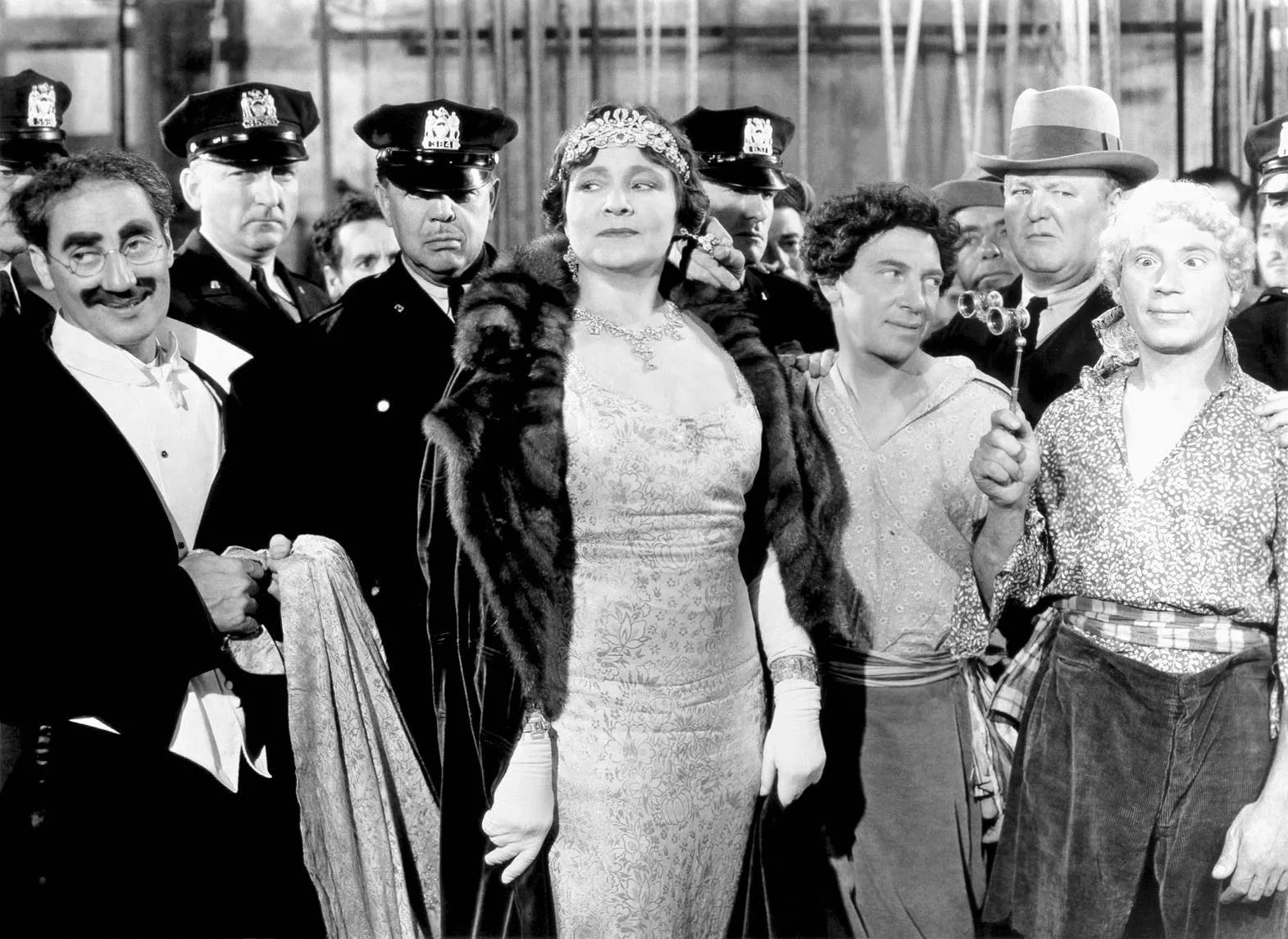
“A Night At The Opera” (1935) at Cinema 21 on Aug. 1. Director: Sam Wood
Lavine begins with a doozy! Classic Marx Brothers. Groucho, Harpo and Chico. (Zeppo had left the act.)
They were always an anarchistic bunch, Lavine writes, and in this film the Marx Brothers turn “the opera into a three-ring-circus.”
There are a series of famous laugh-out-loud scenes:
The “stateroom scene,” where 15 people, including all the Marx brothers, crowd into a teeny-tiny ship stateroom.
The “contract scene”—a crackup, which starts with “the party of the first part” and goes hilariously downhill from there.
There’s also the unbelievably wacky “gibberish scene.” Fun fact: They are not really speaking nonsense. It’s English and if played backwards you can actually hear what they are saying. The dialogue was recorded normally, then reversed and dubbed over the scene.
There’s also real opera in “A Night At The Opera.” Big production scenes. The glamorous leading lady Kitty Carlisle plays opera singer Rosa Castaldi.
Maybe best of all, the film features the Marx Brothers great comic foil, Margaret Dumont. Groucho Marx called Dumont practically “the fifth Marx Brother.” No one ever played “straight man” to the Marx Brothers better than Dumont. And has anyone ever portrayed a stuffy wealthy aristocrat any better?
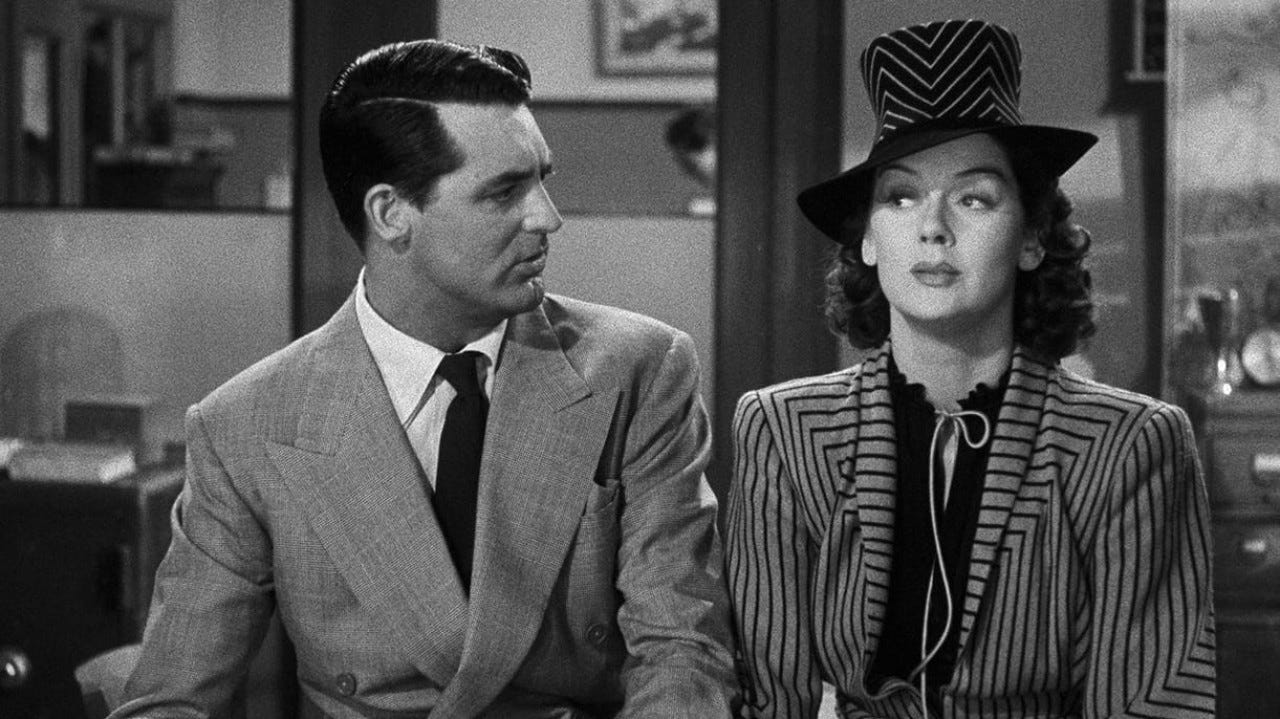
His Girl Friday (1940) at Cinema 21 on Aug. 8. Director: Howard Hawks
The dialogue is fast, furious and hilarious. Lavine calls it, “a tart mix of hardboiled, early Noir-style patter” that fuels a love-hate relationship between the stars, Rosalind Russell and Cary Grant.
The rapid overlapping dialogue broke a record for fastest film dialogue—almost 90 years later that record still stands. It doesn’t get funnier than this!
Grant is the newspaper editor. Russell is his hotshot reporter. They are also divorced, and she is about to remarry. She claims she wants to leave the fast-paced world of journalism behind and settle down as a housewife with her dull, deadly dull insurance-salesman fiancé. Yeah sure. But of course, there is one last big story to cover. And she can’t resist—especially when it involves an upcoming execution and possibly an exclusive interview with the convicted killer? Who’d say no to that?
There is also something about devilishly handsome actors playing for laughs. Grant is magnificent as the desperate, manipulative and ridiculously irresistible leading man.
Also love the pressroom scenes with reporters (all men of course, except for Russell) either smoking their way through a boring game of cards or frantically reaching for their candlestick telephones to call in their latest scoops. What happened to those good old days?
Fun fact: “His Girl Friday” was based on a play called “The Front Page.” The ace reporter in that version was a man. Director Howard Hawks changed that character to a woman, creating this romantic screwball comedy.
Another fun fact: Superman’s Lois Lane was based on Russell’s “girl reporter” character.
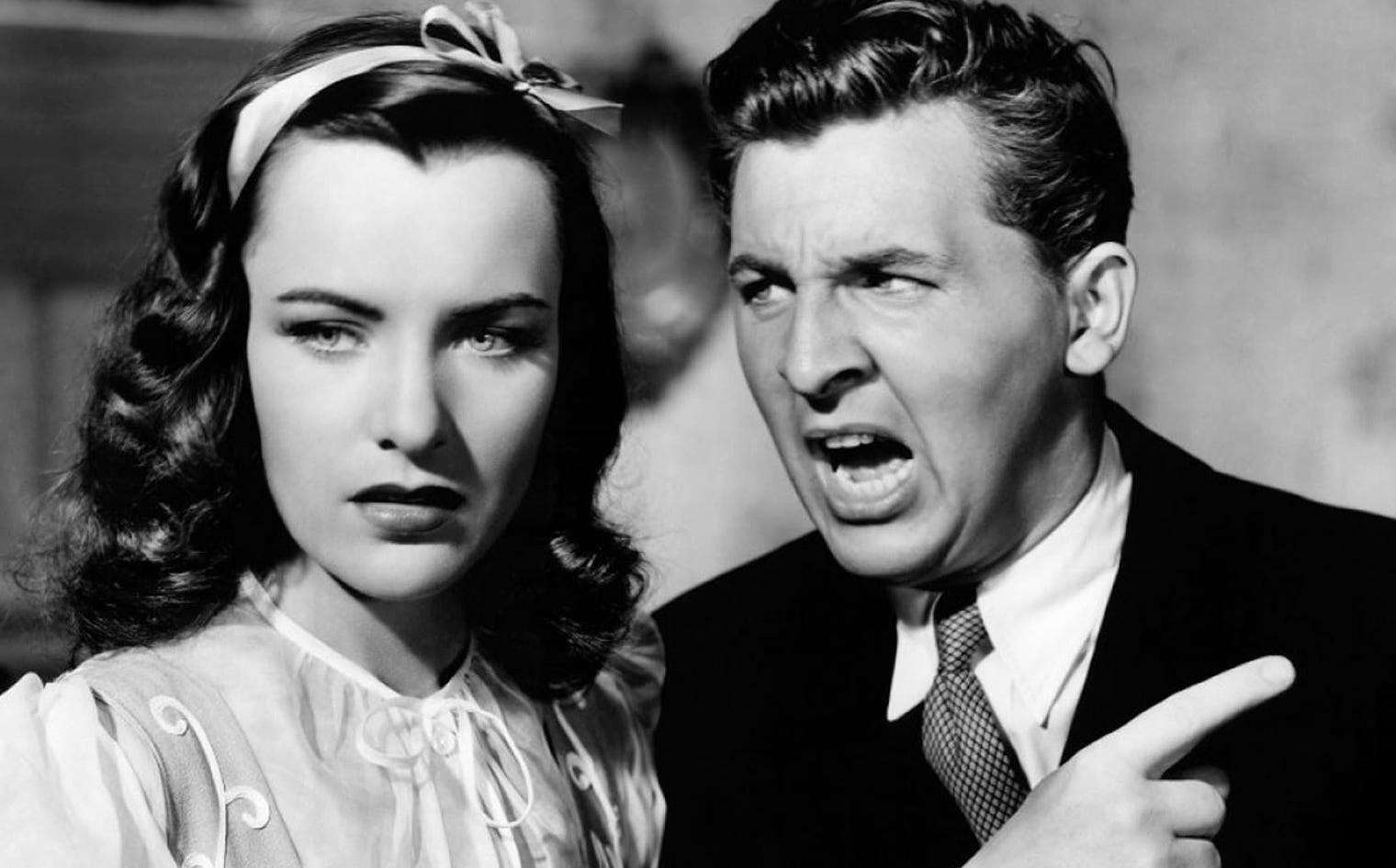
“Hail The Conquering Hero” (1944) at Cinema 21 on Aug. 15. Director: Preston Sturges
Lavine says Preston Sturges “ruled the Hollywood screwball roost during the 1940s ... The hilarious consequences that ensue enshrine this 1944 film eternally as one of the decade’s funniest and smartest screwball comedies.”
Sturges both wrote and directed the film. A small-town boy joins the Marines during World War II. His own father was a war hero in the First World War. The son hopes to be a hero too.
But the Marines discharge him for medical reasons—bad hay fever—only a month after he joins. He doesn’t want to disappoint his mother, so he tells her he’s fighting overseas.
Really, he’s working in the San Diego shipyards. Doesn’t sound funny so far. In fact, it sounds like it’s about to become a story of disappointment and despair.
Somehow, Sturges turns this drama into comedy with, as Lavine says, “a lightning-paced romp involving some of the wackiest character actors in Hollywood.”
The film has been called a satire on hero-worship, jingoism, human frailties and even dear old Mom.
Again, rapid-fire punch lines and verbal slapstick mark this as exquisite screwball.
Eddie Bracken and Ella Raines are the main stars, but Lavine says it’s William Demarest and Franklin Pangborn who also steal the show.
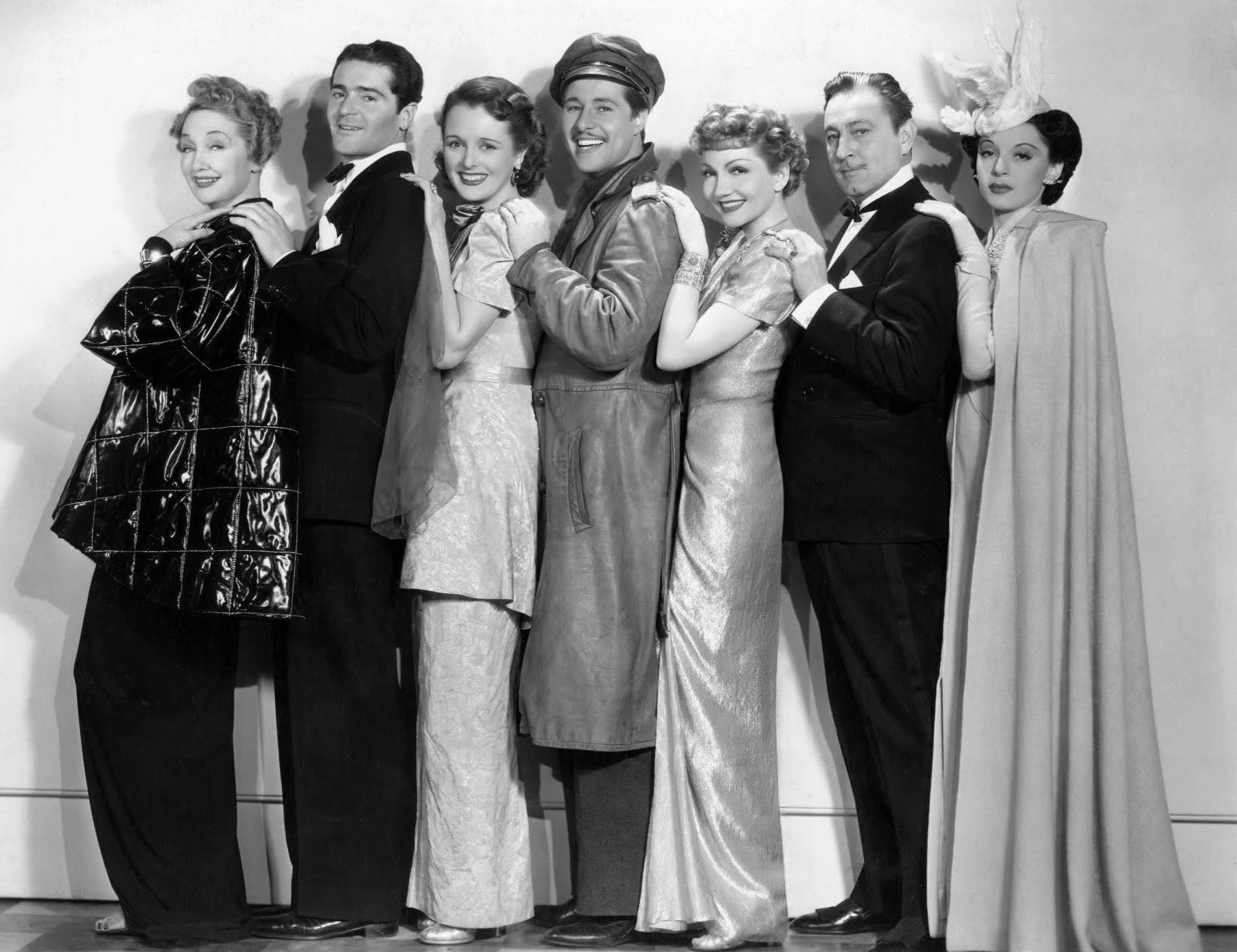
“Midnight” (1939) at Cinema 21 on Aug. 22. Director: Mitchell Leisen
Lavine thinks Director Mitchell Liesen is one of the “unsung Hollywood geniuses of the ‘30s and ‘40s … whose films combined hilarious screwball moments with intelligent storylines and wonderful ensemble casting.”
A beautiful showgirl played by Claudette Colbert is down on her luck, broke and stranded in Paris. But she has her wits about her!
She persuades a kind-hearted Hungarian cab driver played by Don Ameche to drive her around. He is soon smitten. But she is determined to marry for money and falls for “a crowd of insufferable millionaires.” She might well get her way, but it’s one screwball mix-up after another. Misunderstandings, love triangles and convenient deceit.
Colbert was already known as a superb comedienne. The supporting cast is also amazing including Mary Astor, John Barrymore and Francis Lederer.
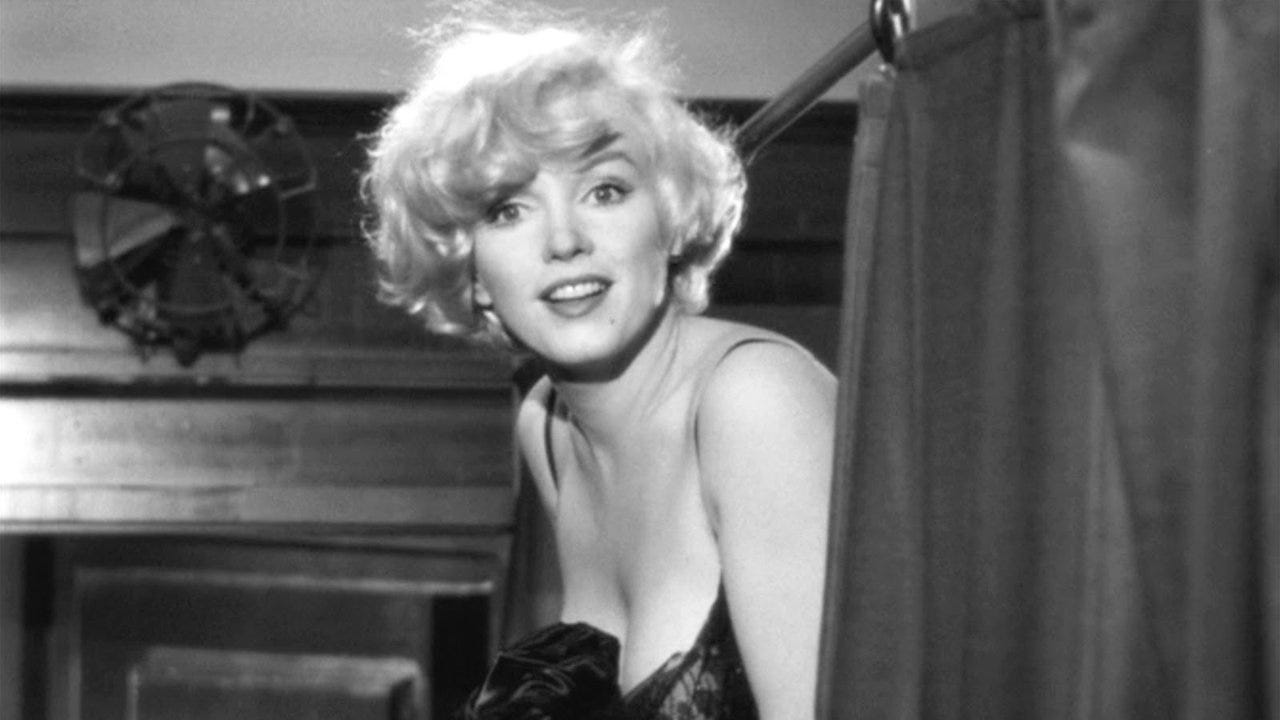
“Some Like It Hot” (1959) at Cinema 21 on Aug. 29. Director: Billy Wilder
Before there was “Tootsie,” “Mrs. Doubtfire” or “The Birdcage”—before gender-bending was even a recognized concept, there was “Some Like It Hot.”
Some critics have called this the best comedy film ever made. (That, of course, is debatable.)
The film was shot in 1958, when Lavine says the screwball comedy was pretty much dead until Billy Wilder brought it back with this movie.
Jack Lemmon and Tony Curtis spend most of the film in drag. The two play musicians in Prohibition-era Chicago who witness a gangland massacre and have to hide out, so they join an all-woman band and “hide out” as “Josephine” on sax and “Daphne” on bass. (The studio hired a female impersonator named Barbette—real name Vander Clyde Broadway—to coach Lemmon and Curtis.)
Marilyn Monroe plays Sugar Kane, the sexpot singer in the band.
This year marks the 100th anniversary of her birth, so as a present to Monroe, let’s take her seriously as an actress and comedienne.
Monroe plays the “dumb blonde” role here that defined her career. But she does so brilliantly. How easy could it be to play someone so sexual yet so childlike and so vulnerable?
So yes, this ‘50s ideal of womanhood is cringey, but that shouldn’t take away from Monroe’s brilliant performance, her comedy chops and her ability to light up the big screen like nobody’s business. Her character is sweet and lovable, and she plays it light opposite the wild hilarity of Lemmon and Curtis. The trio is comic gold. Which is why we can still laugh nearly 70 years later at this most politically incorrect of films.
There’s also a cool 1920s jazz feel to the film. And you have got to love the fact that the bad guys are referred to as “Toothpick” and “Spats.”
The cast also includes Joe E. Brown, who has one of the best last lines of all time in cinema. Hard not to appreciate how tough it is to do comedy once you hear him deliver that one-liner.