


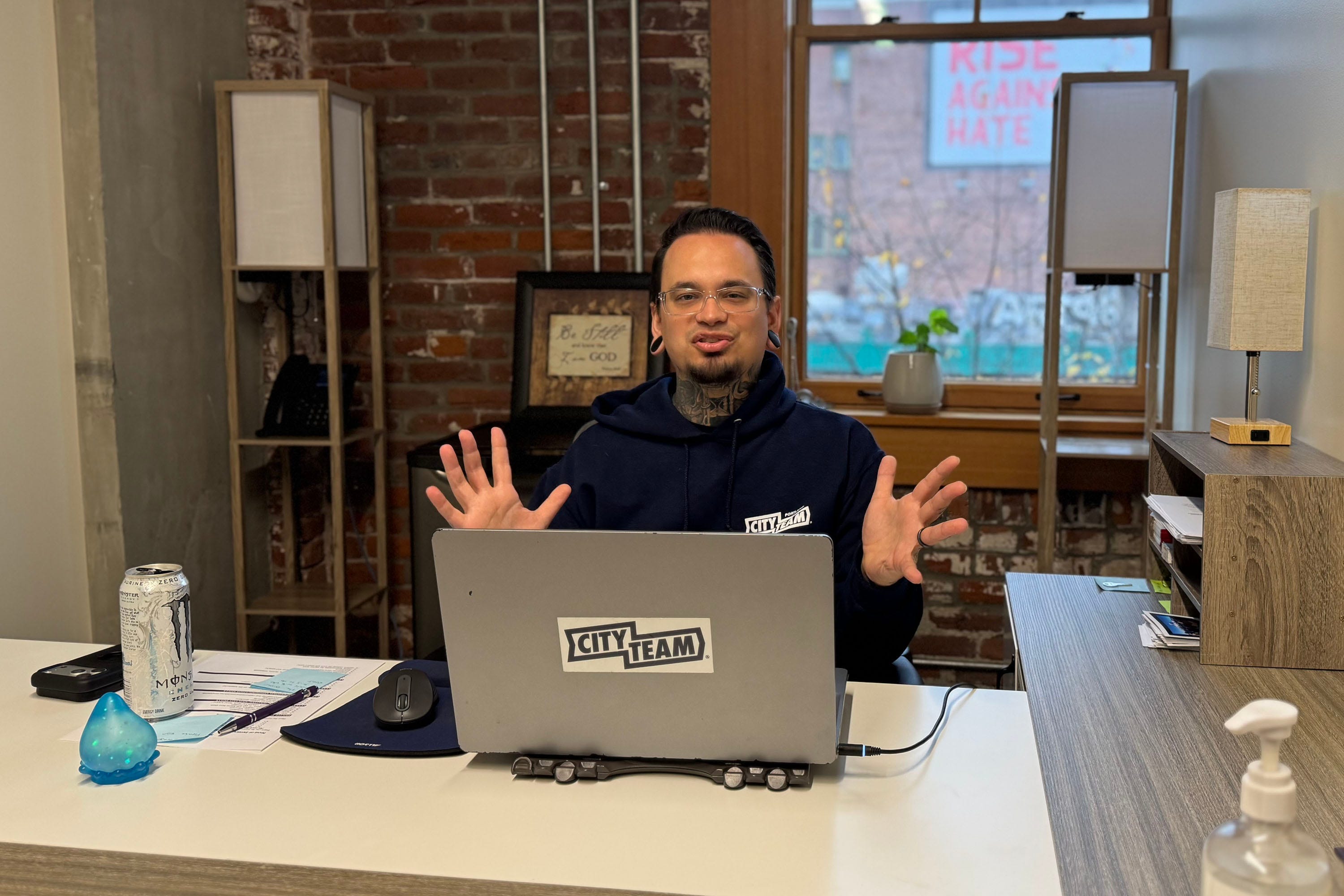
Daniel Gamboa sits before his silver laptop against the backdrop of an exposed brick wall, natural light pouring in the window overlooking a Rise Against Hate billboard in Old Town. A tattoo of an emptying hourglass covers his neck, merging with his neatly trimmed goatee, punctuated by black gauges in both ears.
In an open, chatty tone, he looks directly at the young man who is quietly sizing up Gamboa from the swivel chair in front of him.
“So,” Gamboa asks him. “Why are you here?”
The young man hesitates.
“Um. Well. I drink too much and I get into trouble.”
Gamboa smiles knowingly.
“Yeah,” he says, “you don’t come here if you’re out there crushin’ it with your decisions, right?”
By the end of the meeting, Gamboa has elicited the outlines of this young man’s path to his swivel chair, interwoven the conversation with his own story, and made the case for why the young man should, rather than walking back out the door into a shaky future, commit right now to the CityTeam Portland program and change his trajectory for good.
As manager of the men’s residential program at CityTeam, Gamboa is part of a committed, compassionate workforce trained to seize that moment when broken people finally reach for a lifeline. As Portland continues to confront a flood of addiction spilling onto the streets, it’s a high-demand skill set.
With record levels of homelessness in Multnomah County, The NW Examiner’s series Holders of Hope is highlighting workers on the front lines, recognizing their vital contributions.
A turning point
Gamboa vividly remembers the moment when his life, defined by a chaotic childhood and then years on and off the streets in the Bay Area, reached a turning point.
With nothing but liquor and meth in his body, he was sifting through garbage when he came upon a hunk of Mexican raisin bread pudding called Capirotada. Stuffing the sticky pastry into his mouth, his face and neck began to itch. Scratching frantically, it dawned on him: The bread was ant infested.
As Gamboa clawed away at the ants, he imagined how he must look from above. He peered up at the night sky.
“God, if you’re there, please help me,” he said.
That next day, he returned to CityTeam Oakland, the residential addiction treatment and recovery nonprofit that he had stumbled on the prior week while looking for the Salvation Army. CityTeam, funded by private donors, is the evolution of the San Jose Rescue Mission. The nonprofit now boasts programs in five cities, opening in Portland in 1998.
Gamboa entered the rigorous eight-month program in Oakland. He relapsed on a day pass but came back in and finished. He took a position supporting young men in the program. He relapsed again. CityTeam stuck with him.
CityTeam sent Gamboa to Portland. He went through the full program again. This time it stuck.
Now 37, Gamboa is married. Owns a home. Has four little dogs with matching blue and pink sweaters. And as the men’s residential program manager, he is helping the team settle into its new digs in a beautifully rehabbed building on Northwest Fourth and Davis.
“They saw something in me that I didn’t see in myself,” he says. “Now I’m happy. Content. I just want others to have what I have right now.”
At CityTeam, lived experience is the superpower.
All of the Portland staff members and the leadership team, including Executive Director Lance Orton, are former addicts. Most are CityTeam graduates.
The nonprofit’s success rates are off the charts. Three years after graduation, 76% of CityTeam Portland’s 153 alumni remain sober. One year after graduation, that number is 83%. The flagship Portland program serves men; the women’s program is now also off the ground. CityTeam Portland is the gold standard among the nonprofit’s five locations.
“There is no place like CityTeam,” Gamboa says. “When you come here, you feel it. You see it in people’s faces. We are living testimonials to how this place works.”
An uplifting setting
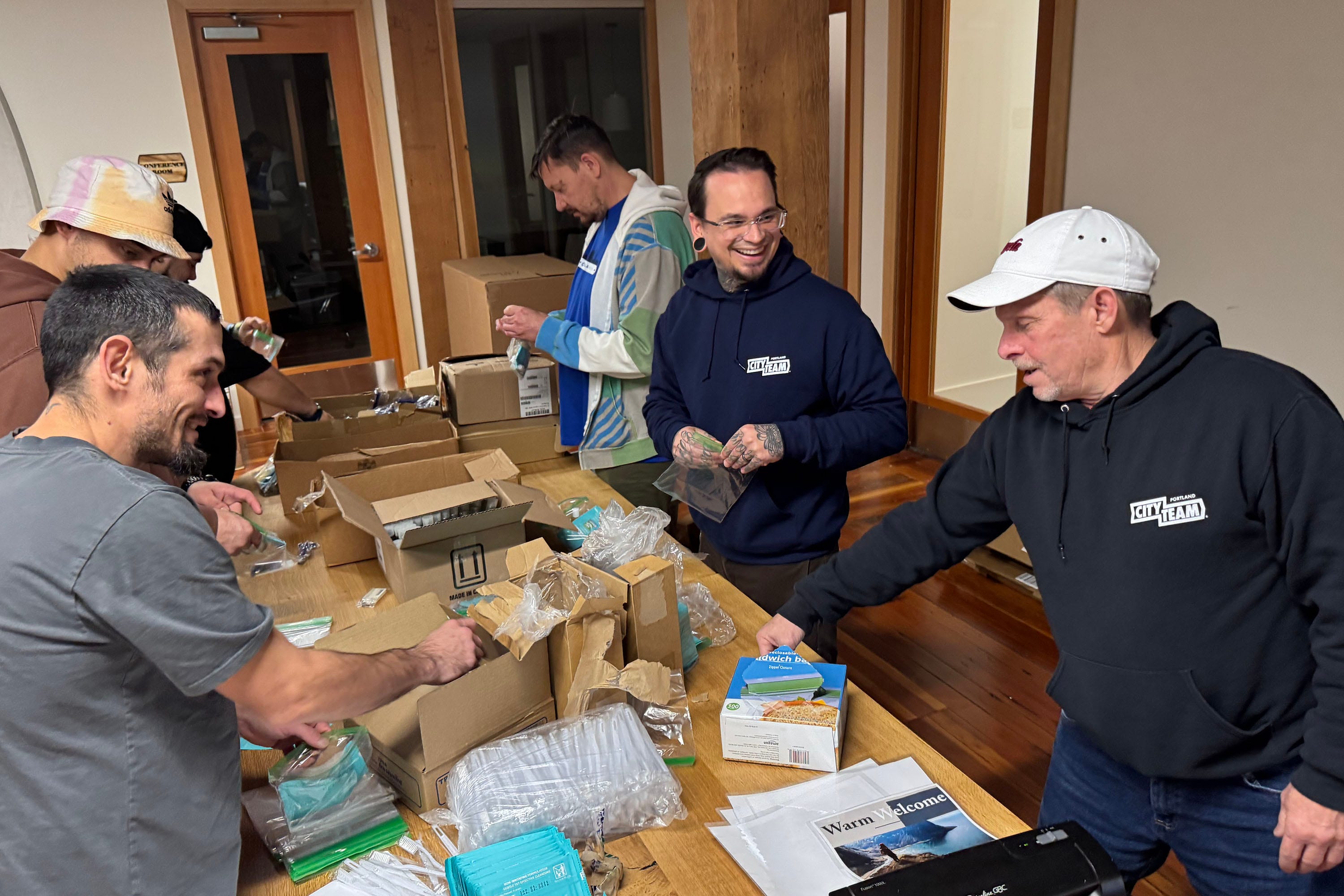
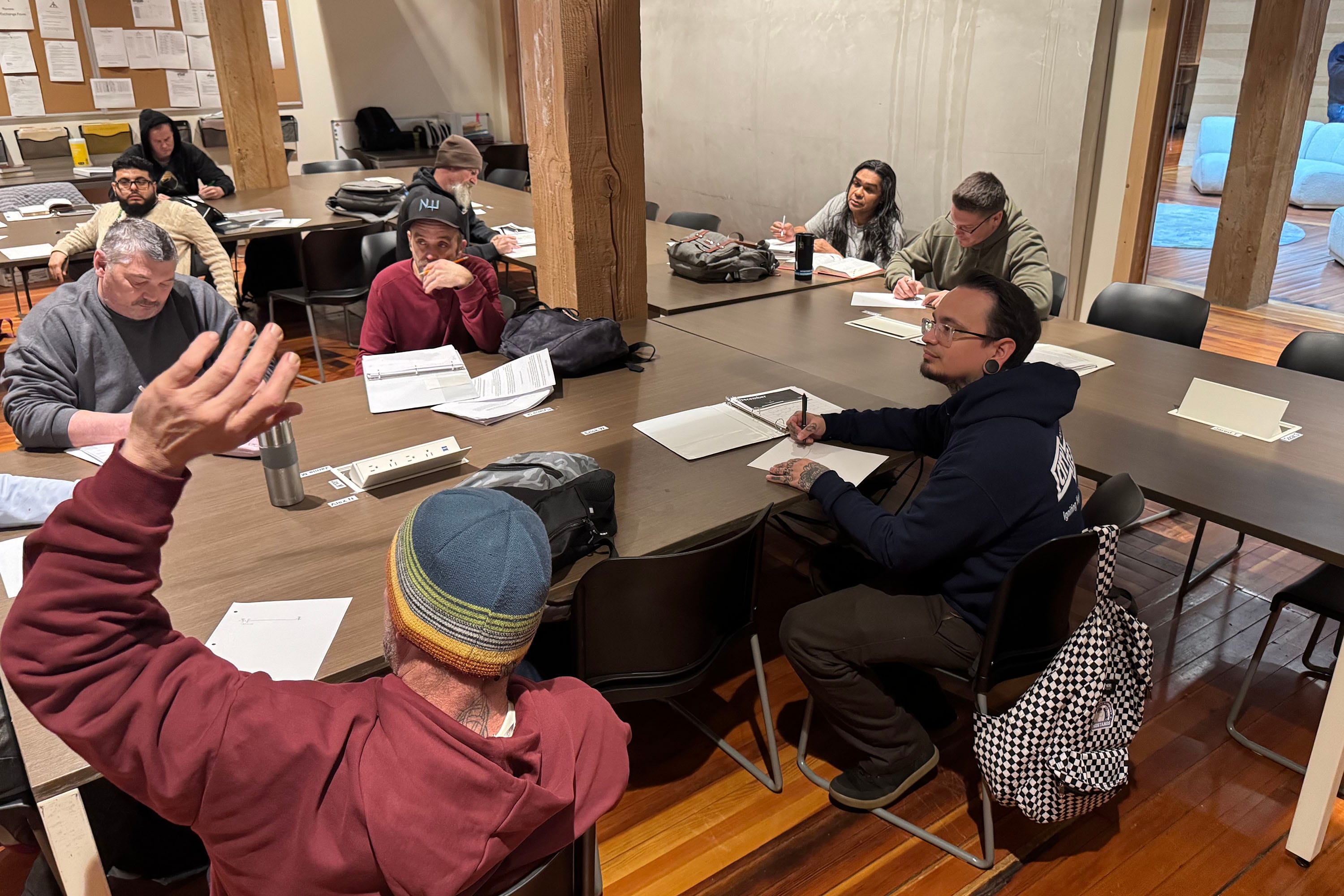
On a recent morning, Gamboa walks out of his office and greets the male residents and staff gathered around a long table assembling toiletries for CityTeam’s shelter on Southeast Grand Avenue, which the city of Portland began funding in November.
The ribbing commences. All of the men are communicative, pleasant, and getting along. A hello almost always comes with a handshake.
The setting is uplifting. An open lounge boasts white circular couches, overstuffed leather chairs and floor to ceiling shelves displaying books, plants and artwork. The workout room is decked out with new weights and equipment. In the gleaming kitchen with its aqua-tiled backsplash, staff members are making lattes.
CityTeam used the proceeds from a capital campaign to purchase the former office building and invested nearly as much to turn it into a residential program setting.
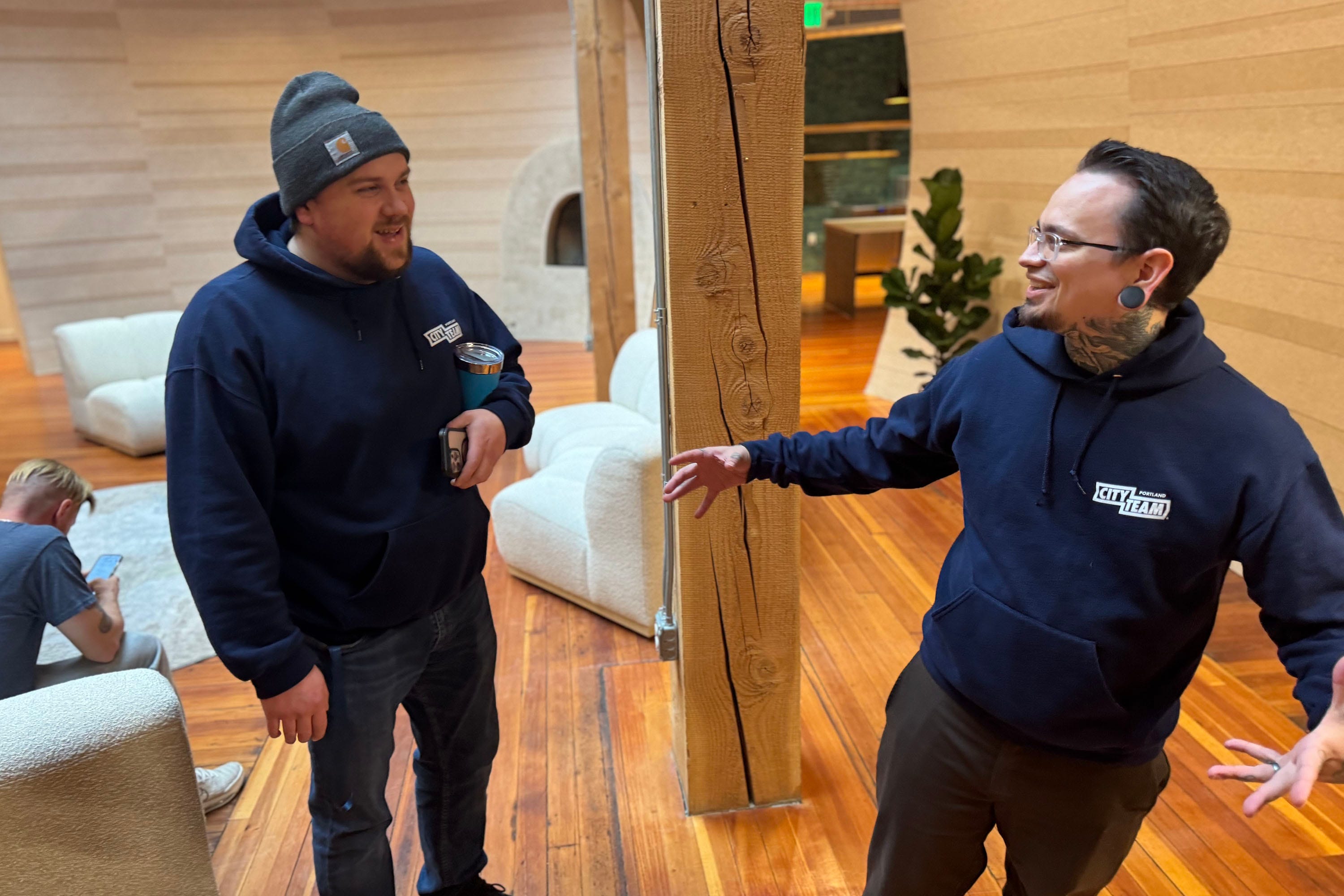
Gamboa stops to confer with a woman who has come to teach one of the recovery classes.
“Nineteen years clean and sober,” she says, sporting a down vest, her straight, shiny blond hair falling to her midback.
The program includes intensive classroom time, learning to understand addiction, how it played out in each person’s life and the tools to keep the pull at bay.
Gamboa knocks on a resident’s door for permission to show off his room, pausing to brag on the resident as he listens, beaming.
Four-person bunk rooms for program newbies surround the lounge on the second floor. Residents who advance in the program move up to two-person rooms on the third floor where they start jobs in the community and learn skills to rejoin society.
All the rooms have exposed brick walls and big windows. They are spotless and well appointed with plush, cream-colored blankets folded back with bright white sheets. The residents are responsible for keeping their rooms and the whole place clean and tidy, teaching housekeeping and fostering an environment of order and calm.
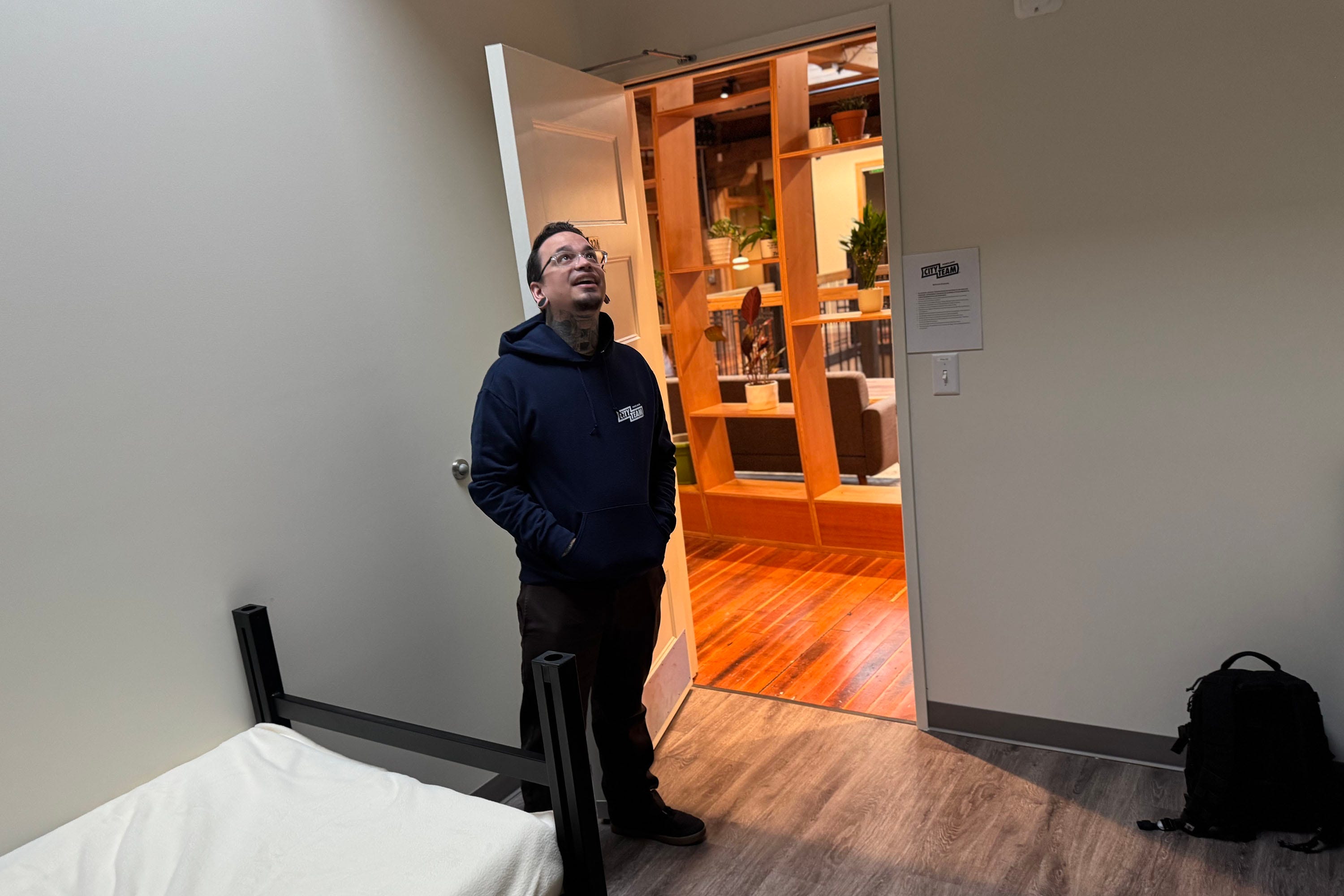
On the third floor, Gamboa steps into one of the rooms with a skylight. He pauses, looking skyward at the gray morning light.
Gamboa wasn’t able to persuade the young man who sat in his swivel chair the week prior. But he planted a seed.
He handed him his card and shook his hand. CityTeam doesn’t have specific times when people can start the program, he told him. If the program has room and you reach out, you’re in.
“When you’re ready, call me or text me,” Gamboa said. “I’ll be here.”
Learn more about CityTeam at

Thank you Erin for highlighting the important work of CityTeam Portland. We are a shining example of what the full continuum of care could and should look like. From emergency overnight shelter, to long-term residential program support with wrap around services including workforce development and clinical therapy, to finally permanent housing placements... it is all possible! We are proud to partner with the City of Portland for this first time at our Grand Ave recovery focused shelter, and hope that others can see the value in public private partnerships. We look forward to expanding our housing support though future projects! While it was disappointing that the young man in your story did not choose to enter the recovery program that day, the seed has been planted, and we hope he makes the choice to better his life in the months to come!