


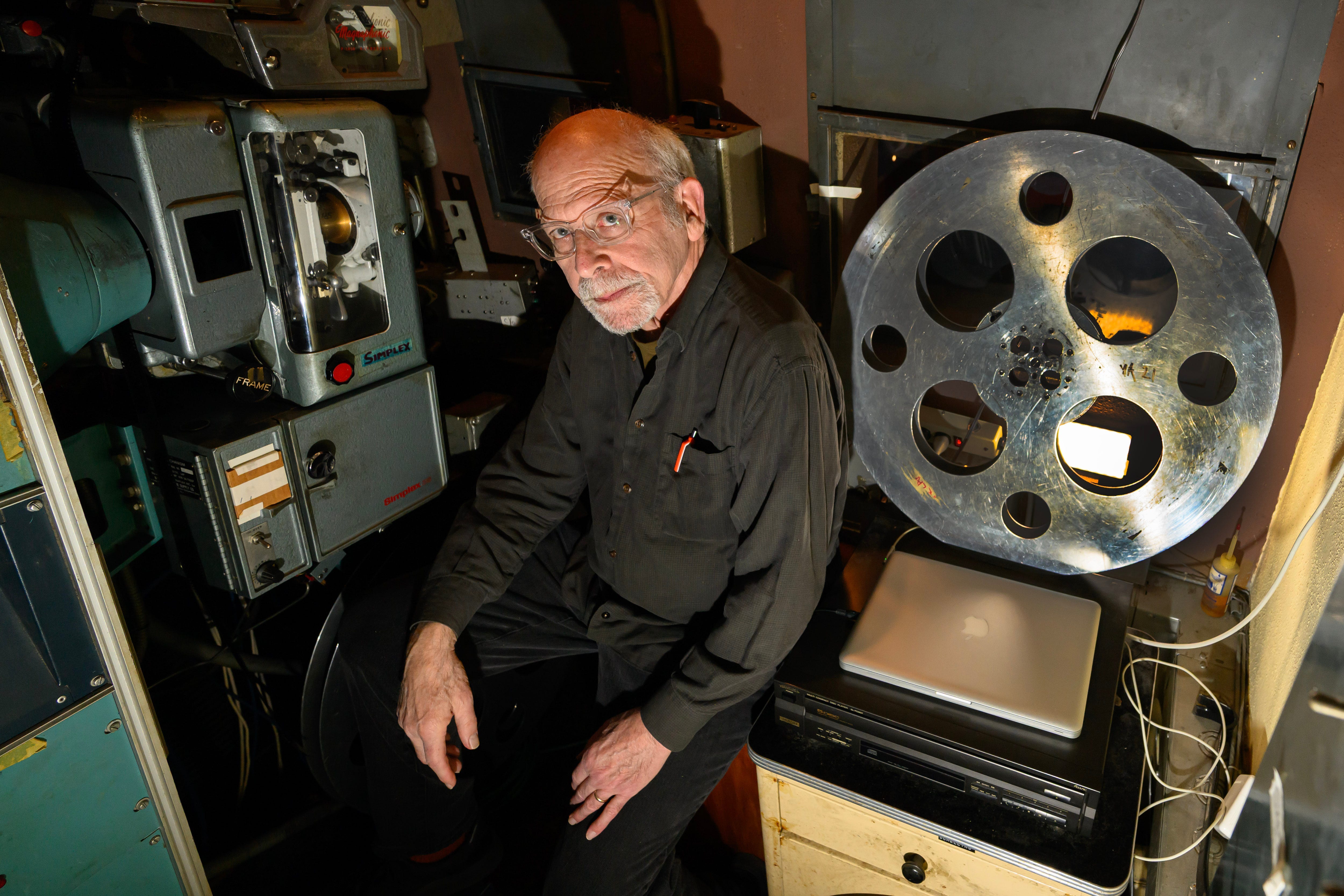
For Elliot Lavine, October is the “best movie month of the year.”
Shivers may run down your spine, the hair on your head may stand up straight, your blood may curdle, and perhaps, even your heart may stop for a beat or two while watching October’s Saturday Morning Classics at Cinema 21. Panic, revulsion, terror — it’s all here!
This is our monthly look at coming attractions for Cinema 21’s popular Saturday Morning Classics. Film programmer Elliot Lavine curates a theme every month, and we let you know what’s coming to the big screen each Saturday at 11 a.m. at our iconic neighborhood theater at 616 NW 21st Ave. One exception this month: There will be no Saturday Morning Classic movie on Saturday, Oct. 24.
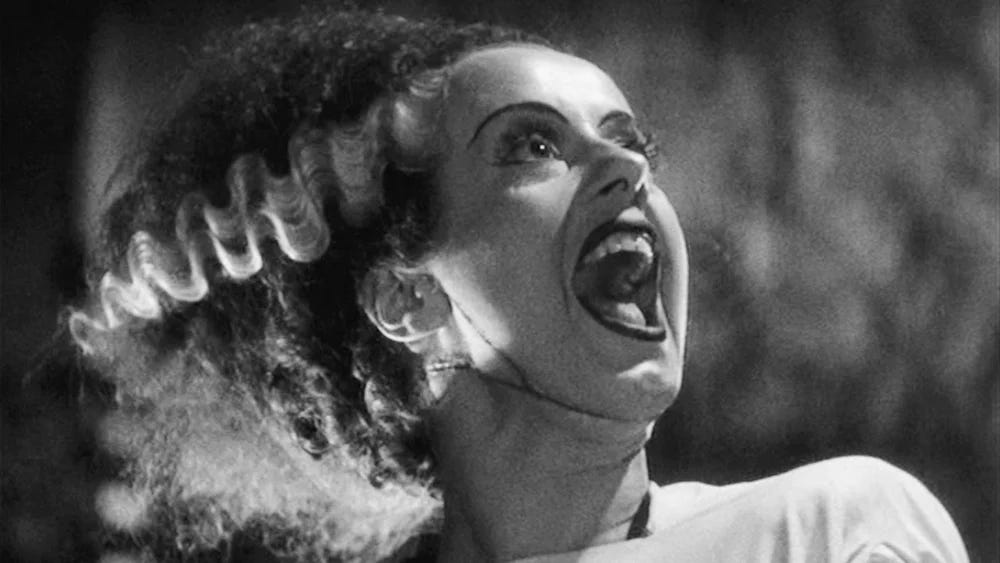
Bride of Frankenstein (1935) at Cinema 21 on Oct. 3. Director: James Whale
Are you stricken with the 21st century fear that A.I. has surpassed human intelligence? Are you playing every nightmare scenario in your mind, that we’ve already (or soon will) lose control over this new “monster” intelligence we humans have invented? And that it will spell the end of humanity?
Well then, take a well-deserved 75-minute break from this contemporary dread and drown yourself in the horrors Mary Shelley concocted more than 200 years ago when she wrote “Frankenstein,” the novel. Made possibly even more frightening in “Bride of Frankenstein,” the movie.
That’s British actress Elsa Lanchester in the black and white photo above with the lightning streak in her beehive hairdo, screaming her lungs out. As the would-be bride, screaming and hissing are her preferred modes of communication. She has just seen her intended groom, the monster played impeccably by Boris Karloff who defined the role of movie monster.
Karloff plays the iconic monster, making him both frightening and tragic at the same time. Lavine says as sensational as Karloff, Lanchester and Colin Clive as Frankenstein are, the actor who steals the show is Ernest Thesiger as the evil Dr. Pretorius.
Critics have called the “Bride of Frankenstein” the finest of all gothic horror movies. The film is frightening, yes, but it also has some eccentric qualities. It’s theatrical, campy and darkly funny.
Director James Whale was openly gay, which was highly unusual during this early golden age of Hollywood. Some see the themes of isolation and persecution in the film as a gay subtext to the plot.
Interesting facts:
Lanchester’s hisses in this film are epic. She modeled them after hissing swans and suffered a sore throat from having to hiss repeatedly as Director Whale shot the same scene over and over from different camera angles.
Her electric shock hairdo was modeled after Nefertiti, the Egyptian queen in 1300s B.C. It was not a wig. Her hair was pulled back and over a hidden wire cone.
Karloff sat in the makeup chair for four hours a day as his monster face was constructed atop his real face. The makeup artist used putty, wax, liquid plastic and greasepaint to create Karloff’s character. Karloff himself created his memorable stilted, lumbering monster walk.
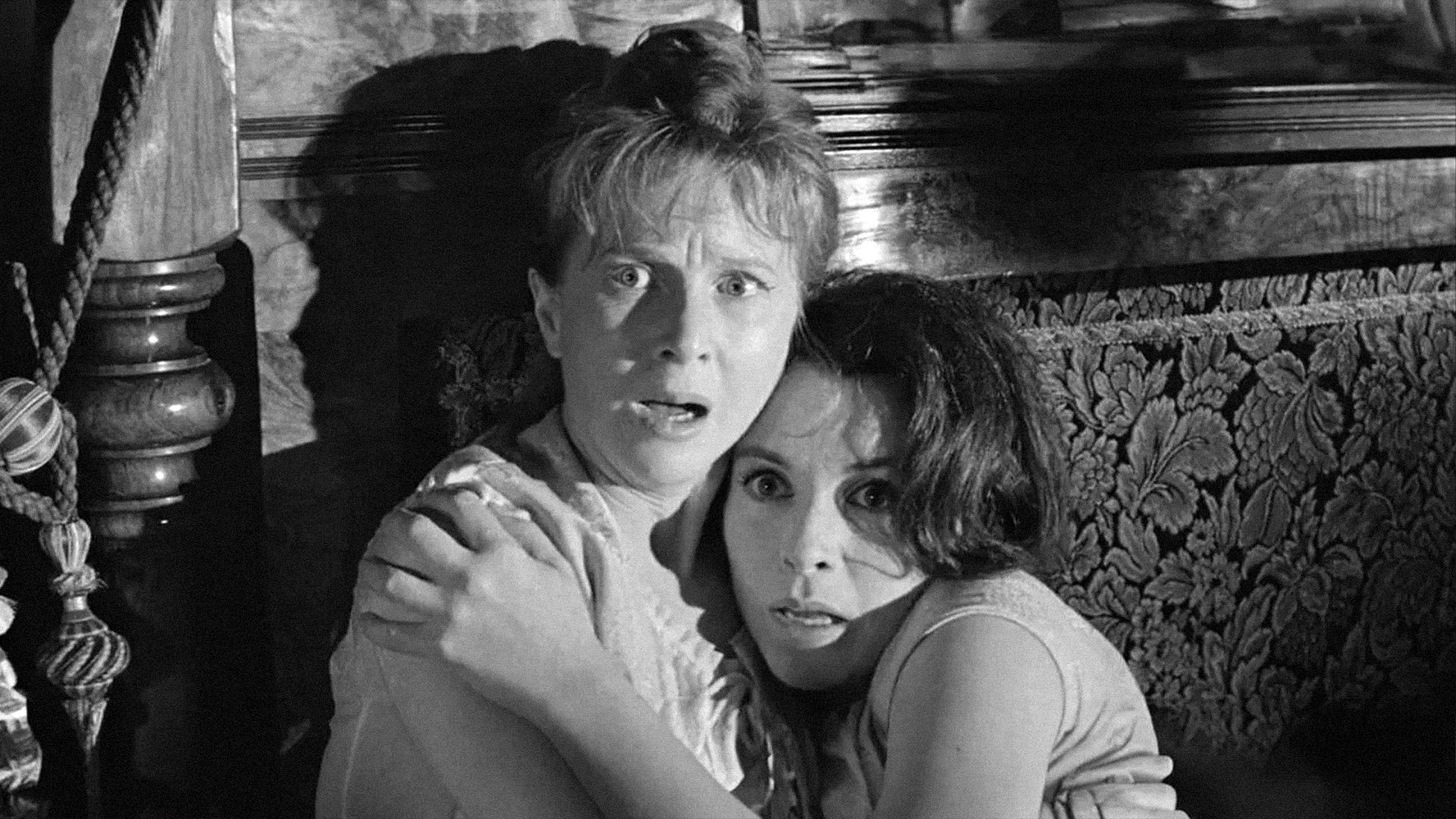
The Haunting (1963) at Cinema 21 on Oct. 10. Director: Robert Wise
Lavine calls “The Haunting” a “psychological shocker.”
The story takes place in a 90-year-old home in New England called Hill House. It’s one of those macabre-looking gothic mansions which go on forever, where no one ever lives in peace, nor rests in peace.
You do not even have to open those huge heavy doors to know that whatever is lurking behind them will never leave you alone. This home is a madhouse. Over the nine decades, four women have died mysteriously.
A scientist studying the paranormal decides to investigate and invites others to stay overnight with him in the “haunted” house. Doors open and close on their own. Banging sounds cannot be explained. Neither can the cries of a young child, nor the laughter of an unseen woman. There is also that rickety spiral staircase, and the famous “breathing door.”
Quintessential horror film stuff. But “The Haunting” is more than that. Lavine says this film relies on “psychological suspense, the unknowing of what lurks in the next scene,” He calls it “a tour de force on virtually every cinematic level.”
The film is shot in black and white. Unconventional tracking shots and pans, low-angle shots and sudden camera moves suggest some evil force may be truly calling the shots in Hill House. Director Wise used an experimental and defective lens to shoot his film, distorting the scenes so that straight walls look curved.
Julie Harris and Claire Bloom play the female leads. Harris is Eleanor, a fragile young woman who appears obsessed or possessed by Hill House. Which is it?
Bloom plays Theodora or Theo, a confident, strong woman. A psychic with E.S.P. She is also a lesbian. The Hays Motion Picture Production Codes were in effect when “The Haunting” was made, which meant homosexuality could not be explicitly depicted. But through body language, subtle dialogue and fashion it is clear Bloom’s character likes women.
Fun fact: British fashion designer Mary Quant was hired to dress Bloom to make her look more bohemian and different. Quant helped originate the mod look of the swinging ‘60s in London, and is credited with inventing the miniskirt, which prompted schools across the U.S. to institute dress codes for hemlines.
Do not confuse this 1963 “The Haunting” with the 1999 remake.
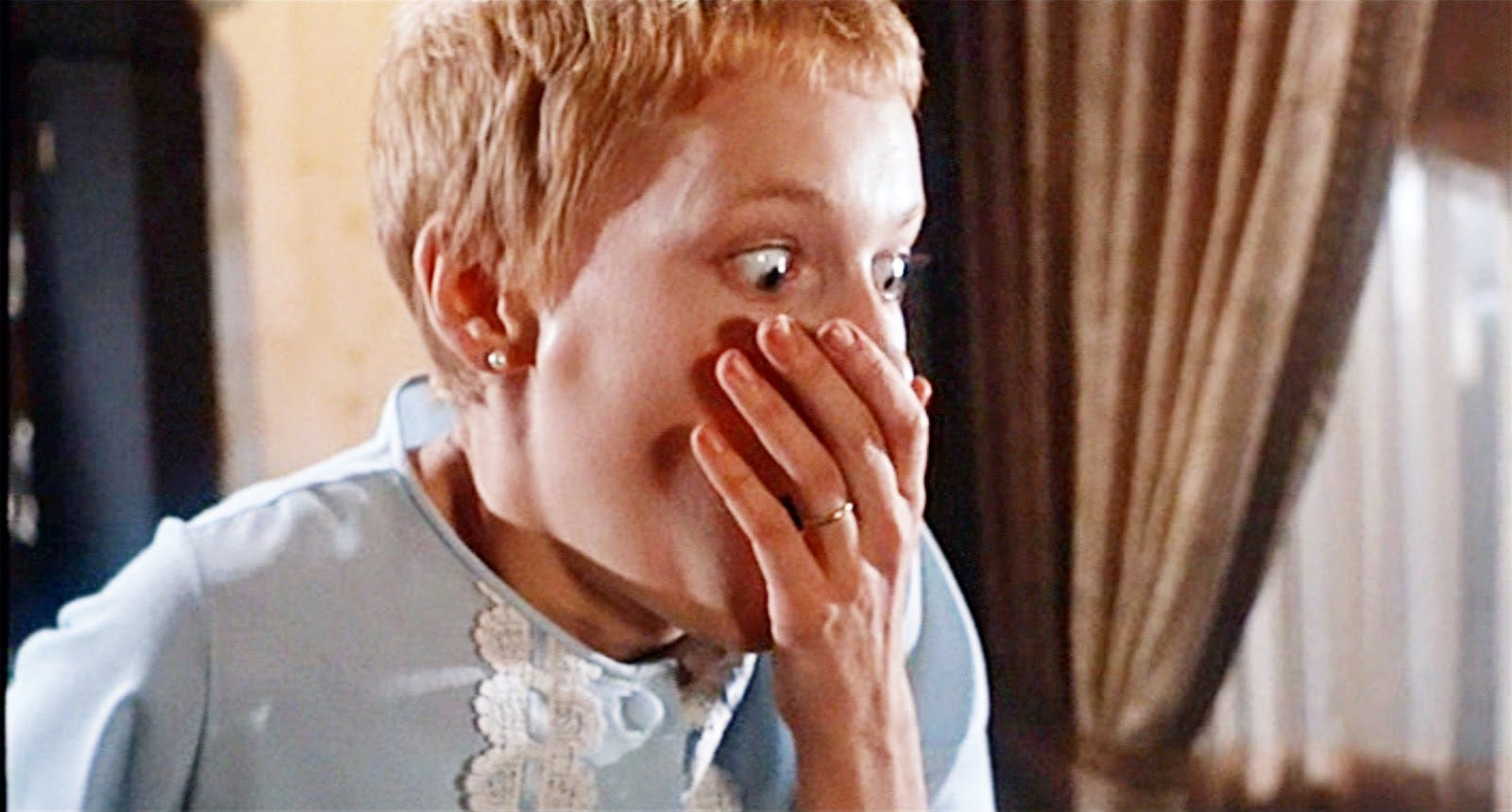
Rosemary’s Baby (1968) at Cinema 21 on Oct. 17. Director: Roman Polanski
Rape by the Devil himself and the birth of the Anti-Christ. Lavine says that “’Rosemary’s Baby’ ... took cinema horror to a dangerous new level.”
Mia Farrow as Rosemary and John Cassavettes as her husband, Guy, are newlyweds settling in to their New York City apartment which is of course in a large Gothic revival style building. The buildings always seem to be Gothic. Trite, but it works.
The previous tenant died in the apartment they move into and there are some ominous rumors about witchcraft and murders in the building. Also, the neighbors are strange, but who doesn’t have an odd neighbor or two?
And how well did Rosemary know Guy before she married him anyway? Because Guy becomes quite taken with the peculiar older couple next door. The Castevets are played by Ruth Gordon and Sidney Blackmer, each at their wicked best.
Guy, a struggling actor, finally lands a coveted part in a play after the original actor goes blind. The price of that success is selling out his wife and her body to the Devil and his coven. And since Rosemary is drugged, she doesn’t even know her husband and his new friends allowed the Devil to rape and impregnate her.
So, in some sense, we know what’s happening, yet Lavine says this the film “remains unequaled in its portrayal of encroaching dread.”
Farrow and Gordon convince us this is real life, even if it is really strange life. Critics praised Polanski for making a horror film into a work of art.
Ugly facts:
As shocking as this story was in 1968, some of it could almost be pulled from the headlines of today. Only in Gisele Pelicot’s case, her husband may have been the devil himself, drugging and raping her and allowing more than 70 other men to do the same. Even making his own snuff videos.
A year after “Rosemary’s Baby” hit theaters, Polanski suffered his own personal horror when his pregnant wife, actress Sharon Tate, was stabbed to death by the Manson family.
In 1977, Polanski was arrested for drugging and raping a 13-year-old girl. He agreed to a plea deal, but fled the U.S. the night before he was to appear in court. Many years later, he apologized to his victim. Polanski continues to direct films in Europe. In 2002, he won the Oscar for best director for “The Pianist.” He did not return to the U.S. to accept the award, because he remains a wanted fugitive.
(There be no Saturday morning classics film on Oct. 24.)
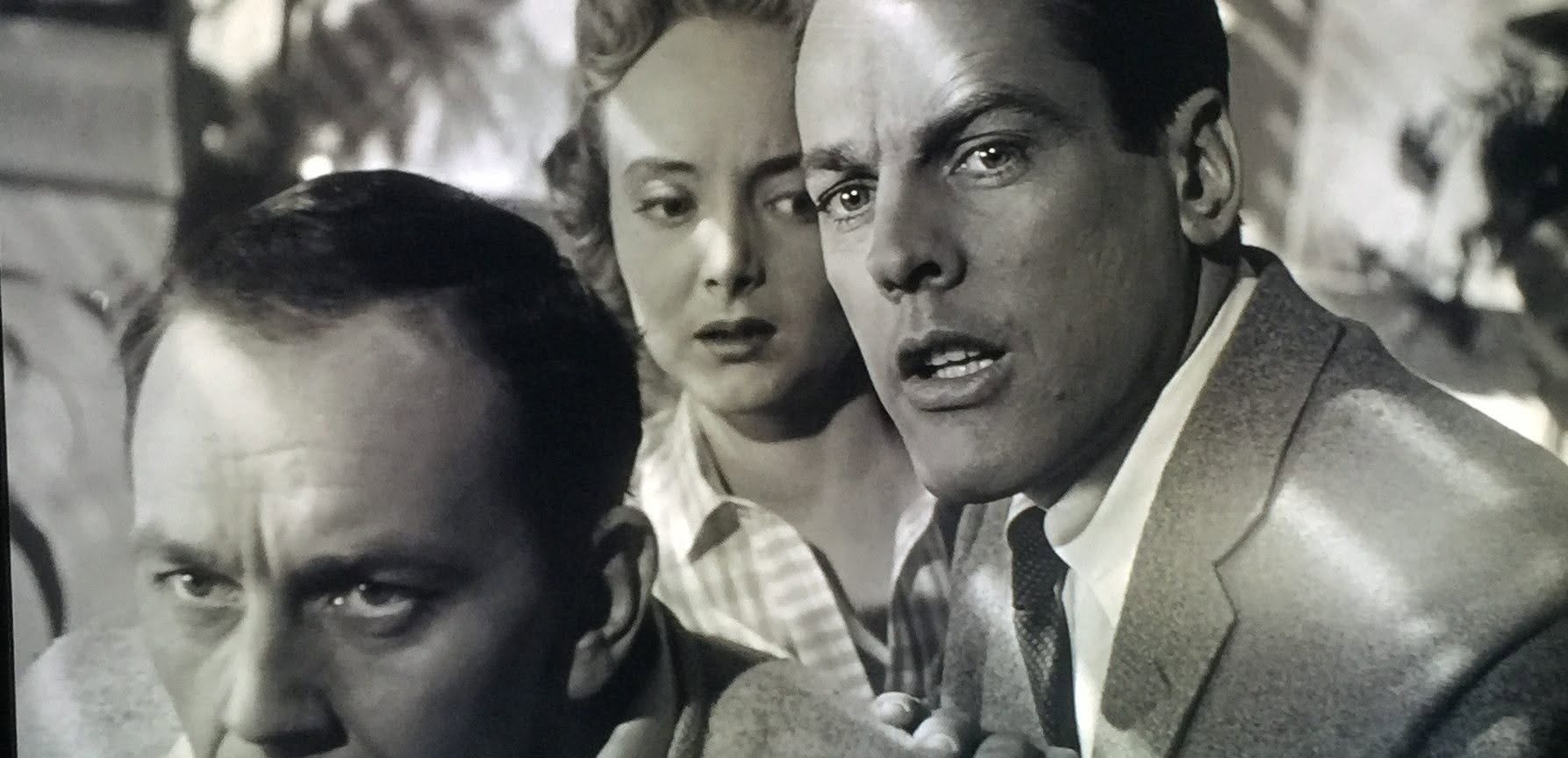
Invasion of the Body Snatchers (1956) at Cinema 21 on Oct. 31. Director: Don Siegel
If you are not already paralyzed with fear by the idea of Satan himself populating the earth with his spawn, then it’s time for you to revel in the sinister plot of extraterrestrials taking over planet earth.
No monsters, nor haunted houses, nor witchcraft here. In fact, on the surface everything looks normal. On the surface.
Just an extraterrestrial invasion that begins with plant spores falling from space down to earth and growing into giant seed pods. Each pod capable of producing a visual replica of a person sleeping nearby. Don’t worry, you will not be able to fall asleep during this movie.
Eventually the emotionless “duplicates” take over. Hence the term “pod people.” Can this quiet invasion of soulless humans be stopped? And what happened to your favorite aunt?
Will this cause mass hysteria? This was after all the 1950s: the Atomic Age, the Cold War, McCarthyism and the fear that Communists were infiltrating the United States. I asked Lavine for his thoughts. He answered with more questions: “Is it a metaphor about conformity? Is it a warning of a devious ideology insinuating itself into our society? Who knows? All I know is we’re ending our October series in the most perfect way possible.”
And perhaps, there is no better way to begin your day on Halloween. Lavine told me he first saw the film when he was 8 years old, “I had no idea what this movie was about, but it gave me nightmares for the longest time.”
The movie is fast paced and has been called “noir-inspired.” It’s everything Lavine likes in film: “beautiful black and white photography, a wild, inexplicable premise that makes complete sense when you realize the film is actually an allegory.”
Despite the repeated nightmares, Lavine estimates he has watched this film more than 100 times. That’s obsession, and that’s an appropriate response to this quartet of chilling films.
Do not confuse this 1956 “Invasion of the Body Snatchers” with the 1978 remake.