


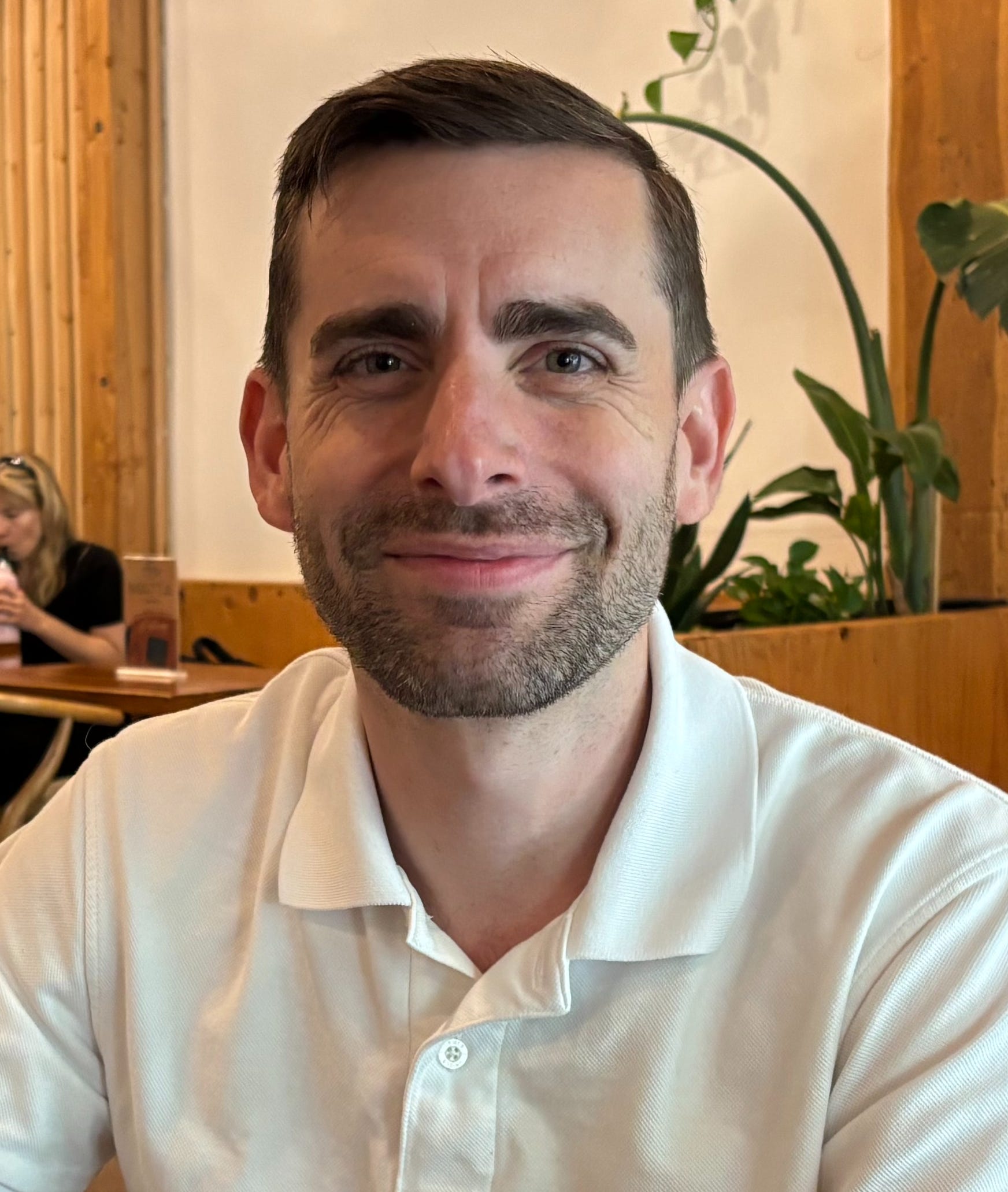
If Portland charter reform was a big idea, Northwest District resident Mattt Zmuda had a bigger one: Merge Portland and Multnomah County governments into a single entity.
A tech engineer, he read the 1971 state legislation allowing Portland and Multnomah County to merge. Though never attempted in 55 years, he figured it was doable. An initiative petition signed by 22,000 voters would have triggered a two-year process of official analysis and citizen engagement culminating in a referendum decided by a majority of affected voters.
“It would not be that difficult,” Zmuda initially surmised, unencumbered by professional political experience. “That was what I thought.”
That confidence led him to believe an all-volunteer effort might be sufficient, and he liked the purity of that path.
The easy way, he reasoned, would be to raise funds and hire an organization to collect the necessary signatures. The hard way proved harder than he anticipated. He never announced the number of signatures he collected.
“I wanted to do this the right way, which means not tapping into existing power structures and political organizations,” he said. “I could have approached business interests to solicit large donations and gotten a paid signature gathering firm. We probably could have reached that threshold pretty easily.
“But, I think that would have triggered a reaction. … If business interests come out strongly on record for this, you would see the same negative reaction [as we’ve seen to] things like DSA.”
The division engendered by the Democratic Socialists of America bloc on the current City Council is not the kind of reform he had in mind.
“What I found is that this [merger proposal] doesn’t necessarily polarize around political ideology,” he said. “People who reached out were coming in equal parts from what’s called the moderate part of City Council—folks who supported Olivia Clark or Dan Ryan—but also, I have quite a few people from DSA.”
Zmuda made the effort, speaking to about 25 neighborhood groups after a MultNoMo kickoff event at the Lucky Labrador Pub in January.
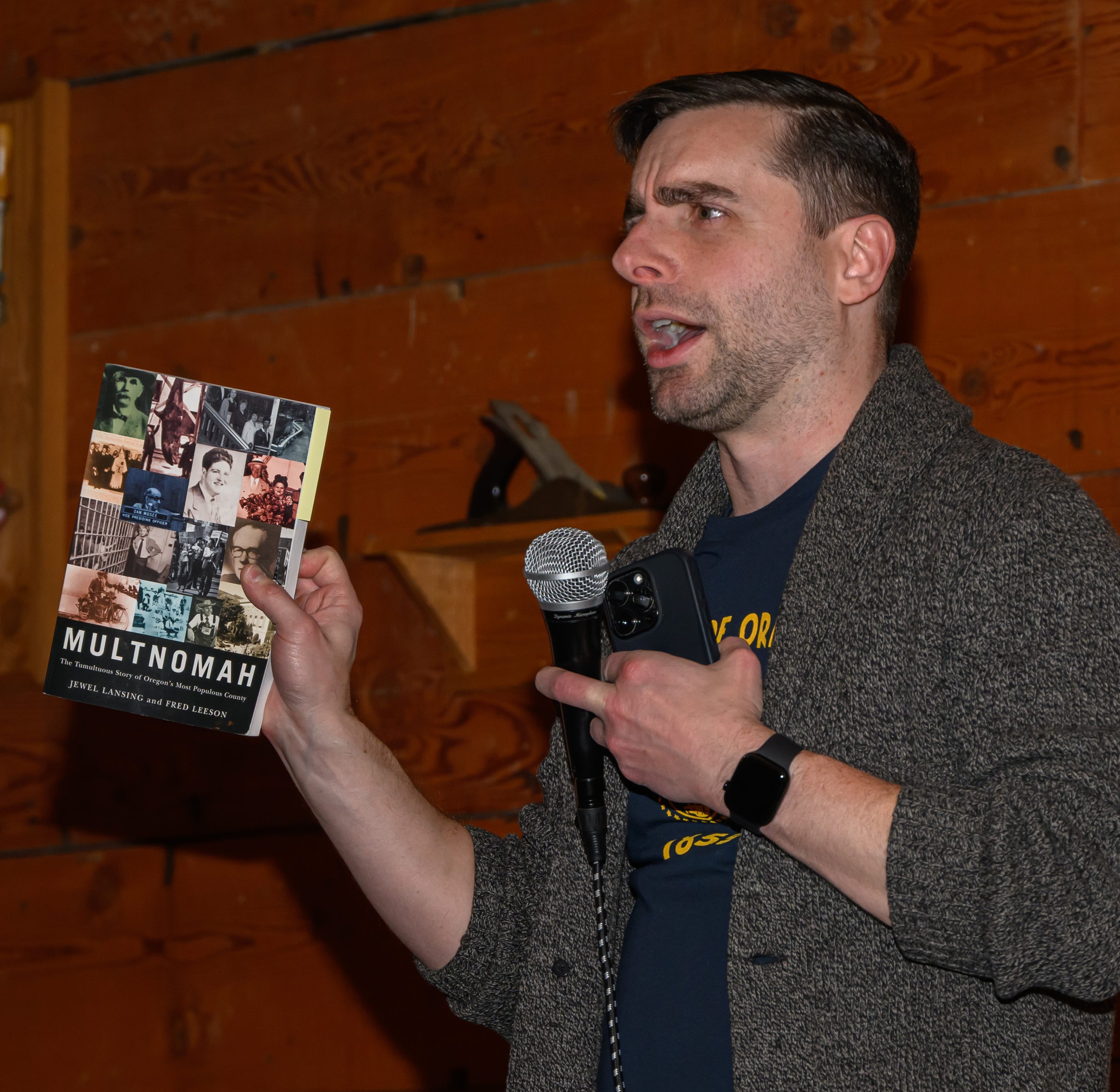
“Overwhelmingly, people who understood it were supportive and enthusiastic,” he said.
“I showed up prepared to argue that two overlapping governments are one too many, and I almost never had to,” he wrote. “People are already there.
“Their questions start further down the road: How services would be organized, what would happen to tax rates, whether their dollars would finally buy better results. Portlanders want government that costs less and delivers more, and they’re ready for a serious, detailed conversation about the structure standing in the way.”
Turning that support into certified signatures, however, was a bigger task than he envisioned.
“A lot of the plans we had for yard signs, canvassing and organized drives didn’t materialize as hoped,” he wrote on MultNoMo.org.
“I work a full-time job and take my four young kids to school,” he told the NW Examiner. “I’m able to maybe work 10-20 hours per week. That’s not enough.”
The whole process was a learning experience, and he intends to continue that education.
“I’m going to be starting at PSU, doing their executive master’s in public administration program. Every other Saturday, a cohort of folks will get together and nerd out about administrative law,” he said with a smile. “So that should be a fun thing.”
Zmuda recalls another Portland political neophyte who wasn’t ashamed to admit he had things to learn.
“On the Johnny Carson show, [Portland Mayor-elect] Bud Clark told him he was enrolling at PSU. That was a big laugh line. It was unthinkable that people would have the humility to go to school and try to be the best person they could be.”
Zmuda won’t take this issue on alone again, but he remains optimistic that its time will come.
“I do see this reform as being inevitable,” he said.
A citizen initiative isn’t the only way a merger could be enacted. The City-County Act of 1971 (ORS 199.705-199.795) can also be triggered by a majority vote of either the Portland City Council or the Multnomah County Board. As with an initiative, there would be a two-year period to draft referendum language that would be put to the voters.
Before any future merger campaign, Zmuda believes the enabling legislation needs to be tightened. For example, the complexities related to parts of the county not in any city are not spelled out, he said. He is in touch with state legislators who promise to refine the process.
“I’m in this for the long haul,” he wrote. “Portland is home for my family. My oldest is 8, and when she graduates high school in 2036, I want this to be a city worth coming back to — somewhere safe and energizing, with housing people can afford and opportunity worth staying for.”
Steve Kanter, a Northwest District resident and dean emeritus of the Lewis & Clark Law School, has followed Zmuda’s effort closely.
“I’m strongly in favor of looking at this again,” Kanter said. “People are hungry for a responsive government … and there would be very strong support for it.”
Overlapping governments cloud authority and responsibility, he said, inviting buck-passing on tough issues or the opposite, unilateral action when cooperation is warranted.
Nothing exemplified the unwieldy divide between city and county more starkly than the matter of homeless shelter and services, issues designated for county control under a 1983 intergovernmental agreement. Mayor Keith Wilson’s central campaign pledge—to create 1,500 shelter beds—led the city to cover what should have been a county responsibility.
Kanter takes the merger issue one step further: He thinks Metro should also be brought under the same tent.
How to get involved
Zmuda’s website lists three ways people can help.
Apply to the Multnomah County Charter Review Committee. Every six years, the county convenes a committee of residents to study the charter and propose amendments for voter approval.
Invite me to speak. If your neighborhood association, civic group, workplace, or book club wants to dig into consolidation, write to unite@multnomo.org.
Connect me with candidates. If you’re running for office, or know someone who is, let’s talk. I can say with confidence that consolidation is a winning issue.
The most consequential words in this account may be the seemingly innocuous promise of “a two-year process of official analysis and citizen engagement,” because whether consolidation produces genuine reform will depend heavily on who government recognizes as the public, whose voices are given institutional weight, and how that engagement process is designed.
Portland and Multnomah County increasingly seem to have moved away from engaging citizens simply as citizens — individual voter-taxpayers with an equal stake in their government — toward a model in which government identifies particular “communities,” recruits nonprofits and advocacy organizations said to represent them, and gives special weight to participants chosen for identity and “lived experience.”
We have seen versions of this in the Portland charter-reform process, the Waterfront Park redesign and, most explicitly, Multnomah County’s Climate Justice Plan. In the last of the three consultative projects, the County assembled representatives of designated “frontline communities” through community-based organizations [1] and has gone so far as to instruct that “lived experience” be recognized as “technical expertise.” [2] Ordinary public surveys, hearings and open houses may still occur, but they sit alongside a much more structured system in which selected organizations and constituencies enjoy a privileged role in defining problems, values and priorities.
That is not quite the same thing as citizen engagement. It is stakeholder engagement based on a particular theory of who legitimately speaks for the public.
This matters enormously for MultNoMo. The basic question is admirably concrete: Would Portlanders be better served by one government rather than two overlapping governments, and would consolidation improve accountability, performance and cost? A two-year process could illuminate that question. But under the prevailing engagement model, it could just as easily become an elaborate exercise in commissioned nonprofits, identity-balanced advisory groups, equity frameworks and “lived experience,” with the original question gradually disappearing beneath the machinery of consultation.
Any renewed consolidation effort should therefore concern itself not only with the rules governing merger, but with the rules governing the two-year process itself. If this is to be citizen engagement, citizens — not government-selected intermediaries purporting to speak for various “communities” — should remain at its center.
[1] Multnomah County Office of Sustainability, “Developing the Climate Justice Plan,” Phase 1: Frontline Community Engagement. The County states that its Climate Justice Plan Steering Committee was “composed of members from 13 community-based organizations representing frontline communities.”
https://multco.us/info/developing-climate-justice-plan
[2] Multnomah County Office of Sustainability, Climate Justice Plan, Community Forum #5: “Contribute to Climate Justice,” Nov. 13, 2025, p. 8. Under “Recommendations/Concerns,” the presentation states: “Continue to prioritize engagement with frontline communities and recognize lived experience as technical expertise.”
https://multco.us/file/cjp_forum_slide_deck_-_contribute/download
Wow, I am grateful for today's message. "Costs less and Delivers More". If the details offer evidence, this is a winning message. I am going to get aboard. Let's get informed.