

City confirms mediation role of Councilors Mitch Green and Steve Novick in PGE deal
The pair did not sign agreement and cannot speak about it for now

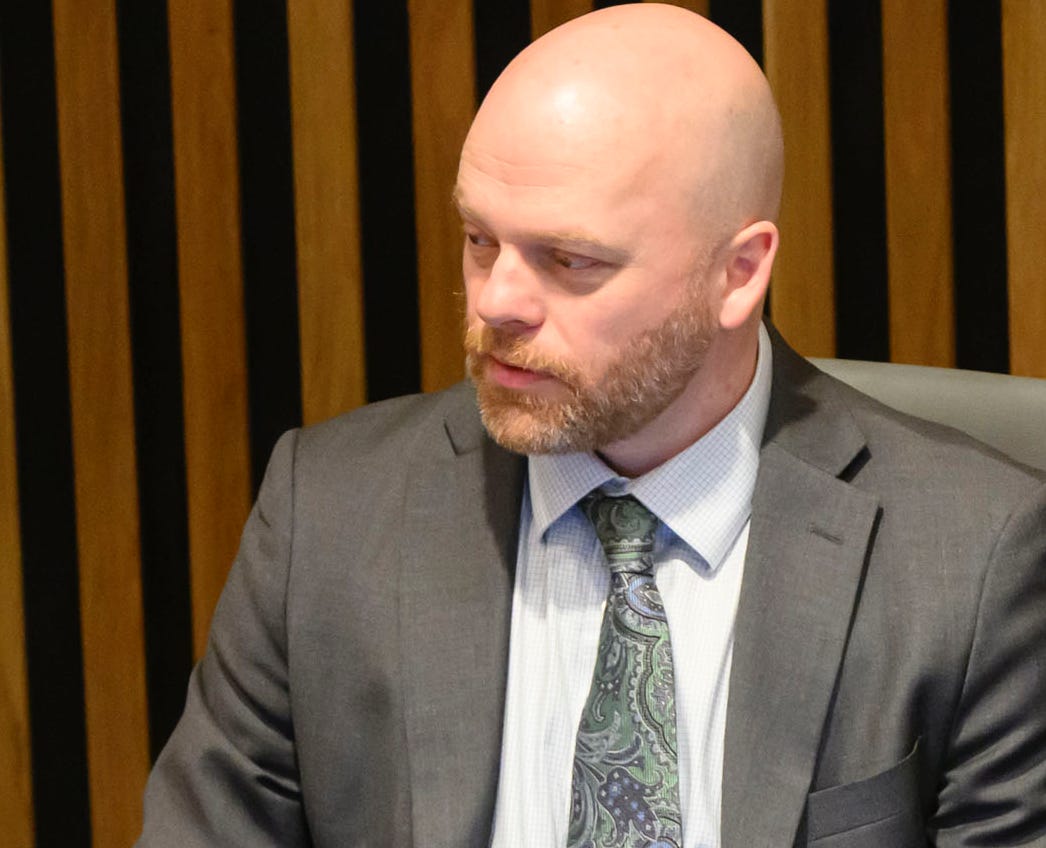
A city spokesperson confirmed on Friday that City Council members Mitch Green and Steve Novick participated in discussions leading to an agreement to support Portland General Electric’s controversial powerline project cutting through Forest Park.
Neither council member had responded to the NW Examiner’s request to confirm or deny their involvement.
“The city, including Councilor Novick and Councilor Green, participated in mediation to improve the previous proposal and reduce impacts to the park where possible,” wrote Chenoa Philabaum, a strategic communications and media manager with the Community and Economic Development service area.
“But the settlement agreement is not a final approval of the PGE project, and the councilors are not parties to the agreement,” Philabaum clarified. “PGE must submit a new land-use application, which will be reviewed in compliance with the city’s land-use process for a determination of whether the revised application meets Portland’s approval criteria.
“Under city code, councilors are required to avoid receiving information from interested parties on a pending land-use application that could be appealed to the council and to avoid saying or doing anything that could demonstrate bias. As a result, the councilors aren’t able to share opinions on the matter at this time.”
The Examiner had asked only about their involvement, not their opinions or positions on the issue. Another line of inquiry will be why they were chosen for this role.
Very interesting. Why can't the council members speak more openly about this agreement? Did they sign a non-disclosure agreement (NDA), or is there some other reason Portlanders are being kept in the dark?
It also raises another question: would the City Administrator have signed this agreement without at least some understanding with, or blessing from, those two council members.
It's worth revisiting what Mitch Green said about NDAs and secret negotiations when it came to the Moda renovation:
"The public deserves transparency and accountability - not backroom deals. I was recently asked to join a small group of councilors to stay close to the talks as the admin enters negotiation. A condition of being in this group would be a commitment to honor an NDA between the city and the team. I refused. The point of an NDA is to keep details secret, which is the opposite of what we should be doing with this project. If you want the public to support using public money to remodel a stadium, then you need to make the case to them in public about why using those funds is better than some alternative. I join my colleague @councilorkoyamalane in rejecting the NDA as she has pointed out, transparency is a core City value."
Those are important principles. Given that stance, it's fair to ask: If transparency is a "core City value" when negotiating a deal involving the Moda Center, why isn't it equally important when negotiating an agreement that could reverse a unanimous 12-0 City Council decision and dramatically affect Forest Park? Why does the same commitment to openness not seem to apply here, with PGE's plan to clearcut Forest Park moving forward phase by phase?
Transparency shouldn't depend on the subject matter. If backroom negotiations are unacceptable for a sports arena, they should be unacceptable when the future of one of Portland's most treasured natural resources is at stake.
At this point, the reason the City enlisted Novick and Green is unknown, but they seem like logical choices. Both council members have strong environmental credentials, and Novick’s background as an environmental lawyer would make him a reasonable participant in negotiations involving a complex land use and environmental dispute. Green’s experience with the Bonneville Power Administration may also have provided valuable expertise on transmission infrastructure and grid reliability. Politically, involving council members from different wings of the Council could also lend broader credibility to any agreement the City ultimately presents to the Council.
Regardless of one’s view of the project, bringing these two council members into the negotiations appears to have been a prudent decision by the Mayor and City Administrator—assuming they ultimately explain and publicly support the agreement. Their involvement would demonstrate that the negotiations were not conducted solely by City staff, but also included elected officials representing different perspectives within the Council. It also makes it harder to conclude that the City Administrator was acting alone or negotiating a backroom deal. If council members with different backgrounds and political perspectives were directly involved, it suggests the negotiations included broader political oversight.