


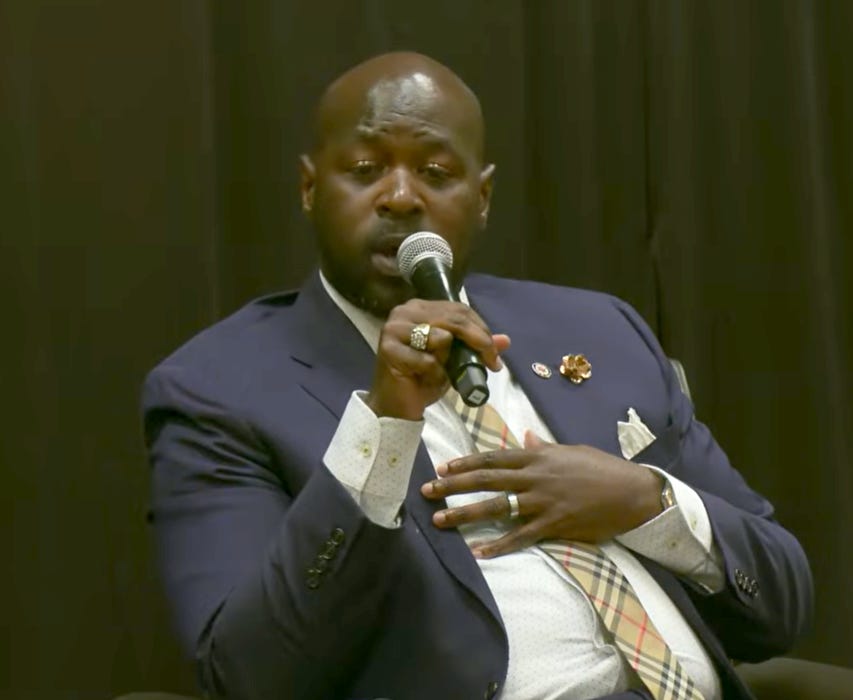
City Administrator Raymond Lee has been a difficult person for Portlanders to read in his first half year on the job.
As a reporter, I have often found that things become more clear to me if I sit in the front row. That’s how I got into a brief exchange with Lee at a City Club program in June.
Lee, who was to be the guest speaker that night, sat beside me, and we chatted about the generous severance packages recently given to departing bureau heads. We agreed that they were absurd. He called the practice unnecessary, as bureau chiefs serve at the pleasure of their employer, who can remove them when they choose and without cause, so large payouts upon departure are neither required nor good for the city.
That candor changed when the program began. As if turning on a dime, the new administrator filled the air with platitudes, cliches and generalities. For the next hour-plus, Lee spoke of how he loved Portland, its people and its potential. Specifics were harder to come by.
Moderator Shane Dixon Kavanaugh of The Oregonian/OregonLive asked what it would take to turn Portland around.
“When you have a change of form of government and a change of culture on top of that,” Lee said, “it’s really shaping some of the conversations that you’re hearing at the dais, and how we move forward collectively as a unit.”
The requisite culture shift could take up to five years, he added.
“In the two years [since charter reform], they never had a conversation about priorities until I got here. I just want to make sure that I’m creating that environment for our City Council to have these conversations about strategy.”
If there was an answer in there, Kavanaugh didn’t detect it either.
“Hearing you talk about the city needing up to five years for there to be a culture change in Portland,” Kavanaugh asked, “Do you think that the public has the patience for five years to get to that culture change?”
Put in those stark terms, Lee reframed his estimate.
“I think you will see things along the way. You’re gonna see changes. You’re gonna see a strategic plan. You’re gonna see dashboards. You’re gonna see things. You’re gonna see more town halls,” he said.
The five years referred to was about when he, as an experienced administrator, would know that cultural change had occurred.
In the meantime, Lee said the city needs to invest more to address homelessness, hire more police officers and upgrade the Moda Center to keep the Trail Blazers in town, all while reducing our unusually high taxes that drive businesses away.
Lee was never asked about excessive severance packages, and he did not bring them up. The topic was certainly on his mind when he negotiated his own contract to become Portland’s city administrator a few months earlier.
As reported by Jack Bogdanski, a Portland lawyer and academic who has been blogging on city affairs since 2002, the city offered Lee an annual salary of $320,000, 95% payment of his health insurance, full payment of his retirement plan and a three-year agreement wherein he would get 12 months pay “if separated in the first year” and a six-month payout if separated in the second or third year.
That was the city’s starting position. Bogdanski wrote that Lee upped the ante with “proposals that even for Portland City Hall would be crazy,” including a full three-year payout if the contract were not extended after the first 18 months of employment.
“He’s extremely keen on getting paid on his way out the door from Portland,” Bogdanski wrote.
The NW Examiner asked Lee how his arrangement differed from the settlements given to other city executives.
Lee asserted that the city administrator’s position is different from bureau directors and managers.
“The city administrator … reports directly to the mayor and all 12 members of the City Council. Unlike bureau directors, the position operates at the intersection of administration and governance and is uniquely subject to changes in political leadership, policy direction and council priorities.
“My employment agreement was negotiated as part of the recruitment process, publicly considered and approved by the City Council.
“The agreement is consistent with the framework established for executive leadership positions under the city’s new organizational structure and was not a unique arrangement created solely for me.”
The city charter does in fact exclude the city administrator from severance limits imposed on other positions.
Despite all this, Lee claimed that “I remain an at-will employee serving at the pleasure of the mayor and City Council.”
His “easy-come, easy-go” status changed the moment he signed a contract ensuring substantial penalties for dismissal. The city retains the freedom to remove him, but it would come with a steep financial cost.
Talk about recieving a cold glass of water in the face, this information stings. Is Portland so disfunctional that our mayor-city council format requires ignoring, if not breaking, our charter? Let me say this very clearly, we are overweight with bureaucrats. We thought we elected individuals who respected us but discover obfuscation and personal ambition along the way. Without economic growth our slide will continue. Our office buildings will remain empty. Struggling entrepreneurs will go elsewhere. Out hierarchy of needs begins with addressing our safety and quality of life. We do not need prima donnas. We need dedicated officials who already know what we want.
Lee is a sharp guy, tough negotiator, and a survivor. Exactly the kind of thing I want in a city administrator. If I were taking a job in such a den of ideological hallucination and ineptitude as Portland I would have done the same thing. Nothing in this article reduces my opinion of him in any way.