


At least 50,000 people. That’s how many folks have flocked to the Portland Art Museum since it reopened in November with a major splash to celebrate its $111 million expansion.
The upgraded museum offers 100,000 square feet of new or upgraded public and gallery space. (Translation for sports fans: that’s equivalent to an area of almost two full football fields.) The new museum is now worth far more than a quick walk-through. Below is a sample of what you’ll see. But by all means, go check out the PAM yourself. Hours and other details here. Click any photo to enlarge. All photos by Walden Kirsch.
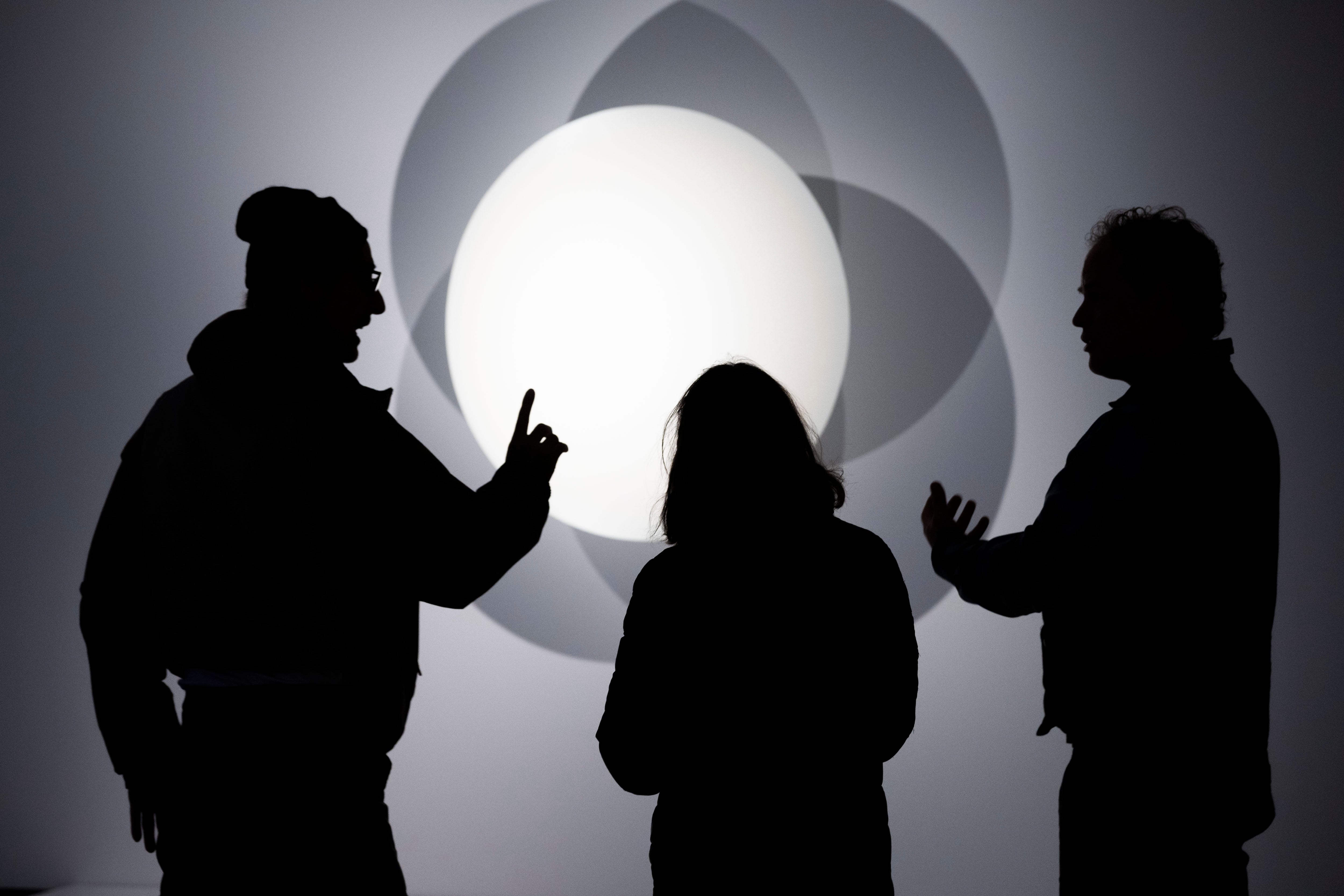
Robert Irwin’s sprayed-enamel-on-aluminum disc, which had long been on museum display before the renovation, is reimagined — and given new interest and intrigue. Uplighting creates shadows and provokes new opportunities for discussion and debate. Is that disc flat? Yes? No? Walk over to the wall and discover for yourself.
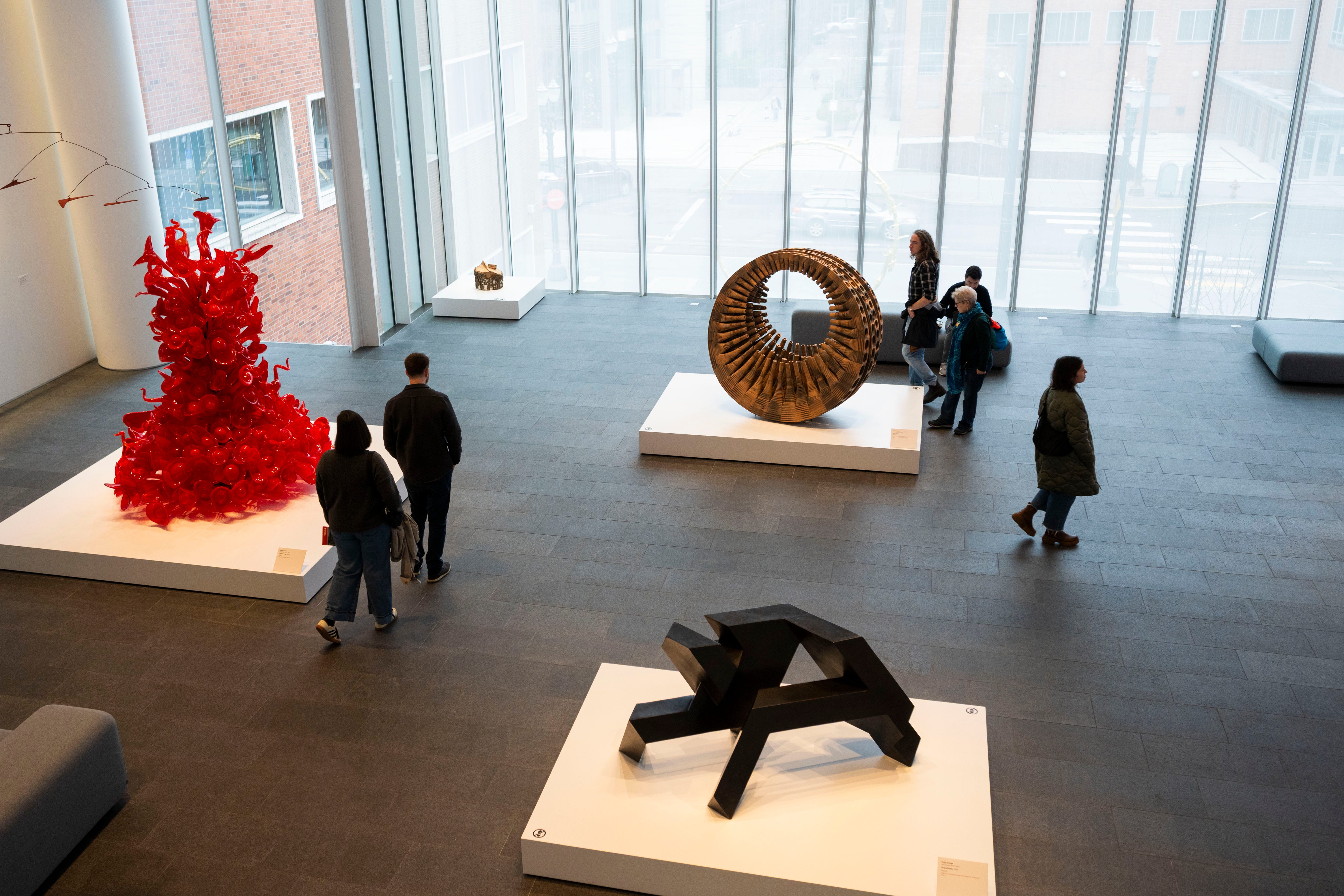
Adding up sculptures, paintings, photographs, and installations of all kinds, the renovated museum now offers about 2,400 pieces of art on display. That’s roughly double the number of pieces museum visitors could enjoy previously. But know this, too. Of the entire PAM collection, less than 5% is on view at any one time. Translation: Come back next week, or next month, and you might see something new.
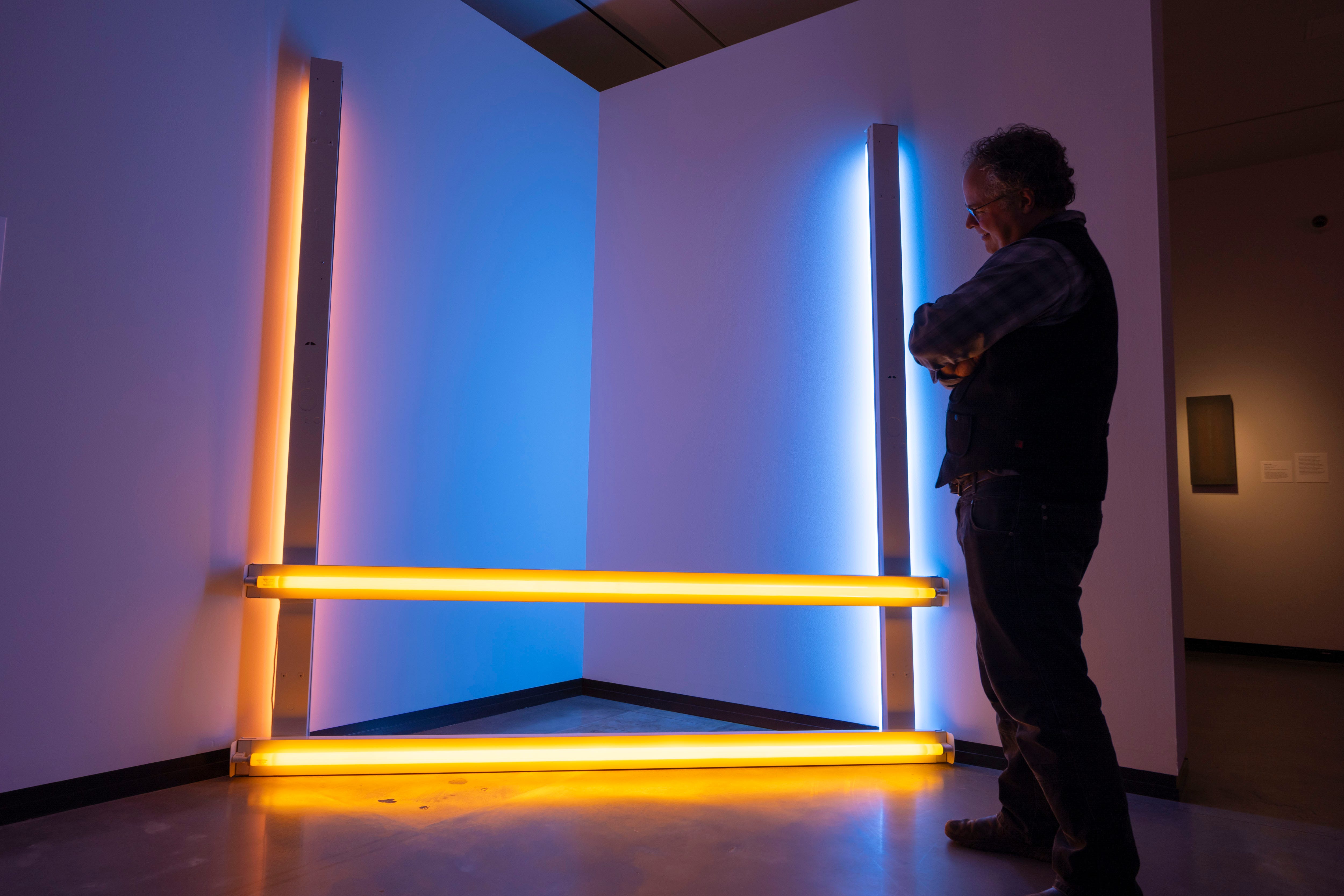
For whatever reason, some pieces of art are more “social” than others. Ian Gillingham, PAM’s head of press and public relations who walked me though the museum this week (that’s him) says that Dan Flavin’s fluorescent light installation is among the museum’s most-Instagrammed pieces. What’s Flavin’s point with this piece? His work, writes the museum, challenges “the long-held belief that the artist’s hand must be evident in an artwork.”
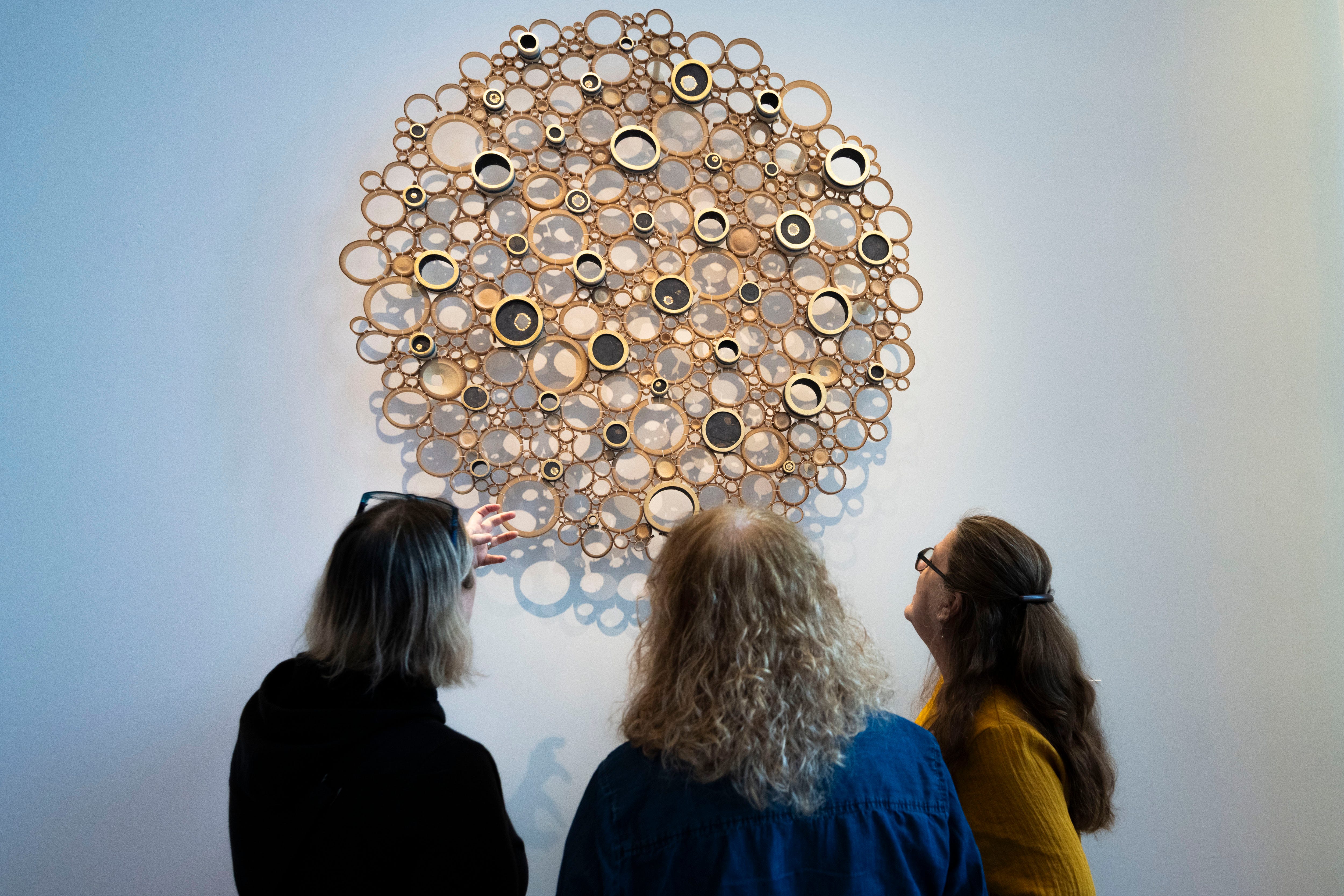
Anne Crumpacker’s piece called “Shine a Light” has a lot going on. It seems to just float weightlessly off the museum wall. And little wonder: Crumpacker’s materials are thin sections of bamboo, waxed-linen thread, Korean rice paper and gold leaf. Nothing that weighs anything.
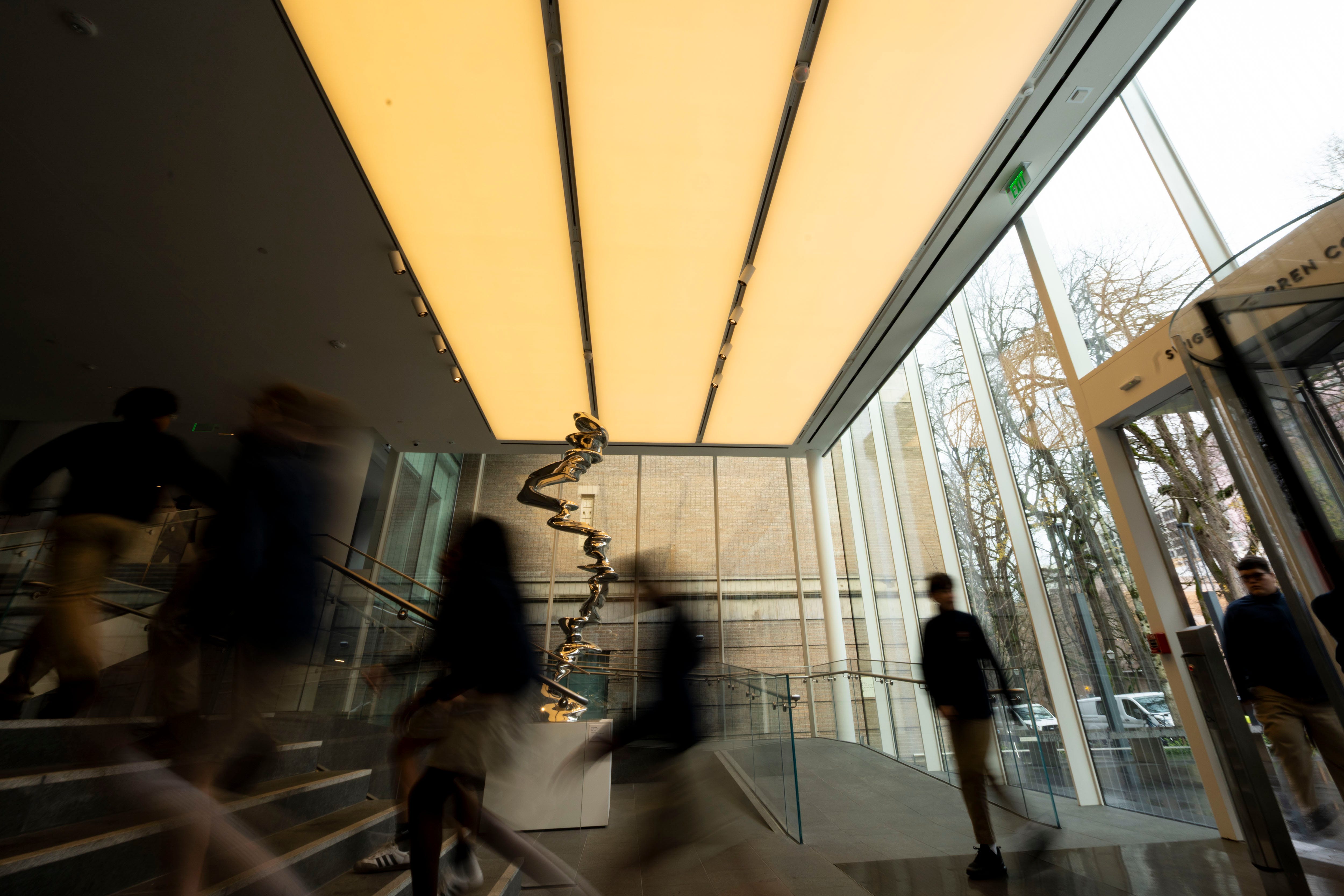
The 50,000 people who have poured into the museum since it reopened on Nov. 20 represent the biggest one-month visitor surge in decades. The museum’s new entrance, shown here, is the 22,000-square-foot Mark Rothko Pavilion. Rothko was one of America’s most influential abstract expressionist painters. Rothko was born in Latvia in 1903, emigrated with his family to Portland in 1913 and graduated from Lincoln High School in 1921, before moving to New York City.
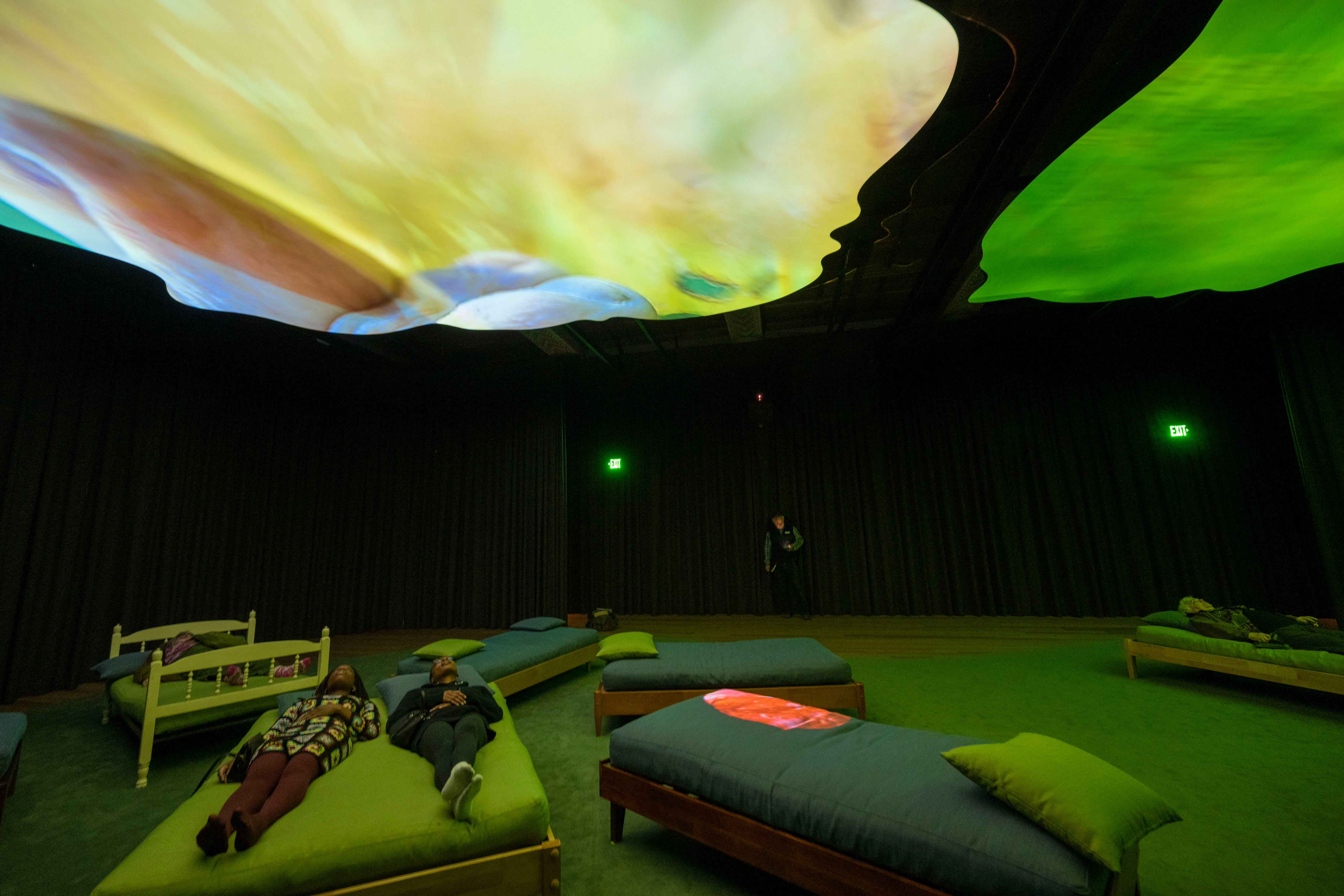
After Leonardo DaVinci’s “Mona Lisa,” Claude Monet’s “Water Lilies” is one of the famous painting series of all time. This remarkable new installation at the PAM invites visitors to slip off their shoes, lie down on raft-like beds and gaze upward—as though they are floating underwater in Monet’s garden, and looking at those famed lilies from underneath. This installation by Swiss video and installation artist Pipilotti Rist includes moving imagery, film shot underwater and a dreamy soundtrack. The artist’s statement? She would like her installation to “simulate our dissolution into water, mud, slime, molecules and atoms.” In addition to all that, it’s fun just to lie there and look up.
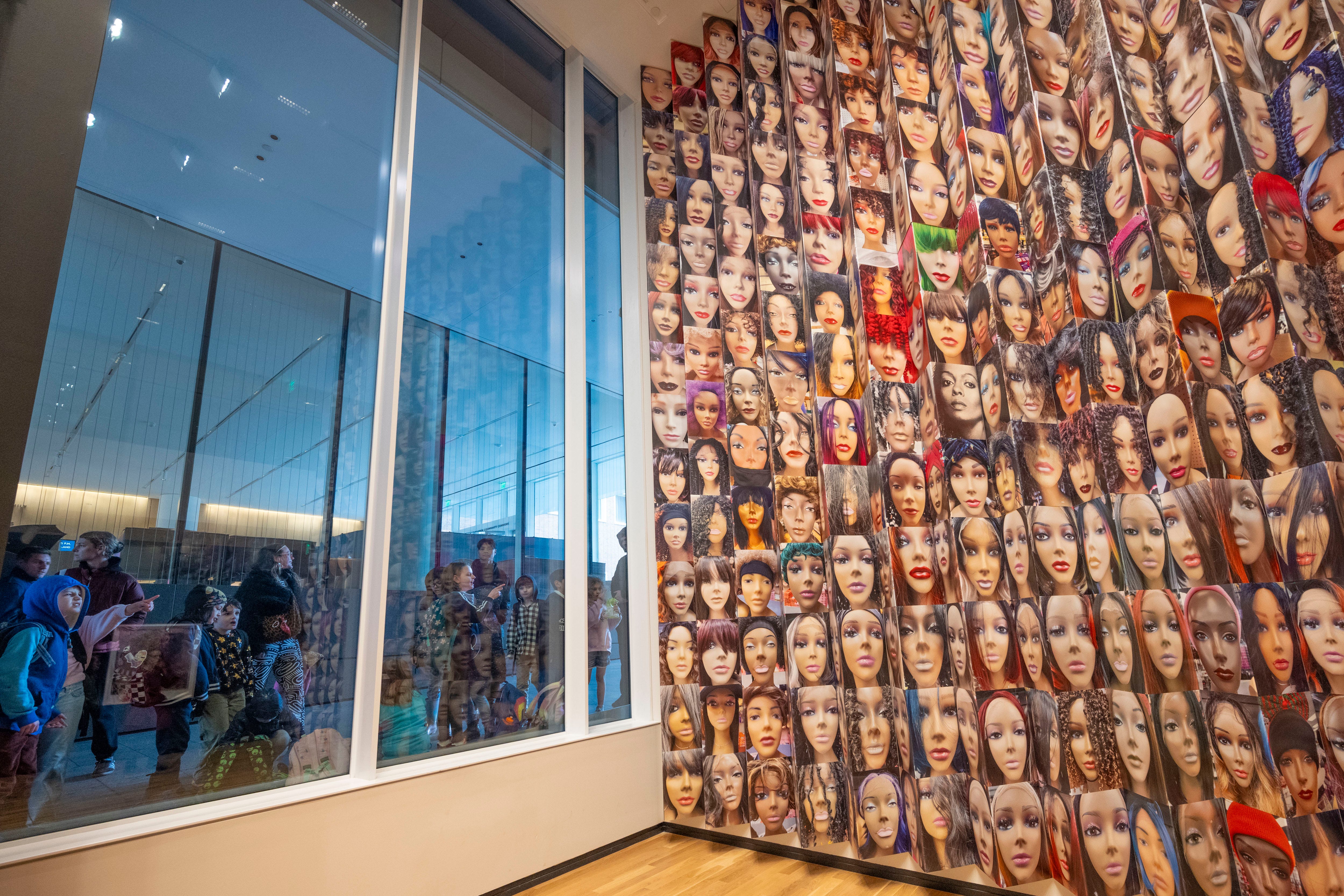
One of the coolest things about the museum? You can catch some of the art for free. The rebuilt public breezeway next to the Rothko Pavilion has huge picture windows that let visitors peer into one of the galleries. Here a bunch of school kids stop to ogle and point at Lisa Jarrett’s 2025 floor-to-ceiling piece entitled “503 Wig Mannequin Portraits and 1 Portrait of Diana Ross.” Even if the museum is closed, and the streets are dark, the gallery with Jarrett’s work has the lights on 24/7 for your viewing pleasure.
Wonderful photography . . . I know have to go experience it myself, which I wasn't inclined to do before I saw your images!