

By Barbara Quinn
Originally published in North Peninsula Review
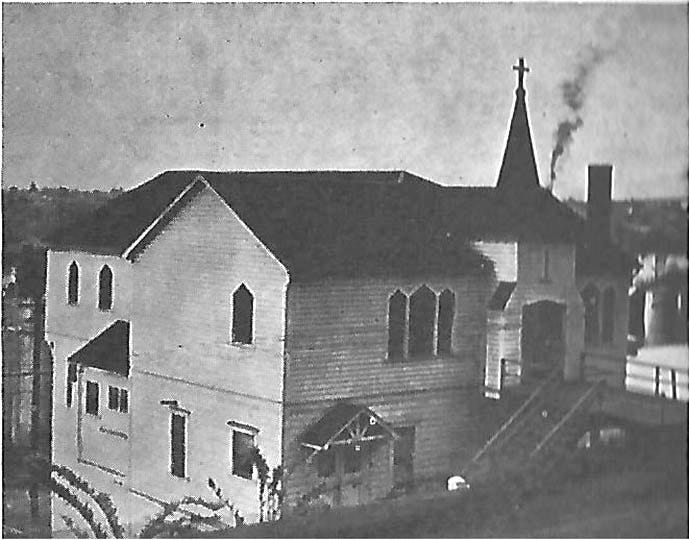
You may have seen the small church facing U.S. Highway 30 just north of the Linnton business district and wondered why it is located between a busy highway and an industrial area. St. Birgitta’s Catholic Church is unusual in many ways.
The original church was built in 1916 on a donated steep hillside next to Highway 30. It was featured in Ripley’s Believe It or Not! because of its unusual three-story stilt structure—a wooden footbridge connecting the top floor directly to U.S. Highway 30—and strange location surrounded tightly on three sides by a Mobil oil plant that was built around it.
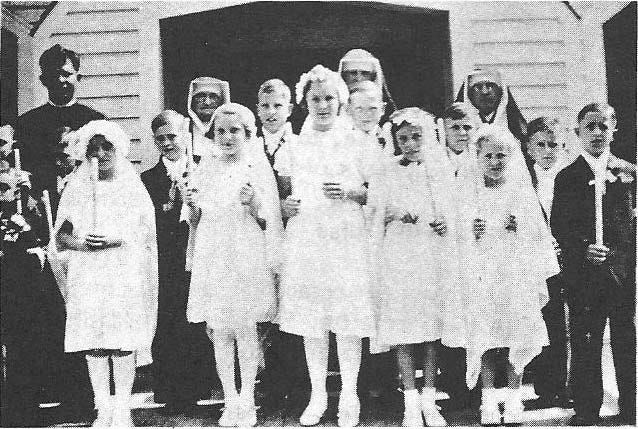
From its beginning, it was either a mission church belonging to another parish or an independent entity. It was not considered a parish church until 1969. It initially served people from Linnton and nearby.
The Catholic Church Extension Society of Chicago contributed $500 toward the $2,000 cost of building the original church. The donor expressed the wish that the new church be dedicated to St. Birgitta. That explains why it was named for a Swedish saint when there were few people of Swedish descent nearby.
The church quickly became associated with eastern Europeans when a member, Mr. J. Kovach, changed the meeting place of the Slovak Catholic Lodge from St. Patrick’s Hall to St. Birgitta. Croatian, Slovenian, Slovak, and Czech people from around the city of Portland came to the parish to hear the mass said in Slovak once a month. To this day, according to the current pastor, the Rev. Joshua Clifton, the church is associated with people of Eastern European ethnic background and serves as a liaison with new immigrants from those countries.
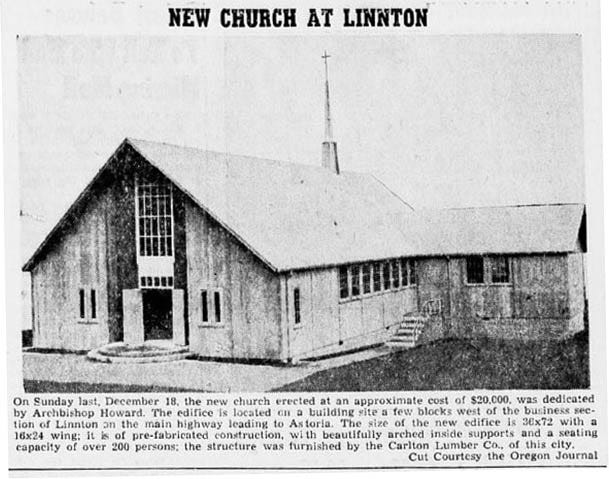
By the 1950s, the lack of parking had become such an issue that the church decided to move and bought land nearby. A Portland firm, which was prefabricating churches and delivering them all over the United States, was chosen to supply the new church structure. Once the building was delivered in sections, volunteers put up all the outside walls before the day was over. As a result, many people who drove to Portland in the morning were surprised to see a new building in the evening. For that reason, it was called a “miracle church.”
In 1963, Pope John XXIII granted permission to establish a mission for Croatian people at St. Birgitta, and the Croatian Mission Center & Chapel of Our Lady of Sinj was built in 1965 near the church.
One other unusual thing about St. Birgitta is that it has maintained the traditional Latin Mass uninterrupted since Vatican II when most other parishes transitioned to the English mass. Clifton maintains that it was given dispensation to do so from Rome. For that reason, it attracts people from around the Metro area who prefer the Latin mass, although there are masses in English as well.
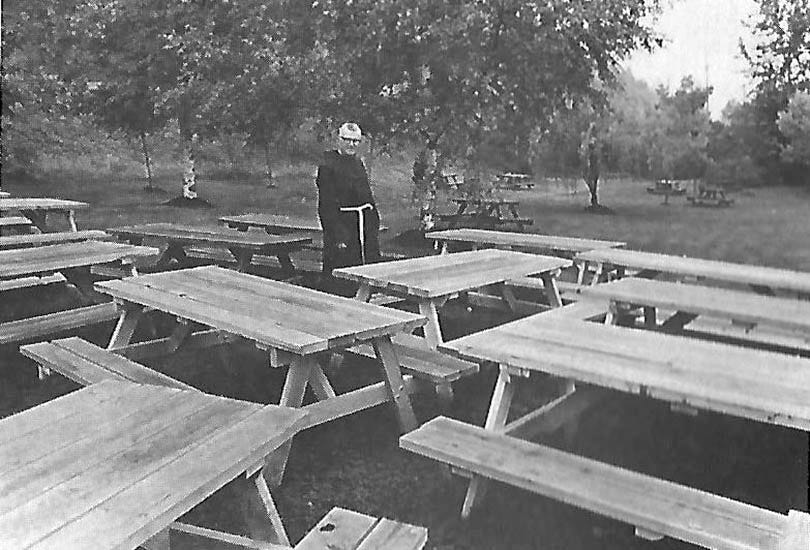
In 1962, the Oregon State Highway Department purchased a strip of frontage from St. Birgitta to widen the highway, and the funds enabled, among other things, the purchase of a wooded picnic area adjacent to the hall. It is fenced and partially shaded making it a safe place for children to play after mass.
The picnic area is open to the public for a sausage feed fundraiser each September. The parish’s annual sausage feed is a good way to check out a bit of Linnton’s colorful history.
Barbara Quinn is co-publisher of North Peninsula Review.